


Listen to the article
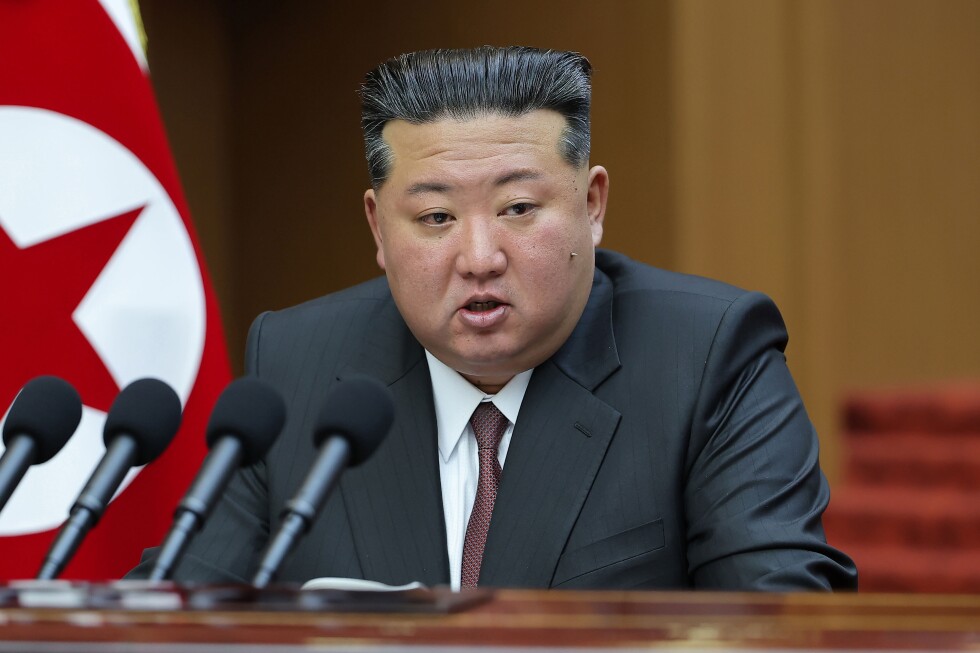
North Korean leader Kim Jong Un has reaffirmed his commitment to maintaining North Korea’s nuclear arsenal while taking an increasingly hostile stance toward South Korea, which he described as his country’s “most hostile” adversary, according to state media reports released Tuesday.
Speaking to North Korea’s Supreme People’s Assembly on Monday, Kim denounced the United States for what he characterized as global “state terrorism and aggression,” in what appeared to be a reference to conflicts in the Middle East. He pledged that North Korea would take a stronger role in opposing Washington amid what he claimed is growing anti-American sentiment worldwide.
Despite his criticisms, Kim avoided directly naming U.S. President Donald Trump and maintained a relatively measured tone regarding potential U.S. relations, stating that whether his adversaries “choose confrontation or peaceful coexistence is up to them, and we are prepared to respond to any choice.”
Kim’s remarks largely echoed statements he made during last month’s Workers’ Party Congress, where he criticized Seoul harshly but left open possibilities for engagement with the Trump administration. He continues to insist that Washington must abandon demands for North Korea’s nuclear disarmament as a precondition for any negotiations.
The Supreme People’s Assembly, which serves as North Korea’s rubber-stamp parliament, concluded its two-day session Monday by passing constitutional revisions, though state media did not detail the specific changes. Analysts had anticipated the amendments would formally designate South Korea as a permanent enemy and eliminate references to shared Korean nationhood, reflecting Kim’s 2024 declaration that North Korea was abandoning its long-held goal of peaceful reunification with the South.
Security experts suggest Kim’s increasingly antagonistic position toward South Korea stems from his assessment that Seoul no longer serves a useful purpose as an intermediary with Washington and instead impedes his regional ambitions. Kim has also demonstrated concern about South Korean cultural influence, implementing aggressive measures to restrict South Korean culture and language among North Koreans as part of efforts to strengthen his family’s authoritarian control.
In his parliamentary address, Kim expressed satisfaction with North Korea’s rapid development of nuclear weapons and missile technology, describing it as the “right” strategic choice to counter what he termed “hegemonic pursuits” by “gangsterlike” imperialist powers—language typically directed at the United States and its allies.
“The dignity of the nation, its national interest and its ultimate victory can only be guaranteed by the strongest of power,” Kim declared. “The government of our republic will continue to consolidate our absolutely irreversible status as a nuclear power and will aggressively wage a struggle against hostile forces to crush their provocations and schemes.”
Kim has suspended substantive dialogue with both Washington and Seoul since his second summit with Trump collapsed in 2019 over disagreements regarding international sanctions against North Korea.
In recent months, Kim has pivoted toward strengthening ties with Russia, reportedly deploying thousands of North Korean troops and substantial military equipment to support Moscow’s campaign in Ukraine. This assistance is widely believed to be in exchange for economic aid and military technology transfers from Russia.
As the Ukraine conflict potentially moves toward resolution, some analysts suggest Kim may be maintaining a somewhat restrained approach toward the United States to preserve diplomatic options for the future. His ultimate objectives likely include securing relief from crippling economic sanctions and gaining implicit recognition of North Korea as a legitimate nuclear power.
However, other experts note that recent U.S. and Israeli military actions against Iran, including the killing of Iran’s previous supreme leader, may have raised Kim’s threshold for reengaging in dialogue with Washington, further complicating prospects for diplomatic progress on the Korean Peninsula.
Fact Checker
Verify the accuracy of this article using The Disinformation Commission analysis and real-time sources.

8 Comments
Kim’s latest statements underscore the complexities of the North Korea nuclear issue. Striking the right balance between deterrence and diplomacy will be crucial to making progress. Careful, patient engagement may be needed to find common ground and reduce tensions.
Kim’s focus on cementing North Korea’s nuclear status is deeply troubling. However, the situation calls for nuanced diplomacy to find mutually acceptable solutions, rather than further escalation. Constructive engagement, though challenging, remains critical.
Kim’s remarks highlight the challenges in dealing with North Korea’s nuclear program. While tough rhetoric may play well domestically, it does little to build trust or advance productive negotiations. A more balanced approach focused on mutual security interests could yield better results.
I agree. North Korea’s nuclear program poses significant risks, but confrontational rhetoric tends to backfire. Diplomacy and incremental progress, even if imperfect, may be the best path forward at this stage.
North Korea’s nuclear ambitions continue to be a major geopolitical flashpoint. While the country’s hostility towards the South is concerning, I’m curious to see if any diplomatic openings emerge that could lead to constructive dialogue and gradual de-escalation.
North Korea’s nuclear ambitions remain a major concern. While diplomacy is crucial, it’s concerning to hear such a belligerent tone from Kim towards the South. De-escalation and constructive dialogue will be key to regional stability.
The North Korean nuclear program remains one of the most pressing security challenges globally. While Kim’s rhetoric is concerning, it’s important to keep exploring avenues for negotiated solutions that address the interests of all parties involved.
Agreed. Maintaining open diplomatic channels, even in the face of provocative statements, is essential. Small steps towards building trust and reducing tensions may be the best path forward at this stage.