


Listen to the article
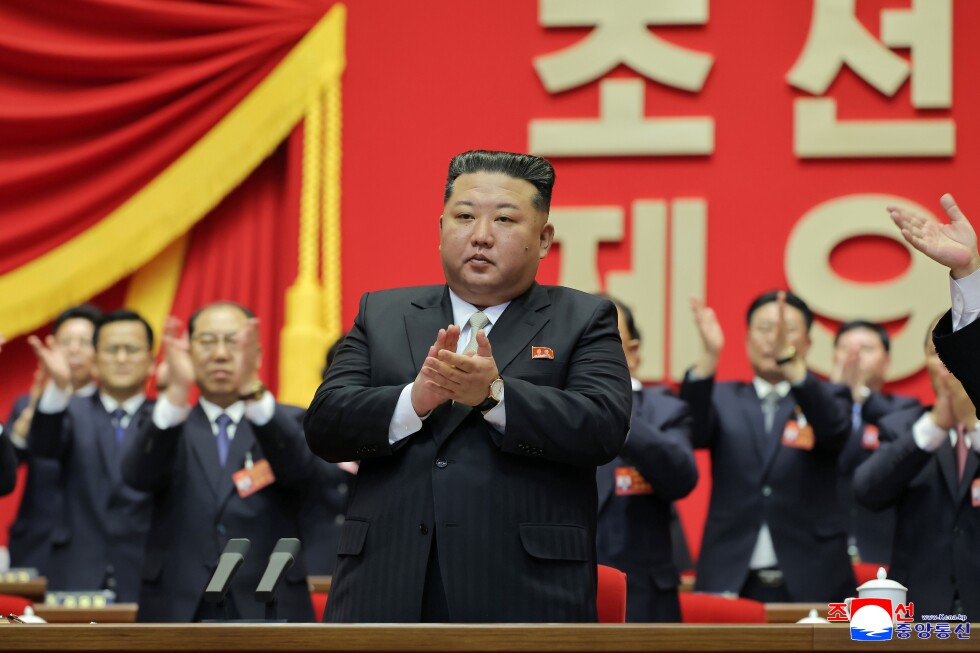
North Korean leader Kim Jong Un has been reelected as general secretary of the ruling Workers’ Party during the ongoing party congress, state media reported Monday. The congress, which began last Thursday, has reaffirmed Kim’s leadership amid his efforts to strengthen North Korea’s nuclear arsenal and enhance its international standing.
According to the Korean Central News Agency (KCNA), Kim was reelected with the “unshakable will and unanimous desire” of thousands of party delegates. The 42-year-old leader has held the party’s top position throughout his rule, though the title has changed from first secretary to chairman in 2016 and then to general secretary in 2021.
The party issued a statement crediting Kim with developing nuclear forces capable of handling “any threat of aggression” and “any form of war,” while praising his leadership for “reliably guaranteeing” North Korea’s future and boosting national pride among citizens.
The congress comes at a time of increasing assertiveness in Kim’s regional politics. In recent years, he has aggressively expanded North Korea’s nuclear capabilities and forged closer ties with Russia through joint military cooperation, which observers believe includes weapons support for Russia’s war in Ukraine. These developments have further deepened tensions with Washington and Seoul.
Kim has also worked to strengthen relations with China, making a significant trip to Beijing last September for his first summit with Chinese President Xi Jinping in six years. Following Kim’s reelection, Chinese state media reported that Xi had sent congratulations to the North Korean leader.
A major leadership reshuffle was also announced during the congress, confirming a generational shift in Kim’s inner circle. The party released a new roster for its powerful 138-member Central Committee, which notably excluded several senior officials. Among those removed were Choe Ryong Hae, the 76-year-old chairman of the standing committee of the Supreme People’s Assembly, who was once considered the second most powerful figure in Pyongyang.
Military marshals Pak Jong Chon and Ri Pyong Chol, who had risen through the ranks during North Korea’s accelerated nuclear development over the past decade, were also absent from the new committee. Additionally, officials who previously managed inter-Korean affairs were removed, including Kim Yong Chol and Ri Son Gwon, who played key roles in Kim’s diplomatic engagements with former South Korean President Moon Jae-in and former U.S. President Donald Trump in 2018 and 2019.
The congress adopted revisions to party rules, though KCNA did not immediately provide details. Analysts had anticipated that Kim might use the congress to codify his hardline stance toward South Korea, potentially formalizing his recent characterization of inter-Korean relations as between two “hostile” states.
Yoon Min Ho, a spokesperson at South Korea’s Unification Ministry, described Kim’s reelection as predictable, noting it serves to further solidify his leadership. South Korean officials are closely monitoring for additional messages from the congress that might indicate North Korea’s future direction.
North Korea has suspended all meaningful diplomatic engagement with the United States and South Korea since the collapse of the 2019 summit between Kim and Trump, which failed due to disagreements over sanctions relief in exchange for denuclearization steps. Relations have deteriorated further in 2024, with Kim abandoning North Korea’s long-standing goal of peaceful reunification with South Korea and declaring it a permanent enemy.
Analysts suggest Kim will likely use the remainder of the congress to unveil new military objectives, including strengthening conventional forces and integrating them with nuclear capabilities. He is also expected to reemphasize his campaign for economic “self-reliance” through mass mobilization, building on gradual post-pandemic economic gains fueled by recovering trade with China and reported arms exports to Russia.
Fact Checker
Verify the accuracy of this article using The Disinformation Commission analysis and real-time sources.

12 Comments
The continued emphasis on nuclear capabilities is troubling, but not entirely surprising given North Korea’s longstanding security concerns and desire for international recognition. It will be important to see if any diplomatic breakthroughs can be achieved to address these issues constructively.
As an investor in mining and energy-related equities, I’ll be closely watching how this situation develops. North Korea’s nuclear capabilities and geopolitical maneuvering could have significant implications for commodity markets and related industries.
Absolutely, the potential ripple effects on commodity markets and supply chains are an important consideration. Prudent investors would do well to monitor the situation closely.
As an investor, I’m interested in how this development could impact commodity markets, particularly those related to the mining and energy sectors. North Korea’s nuclear program and geopolitical maneuvering could have far-reaching consequences that warrant close monitoring.
The continued emphasis on nuclear buildup is concerning. However, it’s crucial to understand the complex historical context and security challenges facing North Korea from their perspective. A nuanced, diplomatic approach may be needed to address these issues constructively.
You raise a fair point. North Korea’s nuclear program is a complex issue without easy solutions. Maintaining open dialogue and exploring creative diplomatic avenues could be key to making progress.
This is certainly a significant development in North Korea’s political landscape. Kim’s reelection solidifies his grip on power and underscores the regime’s commitment to its nuclear ambitions. It will be interesting to see how this impacts regional geopolitics going forward.
North Korea’s nuclear program remains a major concern for the international community. Enhancing its capabilities could further destabilize the region and increase tensions.
The reelection of Kim Jong Un and the party’s emphasis on nuclear buildup is a significant development that warrants close attention. It’s a complex issue with far-reaching implications, both geopolitically and for related industries and markets. Constructive dialogue and nuanced analysis will be crucial going forward.
While North Korea’s nuclear ambitions are concerning, I’m curious to understand the domestic factors driving this agenda. What are the economic and social challenges facing the regime, and how do they view this as a means of bolstering their position both internally and externally?
This is a complex and delicate situation that requires nuanced analysis. While North Korea’s nuclear ambitions are understandably concerning, it’s important to consider the historical context and security challenges facing the regime. Maintaining open channels of communication and exploring diplomatic solutions could be key to making progress.
North Korea’s continued focus on nuclear capabilities is worrying, but not entirely unexpected given the regime’s longstanding priorities. As an investor, I’ll be closely watching how this situation evolves and the potential impacts on relevant commodity markets and industries.