


Listen to the article
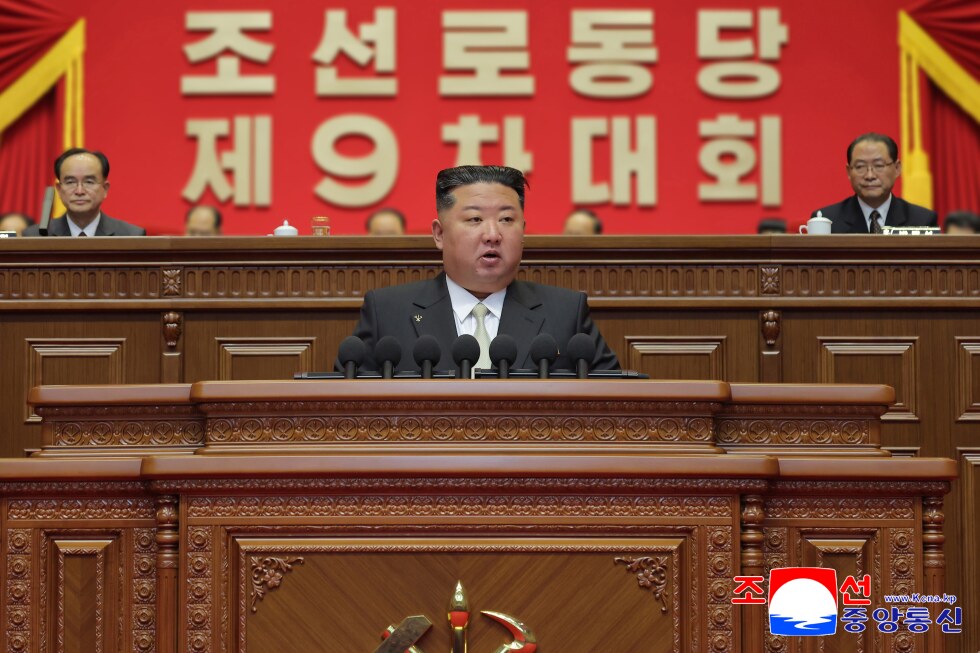
North Korean leader Kim Jong Un opened his nation’s most important political gathering with an air of confidence, touting economic progress and enhanced regional standing as he prepares to chart the country’s direction for the next five years.
The Workers’ Party congress, which began Thursday in Pyongyang, serves as the premier stage for Kim to unveil key political and military objectives while further consolidating his authoritarian control before thousands of party delegates. The multi-day event occurs amid growing speculation that Kim may be positioning his teenage daughter, believed to be Kim Ju Ae, as a potential successor—potentially formalizing a fourth-generation succession in the dynastic regime.
According to North Korea’s official Korean Central News Agency, Kim’s opening remarks highlighted what he described as significant progress since the last congress in 2021, claiming economic gains and a stronger geopolitical position that represents an “irreversible” strengthening of the state’s status.
Entering his 15th year in power, Kim stands in a markedly stronger position than during the previous congress, when North Korea was struggling with a crippled economy worsened by the COVID-19 pandemic and the collapse of his diplomatic initiatives with then-U.S. President Donald Trump. At that time, Kim took the unusual step of acknowledging economic shortcomings while unveiling a five-year development plan centered on self-reliance and mass mobilization, alongside an ambitious weapons development agenda.
Today, Kim appears emboldened by strengthened relationships with Russia and China, an expanded nuclear arsenal, and what outside observers identify as modest economic improvement. Lee Jong-kyu, an analyst at South Korea’s Korea Development Institute, estimates the North Korean economy has grown approximately 10 percent over the past five years, benefiting from post-pandemic trade recovery with China and substantial arms exports to Russia.
“The past five years might be the most productive period for North Korean leadership since the 1950s and 1960s,” noted Koh Yu-hwan, former president of Seoul’s Institute for National Unification. Given this newfound confidence, the congress is unlikely to introduce major domestic policy shifts but will continue emphasizing internal unity and self-reliance under another five-year economic plan.
Kim has capitalized on global geopolitical disruptions, using Russia’s invasion of Ukraine as an opportunity to accelerate weapons development and deepen ties with Moscow. North Korea has reportedly provided thousands of troops and significant munitions shipments to support President Vladimir Putin’s war effort, likely in exchange for economic aid and military technology.
Simultaneously, Kim has worked to strengthen relations with China, meeting with Chinese President Xi Jinping for the first time in six years and joining Putin at a World War II commemoration in Beijing last September. These diplomatic maneuvers support Kim’s efforts to position North Korea within a united front against Washington.
On the military front, North Korea has developed or tested many of the weapons systems Kim demanded in 2021, including solid-fuel intercontinental ballistic missiles and tactical nuclear systems. The country launched its first military satellite in 2023 and recently claimed progress in developing a nuclear-powered submarine.
Having prioritized nuclear weapons development, Kim now appears to be placing increased emphasis on conventional military capabilities. North Korea has unveiled new warships, anti-air systems, and attack drones while outlining broader plans to integrate nuclear and conventional forces. This dual-track approach may reflect lessons learned from North Korea’s involvement in the Ukraine conflict, where Russia has relied primarily on conventional warfare despite possessing nuclear weapons.
Kim’s stance toward South Korea has hardened considerably. In 2024, he abandoned North Korea’s long-standing goal of peaceful unification and declared Seoul a permanent enemy. At the congress, he may further institutionalize this hostile approach, potentially by instructing changes to party rules that would formally characterize inter-Korean relations as being between “two hostile states.”
Despite South Korean President Lee Jae Myung’s desire for engagement, analysts see little prospect for improved relations in the near term. Kim evidently no longer views Seoul as a useful intermediary with Washington but rather as an obstacle to his aspirations for a more prominent role in international affairs.
Toward the United States, Kim may adopt a more measured approach to preserve possibilities for future dialogue, with the long-term goal of securing sanctions relief and tacit recognition as a nuclear state. While currently prioritizing relations with Russia, Kim likely recognizes the importance of maintaining flexibility as global dynamics continue to shift.
Fact Checker
Verify the accuracy of this article using The Disinformation Commission analysis and real-time sources.

14 Comments
Interesting to see North Korea’s claims of economic progress and enhanced regional standing. I wonder how accurate these assertions are given the country’s history of opaque reporting and isolation from the global economy.
You raise a good point. North Korea’s self-reporting on economic and geopolitical matters is notoriously unreliable and should be viewed with significant skepticism.
I’m curious to see if Kim’s remarks touch on North Korea’s nuclear program and relations with the US and its allies. Pyongyang’s nuclear ambitions have long been a source of regional tension and instability.
That’s a good point. North Korea’s nuclear weapons and missile development are major geopolitical flashpoints that will likely feature prominently in the party congress discussions and future policy decisions.
Given North Korea’s history of nuclear brinkmanship and human rights violations, I’m skeptical of any claims of ‘irreversible’ strengthening of the regime’s status. Provocations and oppression often precede such grandiose pronouncements.
That’s a fair assessment. North Korea’s track record of belligerence and repression means we should view their self-congratulatory rhetoric with a healthy dose of skepticism.
The potential for a fourth-generation dynastic succession in North Korea is concerning. Hereditary dictatorship is an archaic and undemocratic model that often leads to instability and human rights abuses.
I agree. Dynastic rule is worrying and runs counter to principles of representative government. The international community should closely monitor any efforts to cement Kim’s family’s grip on power.
The opening of this major party congress in North Korea is a significant event that bears close watching. While their rhetoric may be exaggerated, the regime’s actions and policies will shape the region’s security environment in the years ahead.
Well said. North Korea’s internal political dynamics and strategic posturing, even if inflated, can have real-world ramifications that the international community cannot ignore.
It will be interesting to see if Kim does indeed position his daughter as a potential successor. Dynastic transitions of power are highly unstable and can lead to power struggles, which would be concerning for regional stability.
Absolutely. Any attempt to establish a fourth-generation Kim dynasty would be a worrying development that the international community should watch closely for signs of unrest or conflict.
The economic challenges North Korea has faced in recent years, including the impact of the pandemic, raise doubts about the validity of Kim’s claims of significant progress. Isolated economies rarely thrive under authoritarian rule.
Agreed. North Korea’s economy has long struggled due to the regime’s mismanagement and international sanctions. Touting ‘gains’ amid these persistent challenges seems more like propaganda than reality.