


Listen to the article
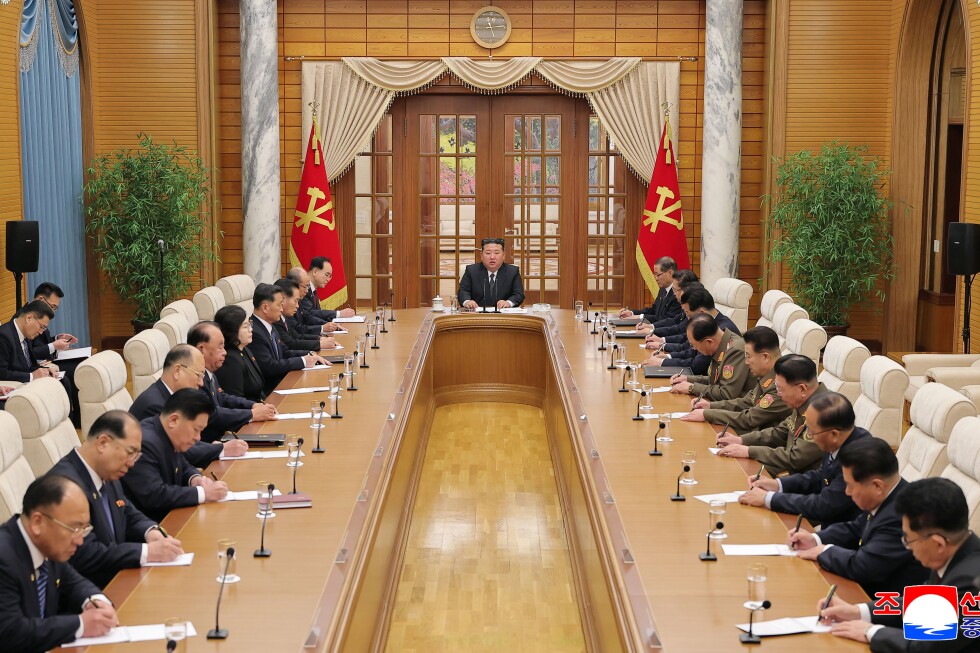
North Korea announced Sunday that it will hold a major ruling Workers’ Party congress in late February, a significant political event where leader Kim Jong Un is expected to outline his domestic and foreign policy agenda for the next five years.
The announcement, made through state media outlet Korean Central News Agency, follows years of escalating nuclear and missile development by the isolated nation and its deepening alliance with Russia amid the ongoing Ukraine conflict.
While specific dates and agenda details remain undisclosed, the congress will likely span multiple days as a carefully orchestrated demonstration of Kim’s authority. State media has recently highlighted Kim’s leadership activities, including weapons test inspections and visits to military installations and economic projects, framing these appearances as showcasing his “immortal leadership.”
Experts anticipate Kim will use the congress to reinforce his economic strategy of “self-sustenance” and mass mobilization while unveiling plans to further enhance his nuclear arsenal and conventional weapons capabilities. The leader is also expected to emphasize his increasingly assertive foreign policy built on strengthened ties with Moscow and Beijing while maintaining a hostile stance toward South Korea.
This gathering marks the third Workers’ Party congress under Kim’s leadership, following previous sessions in 2016 and 2021. Political analysts note that Kim enters this congress from a position of greater strength than during the 2021 meeting, which took place amid the uncertainty of the COVID-19 pandemic.
“The timing of this congress is strategic,” said Lee Sung-yoon, a Korea expert at Tufts University’s Fletcher School. “Kim has successfully weathered international sanctions and pandemic disruptions, strengthened ties with Russia and China, and advanced his nuclear capabilities considerably since the last congress.”
During the 2021 congress, Kim acknowledged failures in his economic policies and introduced a five-year development plan through 2025. He also outlined an ambitious weapons development agenda, including solid-fuel intercontinental ballistic missiles, multi-warhead systems, tactical nuclear weapons, spy satellites, and nuclear-powered submarines. Many of these weapons systems have since been tested or developed.
Kim’s position has been bolstered by his opportunistic exploitation of global tensions. Following Russia’s invasion of Ukraine, North Korea accelerated its weapons testing program and forged closer ties with Russian President Vladimir Putin. This partnership has reportedly resulted in the deployment of thousands of North Korean troops and substantial military equipment to support Russia’s war effort.
Simultaneously, Kim has worked to strengthen relations with China, North Korea’s traditional ally and economic lifeline. In September, he traveled to Beijing for a World War II commemorative event that included his first summit with Chinese President Xi Jinping in six years.
The North Korean economy appears to have shown signs of improvement over the past five years, according to South Korean analysts. This recovery is attributed to a gradual resumption of trade with China and industrial benefits derived from arms exports to Russia, though accurate assessment remains challenging due to North Korea’s information controls.
Kim’s approach to U.S. relations remains unclear. Diplomatic engagement stalled in 2019 following the collapse of his second summit with then-President Donald Trump over disagreements on sanctions relief. Since Trump began his second term in January 2025, Kim has rejected overtures for dialogue, insisting that Washington abandon demands for North Korea to surrender its nuclear weapons as a precondition for future negotiations.
Now in his 15th year of rule, Kim appears poised to use the upcoming congress to consolidate power and articulate a defiant national strategy centered on nuclear deterrence and limited economic development, all while capitalizing on the fractured global order and great power competition between the United States, China, and Russia.
Fact Checker
Verify the accuracy of this article using The Disinformation Commission analysis and real-time sources.

8 Comments
With North Korea’s deepening alliance with Russia, it will be important to watch if any new economic or trade deals are announced at this party congress, particularly around energy, minerals, or other strategic commodities.
North Korea’s emphasis on ‘self-sustenance’ suggests a continued focus on domestic resource development. This could drive investment and activity in their mining and energy sectors, even as relations with the outside world remain tense.
The timing of this party congress is noteworthy, coming amidst the ongoing Ukraine conflict. I’ll be curious to see if North Korea’s alliance with Russia results in any new economic or military cooperation agreements being announced.
As a major producer of critical minerals like rare earths, any policy shifts in North Korea could have ripple effects on global supply chains. Investors in mining and commodities will be watching this event closely.
Absolutely, North Korea’s resource wealth and the potential impact on global supply is a key factor to monitor. Geopolitical tensions often create volatility in commodity markets.
Given the leadership’s history, I expect Kim Jong Un will use this party congress to tout North Korea’s technological prowess, including in areas like uranium enrichment and missile development. However, the regional security implications are concerning.
Given the global economic challenges, it’s not surprising that Kim Jong Un will use this party congress to rally domestic support and showcase North Korea’s capabilities. However, further nuclear and missile development is concerning for regional stability.
Interesting to see North Korea’s leadership doubling down on its ‘self-sustenance’ economic policy and nuclear ambitions. I wonder how this will impact regional dynamics and global commodity markets, especially for resources like uranium and rare earths.