


Listen to the article
A federal judge on Thursday ordered the Trump administration to facilitate the return of Venezuelan migrants deported to El Salvador, escalating a contentious legal battle over immigration enforcement that has pitted the judiciary against the executive branch.
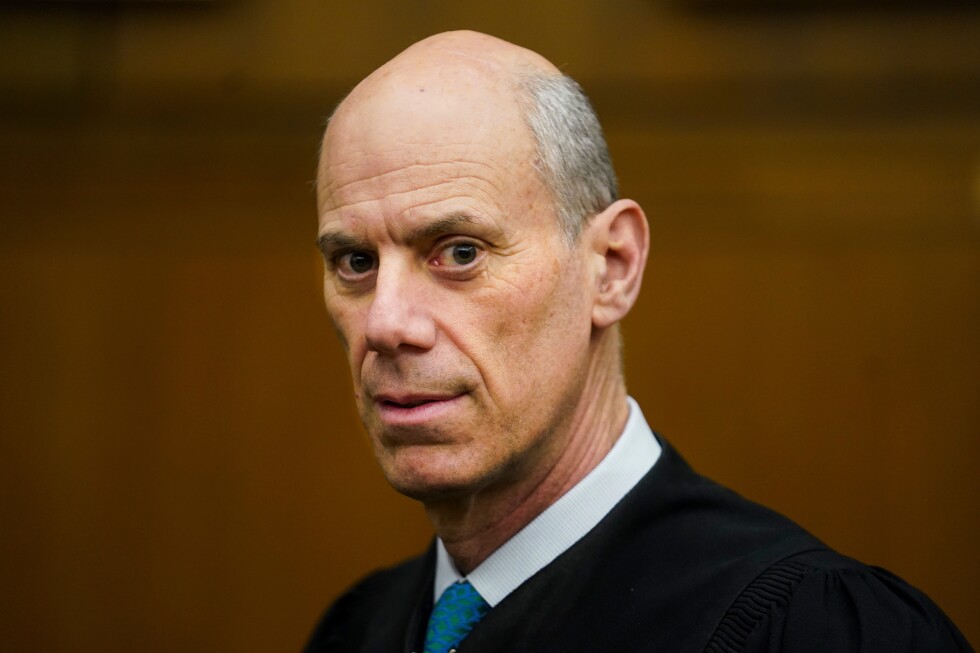
U.S. District Judge James Boasberg directed the government to arrange for and fund the return of some Venezuelan migrants who were deported to a high-security prison in El Salvador and have since relocated to third countries. The ruling represents a significant rebuke to the administration’s handling of the case.
The dispute began in March when President Donald Trump invoked the rarely-used Alien Enemies Act, an 18th century wartime law, to deport 137 Venezuelan migrants accused of gang affiliation to El Salvador’s Terrorism Confinement Center (CECOT), a facility known for its harsh conditions.
In his ruling, Boasberg criticized the administration’s defiant response to his previous orders, writing that the government “essentially told the Court to pound sand.” The judge, who was nominated to the federal bench by President Barack Obama, has repeatedly clashed with the Trump administration over these deportations.
The White House responded forcefully to the decision. Spokesperson Abigail Jackson called it “an absurd, unlawful ruling from a far-left judicial activist trying to undermine the President’s lawful authority to carry about deportations.”
“Americans elected President Trump based on his promise to deport criminal illegal aliens and Make America Safe Again,” Jackson added. “Boasberg has no right to stop the will of the American people, and this will not be the final say on the matter.”
The case has taken several turns since March. The migrants were initially sent to CECOT but were later returned to Venezuela as part of a prisoner exchange negotiated by the United States. According to Lee Gelernt, the attorney representing the migrants, some have since managed to leave Venezuela and relocate to third countries.
Judge Boasberg’s order requires U.S. officials to provide these individuals with boarding letters and cover their airfare if they wish to return to the United States to challenge their deportations. The judge noted that the men would be detained upon their arrival.
The ruling also allows all the affected migrants, including those still in Venezuela, to file legal documents challenging both the presidential proclamation under which they were deported and their designation as members of the Tren de Aragua gang.
“Were it otherwise, the Government could simply remove people from the United States without providing any process and then, once they were in a foreign country, deny them any right to return for a hearing or opportunity to present their case from abroad,” Boasberg wrote, emphasizing the importance of due process protections.
The case has highlighted significant tensions between the judicial and executive branches. In March, Trump officials proceeded with the deportation flights despite a verbal order from Boasberg to turn the aircraft around. This led the judge to initiate a contempt investigation, though an appeals court has temporarily halted that inquiry.
Throughout the proceedings, the administration has maintained that it did not violate the judge’s orders. However, Gelernt, the migrants’ attorney, expressed frustration at the government’s reluctance to act without judicial intervention.
“Remarkably, although the government does not dispute the men were denied due process, it still was not willing to do what was right without a court order,” Gelernt said in a statement following Thursday’s ruling.
The case occurs against the backdrop of the Trump administration’s broader immigration crackdown, which has made aggressive enforcement a centerpiece of its domestic policy agenda. Immigration advocates have criticized the administration’s approach, particularly the invocation of the centuries-old Alien Enemies Act, as an overreach of executive authority.
As legal proceedings continue, the case may set important precedents regarding the limits of executive power in immigration enforcement and the right to due process for non-citizens facing deportation.
Fact Checker
Verify the accuracy of this article using The Disinformation Commission analysis and real-time sources.

26 Comments
Exploration results look promising, but permitting will be the key risk.
Good point. Watching costs and grades closely.
Interesting update on Judge says US must help bring back some of the Venezuelans deported to notorious prison. Curious how the grades will trend next quarter.
Good point. Watching costs and grades closely.
The cost guidance is better than expected. If they deliver, the stock could rerate.
Good point. Watching costs and grades closely.
The cost guidance is better than expected. If they deliver, the stock could rerate.
Interesting update on Judge says US must help bring back some of the Venezuelans deported to notorious prison. Curious how the grades will trend next quarter.
Silver leverage is strong here; beta cuts both ways though.
Good point. Watching costs and grades closely.
Good point. Watching costs and grades closely.
Interesting update on Judge says US must help bring back some of the Venezuelans deported to notorious prison. Curious how the grades will trend next quarter.
Good point. Watching costs and grades closely.
Good point. Watching costs and grades closely.
Interesting update on Judge says US must help bring back some of the Venezuelans deported to notorious prison. Curious how the grades will trend next quarter.
Good point. Watching costs and grades closely.
Uranium names keep pushing higher—supply still tight into 2026.
Good point. Watching costs and grades closely.
Nice to see insider buying—usually a good signal in this space.
Good point. Watching costs and grades closely.
Exploration results look promising, but permitting will be the key risk.
I like the balance sheet here—less leverage than peers.
Good point. Watching costs and grades closely.
Good point. Watching costs and grades closely.
Exploration results look promising, but permitting will be the key risk.
Good point. Watching costs and grades closely.