


Listen to the article
Bangladeshi Media Leaders Call for Protection Amid Rising Attacks
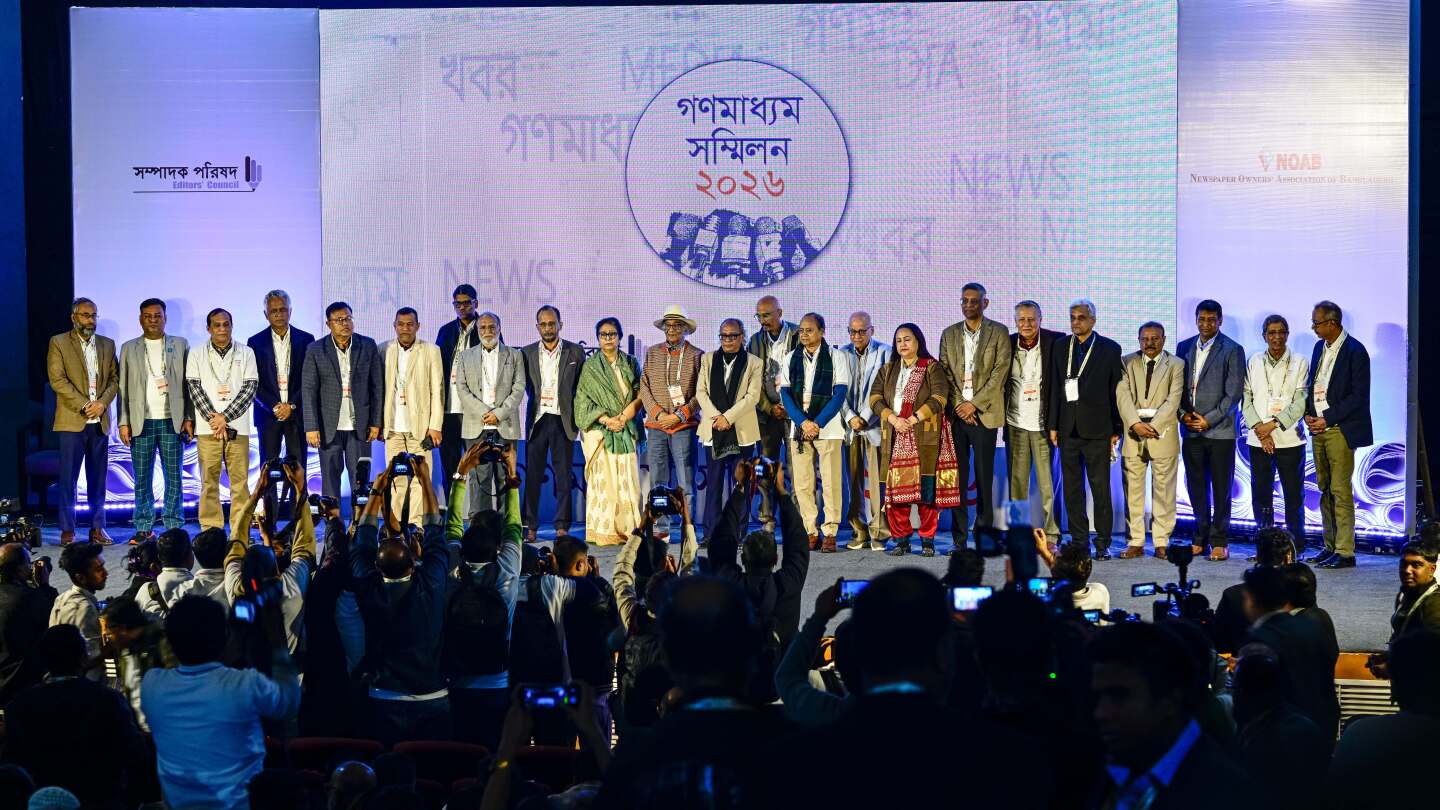
Media professionals across Bangladesh gathered Saturday to demand government protection following violent attacks on two of the country’s leading newspapers, highlighting growing concerns about press freedom under the interim government led by Nobel laureate Muhammad Yunus.
In December, angry mobs stormed the offices of the Daily Star, Bangladesh’s premier English-language newspaper, and Prothom Alo, the country’s largest Bengali-language publication. Attackers set fire to both Dhaka-based buildings, trapping journalists and staff inside for hours before they were eventually rescued from the roof of the Daily Star building. Both facilities were extensively looted during the attacks.
Newspaper representatives criticized the interim government for failing to respond adequately despite repeated calls for assistance. When a leader of the Editors Council, an independent body representing newspaper editors, arrived at the scene, he was reportedly manhandled by the mob.
“Those who want to suppress institutions that act as vehicles of democratic aspirations are doing so through laws, force and intimidation,” said Nurul Kabir, President of the Editors Council and editor of the English-language New Age daily, during Saturday’s conference organized jointly by the Editors Council and the Newspapers Owners Association of Bangladesh.
The motive behind the attacks remains unclear, though both newspapers’ editors are known to have connections with Yunus. In recent months, Islamist groups had staged protests outside both publications, accusing them of having ties to neighboring India.
The December violence wasn’t limited to media outlets. Liberal cultural centers in Dhaka were also targeted on the same day, suggesting a broader pattern of intimidation against progressive voices in Bangladeshi society.
United Nations expert Irene Khan condemned the attacks in December, calling them “deeply alarming” and urging prompt investigation. “The weaponization of public anger against journalists and artists is dangerous at any time, and especially now as the country prepares for elections. It could have a chilling effect on media freedom, minority voices and dissenting views with serious consequences for democracy,” Khan stated.
The situation reflects the complex political landscape in Bangladesh since August 2024, when former Prime Minister Sheikh Hasina fled the country amid mass uprisings. Yunus, who assumed leadership of the interim government afterward, promised to bring stability. However, global human rights organizations including Human Rights Watch and Amnesty International have criticized his administration for failing to protect civil rights and for allowing radical and Islamist elements to gain influence.
The interim government’s treatment of journalists has come under particular scrutiny. Dozens of media professionals face murder charges related to the uprising, accused of encouraging Hasina’s government to use lethal force against protesters. Several journalists with known ties to the former prime minister have been arrested and jailed under Yunus’s leadership.
Saturday’s gathering takes on added significance with national elections scheduled for February. Media leaders emphasized that a free press is essential for democratic processes, particularly during electoral periods when independent reporting serves as a critical check on political power.
The attacks on the Daily Star and Prothom Alo represent a troubling trend in Bangladesh, where press freedom has faced increasing challenges. Both publications are influential voices in the South Asian nation’s media landscape, with the Daily Star serving as the country’s most prominent English-language newspaper and Prothom Alo maintaining the largest circulation among Bengali publications.
Media professionals at the conference stressed that unity among journalists is crucial to resist intimidation and ensure that diverse perspectives can be heard as Bangladesh approaches its upcoming elections. The gathering highlighted growing concern that the space for independent journalism in the country is narrowing precisely when robust media coverage is most needed for democratic accountability.
Fact Checker
Verify the accuracy of this article using The Disinformation Commission analysis and real-time sources.

10 Comments
This is deeply concerning. Media freedom is a cornerstone of democracy and journalists must be able to operate safely. The authorities need to take immediate action to protect the press and uphold press freedoms.
These attacks on the media are a chilling development. The government must act swiftly to investigate and prosecute those responsible. Journalists need robust protection to carry out their vital work.
Press freedom is under threat in Bangladesh. The government’s failure to adequately respond to these attacks is extremely troubling. They must take urgent steps to guarantee the security of media professionals and media outlets.
I agree. Protecting journalists and ensuring a free press should be a top priority for the authorities. Anything less is a dereliction of their duty to uphold democratic values.
Suppressing press freedom through violence and intimidation is a dangerous path. The government must uphold the rule of law and protect the rights of journalists to report freely and without fear of reprisal.
Journalists play a critical role in holding the powerful to account. The government’s failure to respond adequately to these attacks on the media is deeply concerning. They must take immediate steps to safeguard press freedom.
Absolutely. A free press is essential for a healthy democracy. The authorities need to send a clear message that attacks on journalists will not be tolerated.
This is a disturbing development. Bangladesh must uphold its obligations to protect media freedom and the safety of journalists. The government needs to take robust action to prevent further attacks and ensure accountability.
Attacks on news outlets are unacceptable. The government has a duty to ensure the security of journalists and media organizations. I hope they take swift and decisive action to address this troubling situation.
These attacks on the media are a worrying sign of the erosion of democratic institutions in Bangladesh. The authorities must investigate thoroughly and hold the perpetrators accountable. Journalists need robust protection to do their vital work.