


Listen to the article
Jersey Approves Assisted Dying Law as UK Debates Similar Legislation
Jersey’s States Assembly voted Thursday to legalize assisted dying, making it the second British Crown dependency to approve such legislation while similar efforts in mainland Britain face parliamentary hurdles.
Lawmakers on the Channel Island passed the Assisted Dying Law by a decisive 32-16 margin after three days of debate. The legislation now awaits formal approval from King Charles III before it can be implemented.
Under Jersey’s new law, terminally ill residents who have lived on the island for more than a year and are expected to die within six months—or within 12 months for those with neurodegenerative diseases—will be permitted to end their lives with medical assistance. Significantly, the Jersey law allows doctors or registered nurses to administer the lethal drugs directly to patients.
This provision marks a notable difference from the bill currently stalled in the UK Parliament, which would require terminally ill adults to self-administer the life-ending medication after approval.
Jersey, home to approximately 100,000 residents and located off the northwest coast of France, follows the Isle of Man in embracing assisted dying legislation. The Isle of Man approved similar measures in March 2023, but implementation has been delayed as the bill awaits royal assent after processing by the UK Ministry of Justice.
A government spokesperson explained that approval for such bills can take longer when they involve “complex or sensitive” matters or raise legal and constitutional questions. Both Jersey and the Isle of Man maintain self-governance while relying on the United Kingdom for defense and certain aspects of foreign affairs.
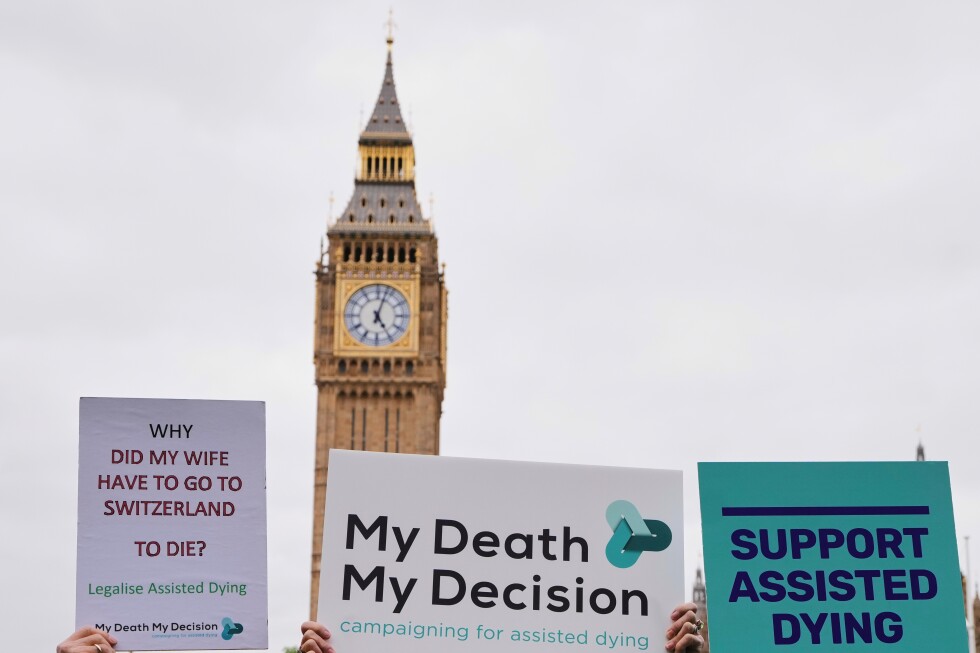
Meanwhile, the mainland UK debate continues to evolve along different timelines. The House of Commons passed the Terminally Ill Adults (End of Life) Bill in June, but progress has stalled in the House of Lords, where more than 1,000 proposed amendments have been introduced.
Supporters of assisted dying legislation claim these numerous amendments represent deliberate delay tactics by opponents. However, some Lords members defend their actions as necessary scrutiny to strengthen what they consider a potentially dangerous bill.
The debate has sparked passionate arguments on both sides. Opponents warn that vulnerable populations—including the disabled, elderly, ill, and those suffering from depression—could face subtle pressure to choose death rather than becoming a burden on others or the healthcare system.
In a related development, Welsh lawmakers recently granted consent for the UK Parliament to pass the bill, while Scottish lawmakers are scheduled to vote on their own assisted dying legislation in March.
The movement toward assisted dying in these British territories reflects a broader international trend. Several countries, including Canada, Belgium, the Netherlands, and parts of Australia, have already legalized various forms of assisted dying or euthanasia, though with differing eligibility requirements and safeguards.
Public opinion polls in the UK have consistently shown majority support for assisted dying under specific circumstances, though medical organizations remain divided on the issue. The Royal College of Physicians has adopted a neutral stance, while some disability rights groups continue to express concerns about potential abuses.
As Jersey moves forward with its legislation, observers will be watching closely to see how quickly royal assent follows and what impact this development might have on the ongoing debates in Westminster and Edinburgh.
Fact Checker
Verify the accuracy of this article using The Disinformation Commission analysis and real-time sources.

8 Comments
This is a significant step for Jersey, and the differences between their law and the UK bill highlight the nuances in how assisted dying can be regulated. Ongoing debates will likely focus on balancing individual rights, medical ethics, and societal concerns.
Assisted dying is a complex and emotive issue. Jersey’s approach, with its direct administration option, appears to strike a balance between patient choice and medical expertise. It will be interesting to see how this plays out on the ground.
The Channel Islands’ relative autonomy allows them to take a different approach than the UK on this sensitive issue. It will be informative to see how Jersey’s law works in practice and whether it influences the ongoing UK parliamentary debate.
Agreed. The UK bill faces significant hurdles, so Jersey’s model could provide a helpful reference point for lawmakers there as they continue to weigh the ethical and practical considerations around assisted dying.
Interesting development in the assisted dying debate. Jersey’s law seems to go further than the UK bill by allowing medical professionals to directly administer the lethal drugs. This could enable more humane end-of-life options for the terminally ill.
The direct administration provision in Jersey’s law is an interesting twist compared to the UK bill. It could provide more options for terminally ill patients, but also raises questions around the role of medical professionals in the process.
This seems like a pragmatic compromise that balances personal autonomy and medical oversight. The direct administration provision could ease suffering for terminally ill patients, though it will be important to have robust safeguards in place.
While a controversial topic, Jersey’s decision recognizes the need for terminally ill individuals to have the option of a dignified death. The UK could learn from this development as it grapples with its own assisted dying legislation.