


Listen to the article
Japan’s Prime Minister Secures Historic Parliamentary Victory
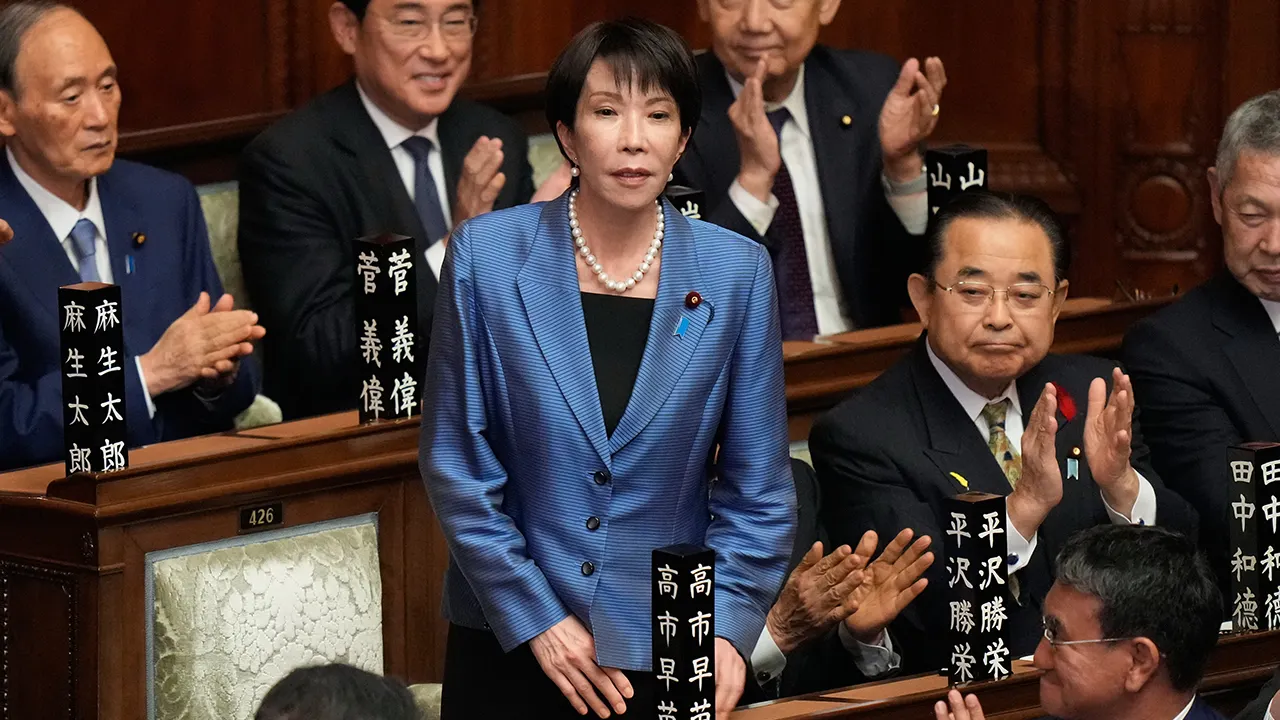
Japan’s Prime Minister Sanae Takaichi and her ruling Liberal Democratic Party (LDP) achieved a decisive victory in Sunday’s parliamentary elections, capturing approximately 316 seats in the 465-member lower house. The landslide win, along with allied parties, has secured a governing supermajority that provides Takaichi with a robust mandate to advance her conservative agenda focused on defense, immigration, and economic reforms.
The election outcome represents one of the strongest performances for the ruling party in years and solidifies Takaichi’s position just months after she made history as Japan’s first female prime minister. With the opposition fragmented, voters delivered a decisive result that gives her significant political capital to pursue her policy priorities.
“I am prepared to move forward with policies aimed at making Japan strong and prosperous,” Takaichi stated following the results, signaling her intent to implement reforms and strengthen national security measures.
The supermajority achieved by the LDP and its coalition partners marks a historic moment in Japanese politics—the first such parliamentary dominance since World War II. This commanding position will allow Takaichi’s government to more easily pass legislation and potentially pursue constitutional amendments that have long been on the conservative agenda.
Takaichi, who has cited former British Prime Minister Margaret Thatcher as a personal and political inspiration, has gained attention for her distinctive personal interests as well as her political positions. A heavy metal enthusiast and drummer, she brings an unconventional background to Japan’s top leadership position.
Her policy platform centers on several key priorities that will likely define her administration. These include boosting defense spending, revising security policies, stimulating economic growth, and maintaining a tougher posture toward regional threats, particularly China. Known for her hawkish stance on Beijing, Takaichi is expected to strengthen Japan’s strategic alignment with the United States.
“Takaichi’s landslide win shows other leaders that defiance of China can be popular with voters. Nobody has to appease or please Xi Jinping anymore,” Asia analyst Gordon Chang told Fox News Digital, highlighting the geopolitical significance of the election outcome.
The Japan-U.S. alliance appears poised to deepen under Takaichi’s leadership. She publicly expressed gratitude for President Trump’s support following her victory, thanking him for his congratulatory message and signaling continued alignment with Washington. Trump had praised her leadership after the results were announced, noting that her “bold and wise decision to call for an election paid off big time.”
U.S. officials welcomed the outcome, with Treasury Secretary Scott Bessent describing Takaichi as a strong ally and emphasizing that her leadership strengthens the strategic partnership between Washington and Tokyo. This relationship takes on added significance amid rising tensions in the Indo-Pacific region.
The snap election, called just months into her premiership, was widely viewed as a referendum on Takaichi’s leadership. The gamble has clearly paid dividends, giving her administration a clear path to implement its agenda through the remainder of the parliamentary term.
On domestic policy, Takaichi backs strengthening Japan’s defense posture and supports constitutional revision to expand the role of the military—a controversial issue in Japan given its post-war pacifist constitution. Economically, she has expressed support for the stimulus-driven policies associated with former Prime Minister Shinzo Abe, often referred to as “Abenomics.”
Analysts note that this electoral success comes at a critical juncture for Japan, which faces economic challenges at home and an increasingly complex security environment abroad. With China’s growing assertiveness in the region and ongoing tensions on the Korean Peninsula, Takaichi’s defense-oriented policies align with growing public concerns about regional stability.
The election results also reflect Japanese voters’ preference for political stability and continuity, as the LDP extends its decades-long dominance of Japanese politics despite recent leadership changes and political scandals.
As Takaichi prepares to translate her electoral momentum into concrete policy actions, her administration’s decisions will have significant implications not only for Japan’s domestic affairs but also for the broader geopolitical landscape in East Asia.
Fact Checker
Verify the accuracy of this article using The Disinformation Commission analysis and real-time sources.

14 Comments
Takaichi’s victory is historic as the first female prime minister of Japan. It will be interesting to see how she navigates gender dynamics in Japanese politics as she pursues her agenda.
The LDP’s supermajority provides Takaichi with significant political capital to advance her priorities. This could enable bold policy changes in the coming years.
Takaichi’s ties to Trump are noteworthy and may signal a closer alignment between Japan and the US under her leadership. This could have implications for regional geopolitics and trade dynamics.
The election results suggest a significant shift in Japanese politics towards more conservative and nationalist policies. This could shape the country’s domestic and foreign policies in the coming years.
This election result reflects a desire by Japanese voters for stronger national security and a more assertive foreign policy stance. Takaichi’s ties to Trump suggest she may align Japan more closely with the US.
Takaichi’s gratitude to Trump following the election victory suggests she may seek to strengthen Japan-US relations during her tenure as prime minister.
The fragmentation of the opposition parties seems to have been a key factor in the LDP’s landslide win. This could make it difficult for alternative policy visions to gain traction in the near term.
Takaichi’s focus on defense and security issues resonates with many Japanese voters, as reflected in the election outcome. This could shape her policy agenda in significant ways.
Takaichi’s victory represents a shift towards more conservative and nationalist policies in Japan. While this may appeal to some voters, it could also strain international relations and economic ties.
The LDP’s supermajority gives Takaichi a strong hand to push through her agenda. It will be important to monitor how she uses this political capital and the implications for Japan’s domestic and foreign policies.
I’m curious to learn more about Takaichi’s economic reform plans. Japan has faced economic challenges in recent years, so her ability to revitalize the economy will be closely watched.
The election results show a clear shift towards more nationalist and security-focused policies under Takaichi’s leadership. This could have ripple effects throughout the region.
This is a significant political shift in Japan. Takaichi’s conservative agenda and focus on defense, immigration, and economic reforms could have major implications for the country and the region. It will be interesting to see how her tenure unfolds.
Securing a supermajority is a big win for Takaichi and the LDP. This gives them a strong mandate to implement their policy priorities over the next several years.