


Listen to the article
Japan’s famed cherry blossoms have begun their annual show across the country, with officials announcing the first blooms significantly earlier than usual in multiple regions.
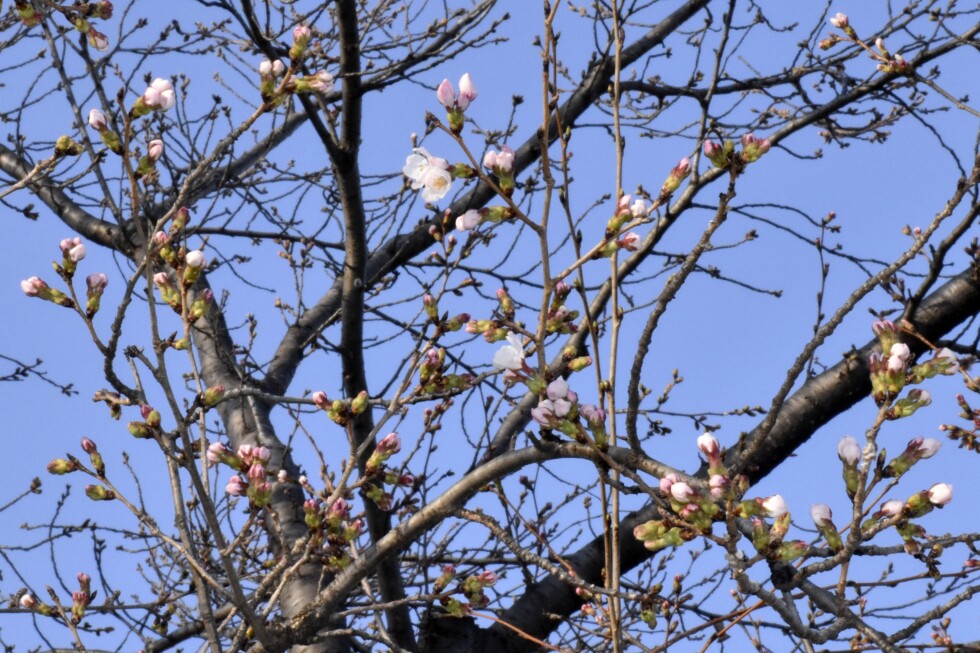
Government cherry blossom spotters from the Japan Meteorological Agency (JMA) confirmed Monday the official start of sakura season after examining benchmark Somei Yoshino trees in three cities. The observations took place in Kochi in southwestern Japan, along with Gifu and Yamanashi in the central region of the country.
Officials declared the season officially underway after finding more than five flowers blooming on each of the designated trees, meeting the minimum threshold for the announcement. The Kochi tree flowered first for the third consecutive year, appearing six days earlier than average. The benchmark trees in Gifu and Yamanashi bloomed even further ahead of schedule, with flowers appearing nine days before their typical timeframe.
Shinobu Imoto from the Kochi Meteorological Agency pointed to specific weather patterns as potential factors in the early blooming. Speaking to TBS television, Imoto suggested that reduced rainfall during winter months combined with extended hours of sunshine likely contributed to the accelerated flowering schedule.
The timing of Japan’s cherry blossoms has taken on increasing significance in recent years as scientists track the impacts of climate change. Records of cherry blossom blooming in Kyoto date back over 1,200 years, with research showing a trend toward earlier flowering that accelerated in the last century as global temperatures have risen.
Cherry blossoms typically reach their peak between late March and early April, a period that coincides with important transitions in Japanese society. The fleeting beauty of the blossoms has become deeply intertwined with the start of Japan’s new school and business year, making sakura season both a natural phenomenon and a cultural milestone.
The blooming period transforms parks and streets across Japan, drawing millions of residents and tourists who participate in “hanami,” the traditional custom of viewing and celebrating the cherry blossoms. Many Japanese gather for picnics and walks beneath the flowering trees, a practice that dates back centuries.
The economic impact of sakura season is substantial, particularly for Japan’s tourism sector. Before the COVID-19 pandemic restricted international travel, the spring cherry blossom season represented one of Japan’s busiest tourism periods, with visitors from across Asia and around the world traveling specifically to witness the blooms.
However, the growing popularity of cherry blossom viewing has created challenges for communities near popular viewing spots. Local residents have increasingly voiced concerns about environmental impacts, including littering, noise pollution, and congestion issues related to overtourism. Many cities have implemented management strategies to balance visitor enjoyment with environmental protection and community needs.
Cherry blossoms hold profound cultural significance in Japan that extends far beyond their aesthetic appeal. Sakura have influenced Japanese literature, poetry, art, and philosophy for centuries, often serving as metaphors for life’s beauty and impermanence. The brief blooming period—typically lasting just one to two weeks—embodies the Buddhist concept of mono no aware, or the pathos of things, teaching appreciation for transient beauty.
As climate patterns continue to shift globally, scientists and cultural observers alike are watching Japan’s cherry blossom season as both a natural barometer of environmental change and a window into how traditional cultural practices adapt to new realities.
The early blooming in Kochi, Gifu and Yamanashi signals the beginning of a northward progression of cherry blossoms that will continue across Japan in the coming weeks, culminating in the northern island of Hokkaido by May.
Fact Checker
Verify the accuracy of this article using The Disinformation Commission analysis and real-time sources.

15 Comments
The early arrival of Japan’s cherry blossoms is both beautiful and concerning. I hope the people of Japan can still find ways to celebrate this cherished tradition, even as the effects of climate change become more apparent.
It’s fascinating to see the cherry blossoms blooming so much earlier this year in parts of Japan. I wonder what other changes in seasonal patterns we might observe in the coming years as the climate continues to shift.
Good point. This early flowering is likely just the tip of the iceberg when it comes to the environmental changes we’ll see due to global warming. Continued monitoring and research will be crucial.
The early arrival of the cherry blossoms is a sign of the changing climate. I hope the people of Japan can still enjoy the beautiful seasonal display, even if it’s happening sooner than usual.
You’re right, the cherry blossom season is an important cultural tradition in Japan. Hopefully the flowers will still bring joy, even with the shift in timing.
It’s remarkable that the cherry blossoms are flowering so much earlier in Kochi, Gifu, and Yamanashi. I wonder if this trend will continue in future years as the climate continues to warm.
Good point. The meteorological agency seems to attribute the early blooming to specific weather patterns this year, but it will be interesting to see if this becomes a more regular occurrence.
The early arrival of Japan’s cherry blossoms is a fascinating phenomenon. I wonder how this might impact the traditional hanami (flower-viewing) festivals and celebrations that are so central to Japanese culture.
While it’s concerning to see the cherry blossoms blooming so far ahead of schedule, I’m glad the meteorological agency is closely monitoring the situation and providing insights into the potential drivers behind this shift.
Yes, the agency’s observations and explanations are helpful for understanding the environmental factors at play. Continued tracking of these changes will be important.
The early flowering of Japan’s iconic cherry blossoms is a visible sign of how climate change is impacting seasonal patterns around the world. I hope the people of Japan can still find ways to celebrate this beloved tradition.
Interesting to see the cherry blossoms blooming so early this year in Japan. I wonder if the warmer temperatures and weather patterns are driving this shift in the typical flowering timeline.
Yes, it seems the reduced rainfall and extra sunshine were key factors behind the early blooming. Climate change may be playing a role in the changing seasonal patterns.
It’s remarkable to see the cherry blossoms blooming up to 9 days earlier than usual in some regions of Japan. This is a clear sign that climate change is disrupting established seasonal patterns.
Absolutely. The meteorological agency’s findings underscore the need to closely monitor the impacts of a warming climate on natural cycles and ecosystems.