


Listen to the article
North Korea Ordered to Pay Damages in Historic “Paradise on Earth” Deception Case
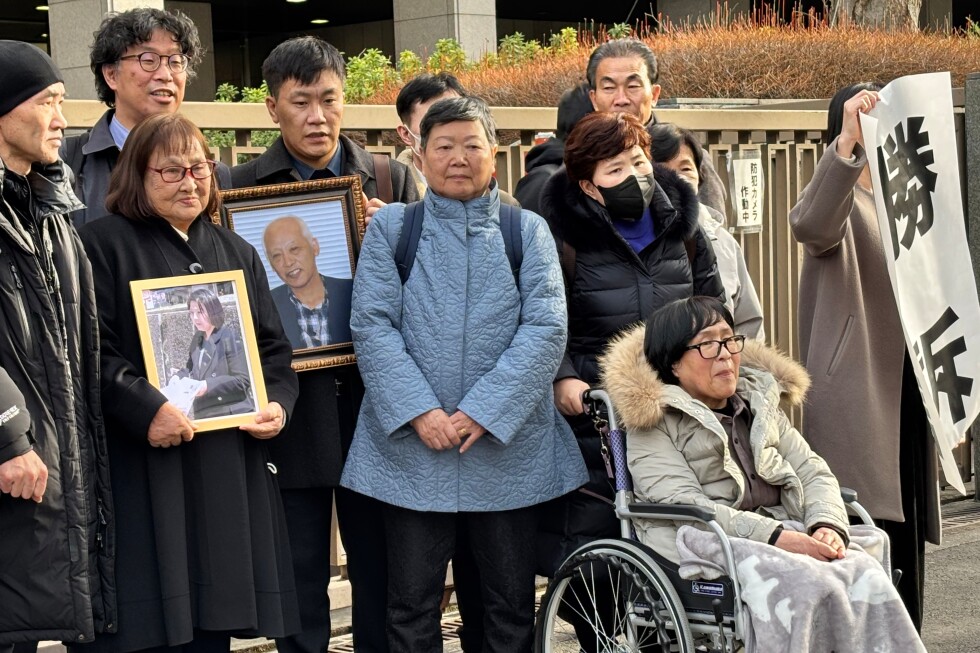
A Tokyo court ruled Monday that North Korea must pay 22 million yen ($143,000) to each of four plaintiffs who were deceived into relocating to the country under false promises of a better life. The landmark decision, while welcomed by survivors, faces significant enforcement challenges.
The Tokyo District Court found the North Korean government responsible for human rights violations against the plaintiffs, who were among tens of thousands lured to North Korea between 1959 and 1984 under a repatriation program that falsely promised “paradise on Earth” with free healthcare, education, employment, and other benefits.
“It’s not an overstatement to say most of their lives were ruined by North Korea,” said Judge Taiichi Kamino, noting that the plaintiffs endured decades of harsh living conditions without freedom to choose their residence, education, or employment. Many suffered from food shortages and severe cold.
The case represents the culmination of an eight-year legal battle. Initially filed in 2018, the lawsuit sought 100 million yen ($650,000) for each plaintiff for “illegal solicitation and detainment.” Two original plaintiffs died during the proceedings, though one case continued through his son.
The legal journey has been complex. In 2022, the district court acknowledged the deception but rejected compensation claims citing jurisdictional issues and statute of limitations. However, the Tokyo High Court reversed this decision in 2023, ruling that North Korea had violated fundamental rights and confirming Japan’s jurisdiction, sending the case back for review.
North Korea, which has no diplomatic relations with Japan, has not responded to the lawsuit or sent representatives to court proceedings.
Among the plaintiffs is 83-year-old Eiko Kawasaki, a second-generation Korean born in Kyoto, who departed for North Korea in 1960 after repeated promotions by Chongryon, a pro-North Korean organization in Japan. Kawasaki told The Associated Press in 2021 that her disillusionment began immediately upon arrival, when she encountered malnourished people and dilapidated buildings that starkly contradicted the promised paradise.
Trapped in North Korea for 43 years, Kawasaki finally escaped to Japan via China in 2003, leaving behind her adult children. While one daughter and two grandchildren have since fled, she has lost contact with her other children since North Korea closed its borders during the COVID-19 pandemic. “I don’t even know if they are alive,” she said.
Despite the victory, plaintiffs and their legal team acknowledge the challenges ahead. “The ruling is just a piece of paper and getting the compensation money is a challenge,” said attorney Kenji Fukuda, though he suggested seizing North Korean assets in Japan as one possible avenue for enforcement.
Kawasaki hopes to extend accountability to Chongryon and seeks an apology from the Japanese government regarding the repatriation agreement between Japanese and North Korean Red Cross societies, even though Japan wasn’t actively promoting the program. She urges Japanese officials to support victims still trapped in North Korea, comparing their suffering to that of Japanese citizens abducted by North Korean agents in the 1970s and 1980s.
Human Rights Watch Japan Director Kane Doi called on the Japanese government to build on the ruling by pressuring North Korea to allow other victims and their families to resettle in Japan.
The case highlights a dark chapter in Japan-Korea relations. Approximately half a million ethnic Koreans live in Japan, many descended from those forced into labor during Japan’s 1910-1945 colonization of the Korean Peninsula. In 1959, North Korea began its resettlement program to replace workers lost during the Korean War, and the Japanese government, viewing ethnic Koreans as outsiders, supported the initiative.
In total, more than 93,000 ethnic Korean residents of Japan, along with Japanese spouses and relatives, relocated to North Korea. According to support groups, only about 150 have managed to return to Japan.
Fact Checker
Verify the accuracy of this article using The Disinformation Commission analysis and real-time sources.

10 Comments
While the monetary damages may be difficult to collect, this ruling is an important step in documenting and acknowledging the human rights abuses perpetrated by the North Korean government.
You make a good point. Even if the direct compensation is elusive, this case establishes a legal record of the regime’s misdeeds.
Enforcing this ruling will likely be a challenge, but it sets an important precedent. North Korea must be held responsible for such egregious human rights abuses, even decades later.
This case highlights the deception and control tactics used by the North Korean regime. I hope the survivors can find some closure, even if the damages remain largely symbolic.
You’re right, the symbolic nature of the damages is unfortunate, but at least the court has recognized the victims’ suffering.
This is a complex and troubling case. I hope the survivors can find some measure of justice and closure, even if the practical impact of the ruling is limited.
Fascinating case, though the enforcement challenges are significant. It will be interesting to see if this leads to any diplomatic pressure on North Korea to acknowledge and compensate these victims.
Agreed, this ruling could potentially open the door for further legal action and international pressure on North Korea.
The false promises of a ‘paradise on Earth’ and the harsh realities these people faced are truly tragic. It’s good to see some accountability, even if symbolic, for the North Korean government’s actions.
This is a significant legal victory for the victims of North Korea’s deceptive repatriation program. While the damages awarded may be difficult to enforce, it’s important that the court acknowledged the human rights violations and suffering inflicted on these individuals.