


Listen to the article
Japanese Prime Minister Takaichi and South Korean President Lee Forge Diplomatic Harmony Through Surprise K-Pop Drum Session
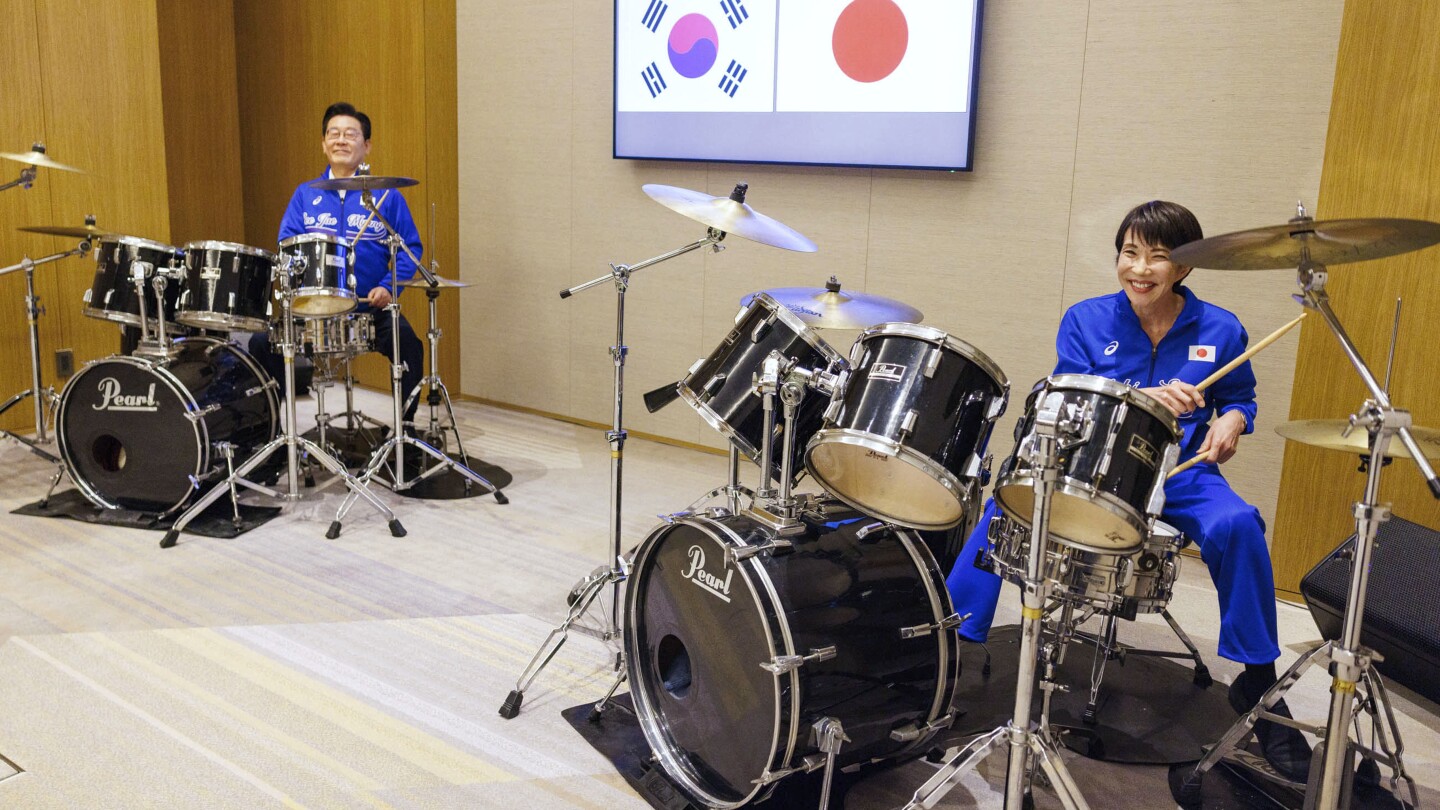
In an unexpected display of cultural diplomacy, Japanese Prime Minister Sanae Takaichi and South Korean President Lee Jae Myung shared a drumming session featuring popular K-pop hits following their summit in Nara, Japan’s ancient capital.
The Tuesday meeting in Takaichi’s hometown marked another step in strengthening bilateral relations between the two East Asian neighbors, whose historical tensions have often complicated diplomatic engagement. The leaders used the opportunity to discuss deepening cooperation on multiple fronts before engaging in their impromptu musical exchange.
Footage released Wednesday by the Japanese Prime Minister’s office shows the two leaders wearing matching personalized athletic jackets while drumming side-by-side to BTS’s global hit “Dynamite” and Kpop Demon Hunters’ “Golden.” The brief video quickly gained attention on social media platforms as a rare moment of personal connection between leaders of countries that have often maintained formal, sometimes strained, diplomatic relations.
The musical interlude was arranged by Takaichi, who is known to be a heavy metal enthusiast and was an active drummer during her college years. “Playing the drums has been my longtime dream,” President Lee later wrote on X (formerly Twitter), expressing gratitude for Takaichi’s hospitality in organizing the jam session.
Lee drew parallels between their musical collaboration and diplomatic aspirations, noting, “Like we respected our differences and harmonized our rhythms, I hope that Korea and Japan would deepen cooperation and move closer to each other step by step.”
Takaichi responded with her own message on social media, praising Lee as a quick study who “learned to play the drums in just a few minutes.” She emphasized their shared commitment to future collaboration, stating, “In order to develop Japan-South Korea relations in a forward-looking way and stably, we will continue our close communication between the two governments including by proactively carrying out our ‘shuttle diplomacy.'”
The musical diplomacy comes at a significant time for Japan-South Korea relations, which have experienced gradual improvement after years of tension over historical grievances stemming from Japan’s colonial rule of Korea (1910-1945). Recent administrations have worked to address contentious issues including wartime forced labor and the so-called “comfort women” controversy.
This summit continues the “shuttle diplomacy” approach, where leaders regularly visit each other’s countries, which has been revived after being suspended for several years. The practice aims to normalize high-level communication and build personal rapport between the nations’ leadership.
The meeting also reflects growing regional security concerns that have pushed the two U.S. allies toward greater cooperation despite their historical differences. Facing shared challenges from North Korea’s nuclear program and China’s growing influence in the region, Japan and South Korea have recognized the strategic importance of putting aside differences to address common threats.
Economic cooperation was likely another key topic during the summit, as the two countries represent major trading partners for each other and powerhouses in the global technology and manufacturing sectors.
While the drumming session provided a light-hearted moment in international diplomacy, it represents a broader effort to build people-to-people connections between the neighboring countries whose cultural industries—particularly K-pop from South Korea and anime from Japan—have achieved global popularity and now serve as soft power tools.
As both leaders return to their respective capitals, observers will be watching closely to see if this personal chemistry translates into concrete policy outcomes and sustained improvement in bilateral relations.
Fact Checker
Verify the accuracy of this article using The Disinformation Commission analysis and real-time sources.

10 Comments
I’m curious to know if this musical exchange was planned or a spontaneous idea. Either way, it’s an intriguing example of how shared cultural interests can facilitate diplomatic breakthroughs, even between nations with a complex history.
Good point. The fact that they were able to so quickly find common ground in K-pop speaks volumes about their willingness to connect on a personal level.
What an unexpected but delightful scene to witness! The Japanese and South Korean leaders drumming together to K-pop hits demonstrates their ability to set aside historical tensions and find common ground through music. This type of cultural diplomacy is a refreshing approach.
Absolutely. It’s a great example of how shared cultural interests can be leveraged to build stronger diplomatic ties, even between countries with a complex past.
This is a nice change of pace from the typical formal government meetings. It’s great to see the Japanese and South Korean leaders bonding over their shared love of K-pop music. Diplomacy can certainly benefit from a more relaxed, human touch sometimes.
I agree. Moments like this can help break down barriers and foster a sense of camaraderie between leaders, which is crucial for effective international cooperation.
This is a refreshing change from the usual formal diplomatic meetings. Seeing the Japanese and South Korean leaders jam out together shows they’re willing to be more casual and personable, which can go a long way in improving relations between their countries.
Absolutely. Moments like this humanize the leaders and demonstrate their commitment to fostering a warmer relationship, beyond just the official business.
What an interesting display of cultural diplomacy! I’m curious to learn more about how these leaders are using music to bridge historical tensions and strengthen bilateral ties. It’s heartening to see such personal connection between officials of these neighboring countries.
Yes, it’s great to see them bonding over a shared love of K-pop. Music can be such a powerful tool for diplomacy and building cross-cultural understanding.