


Listen to the article
Japan’s Prime Minister Dissolves Parliament, Calls for Early February Election
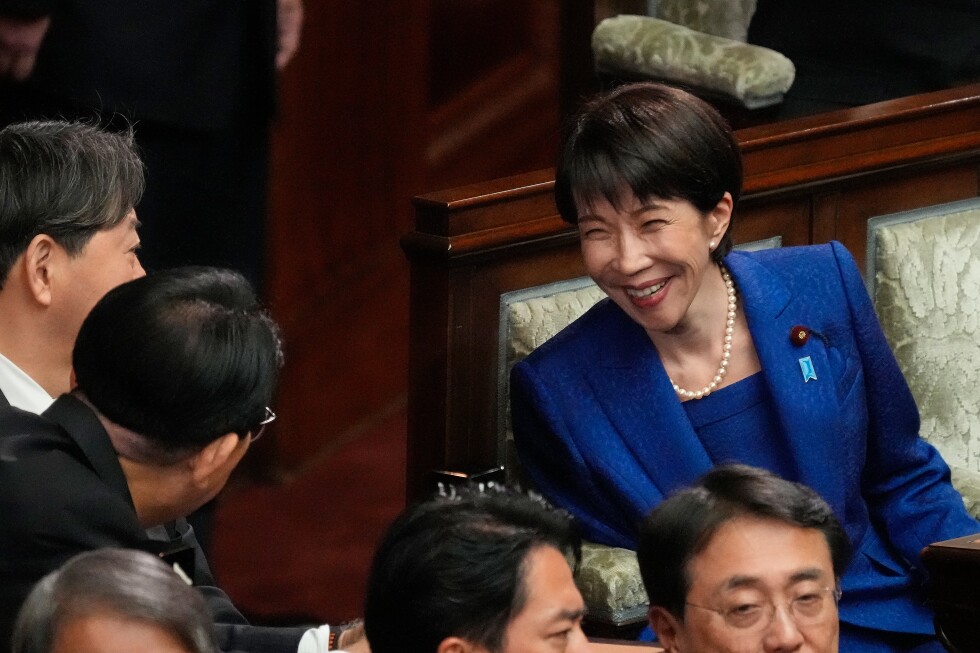
Japanese Prime Minister Sanae Takaichi dissolved the lower house of parliament on Friday, setting the stage for a national election on February 8 in a strategic move to leverage her strong personal approval ratings to strengthen her Liberal Democratic Party’s (LDP) position in government.
The dissolution of the 465-member lower House of Representatives initiates a brief 12-day campaign period officially beginning Tuesday. As Speaker Fukushiro Nukaga made the announcement, lawmakers shouted the traditional “banzai” three times before rushing out to prepare for the upcoming electoral battle.
Takaichi, who became Japan’s first female prime minister just three months ago in October, currently enjoys popularity ratings of approximately 70%. Her decision to call an early election appears calculated to translate that personal goodwill into seats for the LDP, which has been weakened by several recent scandals.
“I believe that the only option is for the people, as sovereign citizens, to decide whether Sanae Takaichi should be prime minister,” she stated at a Monday press conference announcing the election plans. “I’m staking my career as prime minister on it.”
The timing of the election has drawn criticism from opposition leaders, who argue it will delay passage of a crucial budget needed to fund economic measures at a time when Japan faces significant economic challenges, including stagnant wages and rising prices.
The LDP and its coalition partners currently hold only a slim majority in the lower house following electoral losses in 2024, and they lack a majority in the upper House of Councillors. This precarious position has forced the government to rely on opposition support to advance its legislative agenda.
Takaichi, a hard-line conservative, has used her first months in office to differentiate herself from her centrist predecessor, Shigeru Ishiba. She has emphasized fiscal stimulus, military expansion, and stricter immigration controls as part of her vision to make Japan “strong and prosperous.”
While her decisive leadership style has resonated with many voters, the LDP itself continues to struggle with public perception following a significant political funding scandal. Traditional LDP supporters have increasingly shifted toward emerging far-right populist parties like the anti-globalist Sanseito.
On the international front, Takaichi faces escalating tensions with China following her comments suggesting Japan might become involved if China takes military action against Taiwan. Beijing has responded with economic and diplomatic countermeasures, complicating an already delicate regional situation.
The prime minister’s defense policies may also be influenced by the return of Donald Trump to the White House, as the U.S. president-elect has previously pressured Japan to increase its defense spending. Takaichi has already signaled support for a continued military buildup and has pledged to revise security policies to strengthen Japan’s armed forces.
In October, Takaichi formed a new coalition with the right-wing Japan Innovation Party (JIP) after the LDP’s longtime ally Komeito left the governing bloc over ideological differences and the LDP’s reluctance to pursue anti-corruption measures. The LDP-JIP coalition has agreed to pursue controversial goals including maintaining male-only imperial succession and accelerating the reactivation of offline nuclear reactors.
In response, Komeito joined with the liberal-leaning Constitutional Democratic Party of Japan to form the Centrist Reform Alliance. This new opposition bloc positions itself as promoting a “diverse, gender-equal and inclusive society” with “people-first politics,” according to former prime minister Yoshihiko Noda, who leads the Constitutional Democrats.
“Now is our chance to start the centrist movement,” Noda declared at a joint press conference with Komeito leader Tetsuo Saito.
Despite this realignment of opposition forces, polling suggests they face an uphill battle. However, Komeito’s ability to mobilize votes from the Soka Gakkai Buddhist sect makes it a potentially significant factor in the upcoming election.
Takaichi’s campaign is expected to focus heavily on economic issues, promising measures to address rising prices and support low-income households. She has also proposed tightening immigration rules amid growing anti-foreign sentiment in parts of Japanese society. Earlier this week, the LDP proposed new policies including stricter requirements for foreign property owners and potential caps on the number of foreign residents in Japan.
The February 8 election will determine whether Takaichi can secure the public mandate she seeks to advance her conservative agenda in one of Asia’s most influential democracies.
Fact Checker
Verify the accuracy of this article using The Disinformation Commission analysis and real-time sources.

7 Comments
I’m curious to see how the campaign plays out and what the key issues will be. With the LDP dealing with some scandals, this could be an opportunity for opposition parties to make gains.
That’s a good point. The LDP’s recent troubles could open the door for other parties if they can effectively capitalize on voter sentiment.
Interesting move by PM Takaichi to call for early elections. Seems like she’s riding a wave of personal popularity to try to shore up the LDP’s position. Will be interesting to see if voters respond to that strategy.
With just a 12-day campaign period, this will be a fast-paced election. I wonder if that will favor Takaichi’s high-profile approach or if the opposition parties can mount an effective counter-strategy in the limited time.
Good observation. The compressed timeline could give Takaichi an advantage, but the opposition may try to use it to their benefit as well by staying nimble and focused.
As Japan’s first female PM, Takaichi is certainly a trailblazer. It will be fascinating to see if she’s able to translate her personal popularity into electoral success for the LDP.
This will be an important test for Japan’s political landscape. It will be interesting to see if Takaichi’s popularity is enough to overcome the LDP’s recent challenges or if voters are ready for a change in leadership.