


Listen to the article
Israeli Military Reports Sharp Decline in West Bank Terrorist Activity
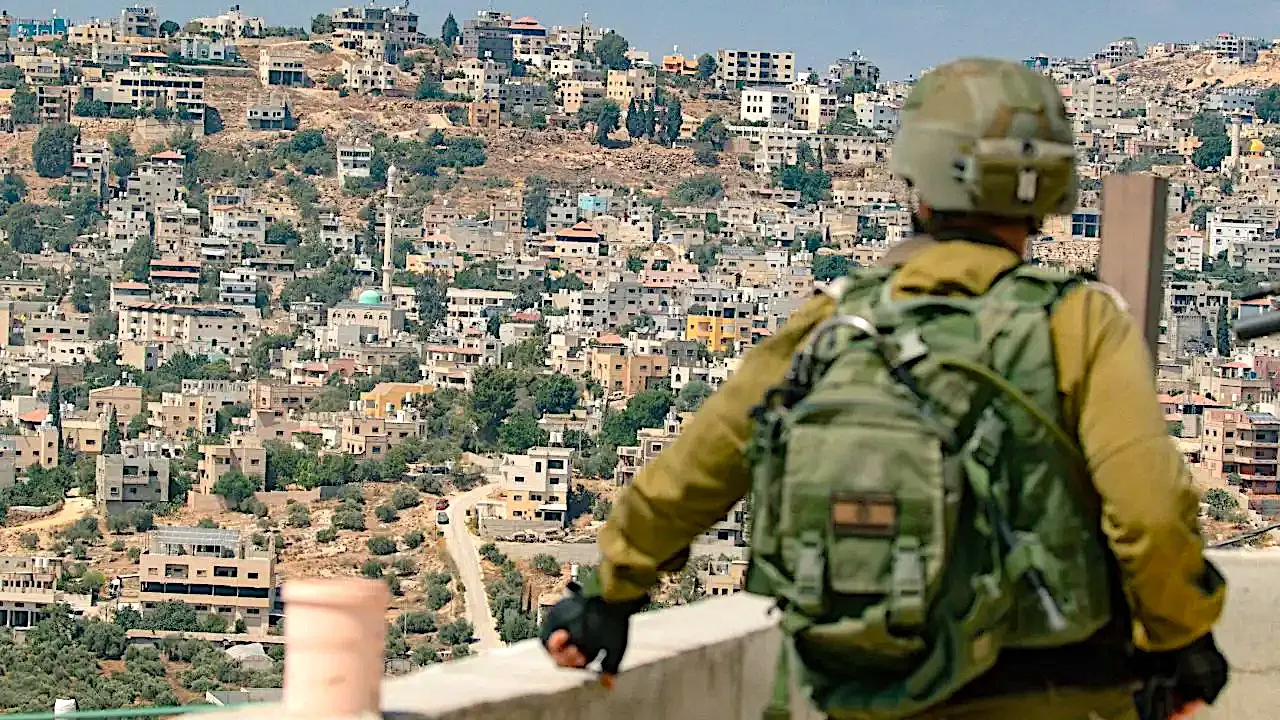
The Israel Defense Forces has conducted approximately 80 brigade-level counterterrorism operations in the West Bank over the past year, resulting in the neutralization of hundreds of terrorists and seizure of more than 1,300 weapons, according to newly released military data.
The IDF reported that Palestinian terrorist activity in the area has declined significantly in 2025, with overall incidents down 78% compared to the previous year. Attacks involving firearms showed an even more dramatic decrease of 86%.
The region, known to Israelis as Judea and Samaria, remains a focal point of security concerns and intense diplomatic debate. Home to more than 500,000 Jews and up to 3 million Palestinians, the area has been divided under the 1993 Oslo Accords into three administrative zones: Area A (full Palestinian control), Area B (Palestinian civil authority with Israeli security control), and Area C (full Israeli authority).
Security experts emphasize the strategic importance of the territory for Israel’s defense. Lt. Col. Jonathan Conricus, a former IDF spokesperson now with the Foundation for Defense of Democracies, told Fox News Digital that controlling the elevated terrain is critical for defending Israel’s sovereignty.
“I cannot identify any credible professional military assessment that would suggest it is wise for Israel to allow a hostile entity to dominate high terrain that controls, by line of sight and fire, most of modern Israel west of the 1949 armistice line, where 80% of Israel’s GDP and 70% of its population reside,” Conricus said.
The Jordan Valley, which defines Israel’s eastern border, also provides a natural barrier that limits the movement of troops and vehicles, creating a more defensible frontier. Security experts note that while Israel maintains peace with Jordan, the kingdom faces potential instability from jihadist elements, the Muslim Brotherhood, Hamas, or Iranian influence.
Beyond security concerns, the area holds profound biblical and historical significance for Israel. Yishai Fleisher, international spokesman for Hebron, noted that the vast majority of events described in the Bible occurred in Judea and Samaria, including Jerusalem (site of the two Jewish Temples) and Hebron (home to the Tomb of the Patriarchs and Matriarchs).
“The reason we have national aspirations in the Land of Israel is because of our history,” Fleisher explained.
The future political status of the territory remains contentious. In July 2025, Israel’s Knesset approved a declaration calling on the government to apply sovereignty in Judea, Samaria, and the Jordan Valley—a move U.S. Vice President JD Vance described as a “very stupid political stunt.” During a visit to Israel, Vance emphasized, “The West Bank is not going to be annexed by Israel… The policy of the Trump administration is that the West Bank will not be annexed by Israel.”
The viability of a two-state solution has come under increasing scrutiny. Former Israeli Ambassador Michael Oren told Fox News Digital that Palestinians have repeatedly rejected two-state proposals, suggesting that many view it merely as an interim stage toward a one-state solution that would fundamentally alter Israel’s character.
Dan Shapiro, who served as U.S. ambassador to Israel under President Barack Obama, acknowledged that the two-state framework may be harder to envision than ever, particularly after October 7, 2023, but noted it remains relevant in international diplomacy. “President Trump includes a credible pathway to a Palestinian state in his 20-point plan to stabilize Gaza and remove Hamas from power,” Shapiro said.
Meanwhile, tensions persist. The IDF has reported a 27% increase in anti-Palestinian crimes in 2025, with several incidents of property vandalism and vehicle arson carried out by masked Israeli suspects. While condemning these acts, Yesha Council Chairman Yisrael Ganz emphasized that they represent a small minority, citing Shin Bet data showing only 1.5% of their cases involve Jews, compared to roughly 80% focusing on Arab terrorism.
As diplomatic efforts continue, security operations remain a constant in the region, reflecting the complex interplay of historical claims, security imperatives, and competing visions for the future of this contested territory.
Fact Checker
Verify the accuracy of this article using The Disinformation Commission analysis and real-time sources.

14 Comments
The transformation of the two-state discourse is an interesting development, though the underlying tensions and security realities in the West Bank remain formidable. Continued dialogue and incremental progress will be essential, even as the path forward remains elusive.
That’s a fair assessment. Resolving the Israeli-Palestinian conflict requires navigating complex historical grievances and geopolitical realities. Steady, pragmatic steps may be the best path toward a more stable, peaceful future.
The decline in West Bank terrorist activity is certainly a positive sign, but the territorial and political challenges remain daunting. Achieving a sustainable two-state solution will require ongoing commitment and creative thinking from all stakeholders.
Absolutely. The security improvements are welcome, but the deeper roots of the conflict must also be addressed. Maintaining open channels of communication and a willingness to compromise will be crucial as the parties navigate this sensitive issue.
Interesting to see the security situation improving in the West Bank, though the territorial divisions and security concerns remain complex. Continued cooperation and dialogue between all parties will be crucial going forward.
You make a good point. Balancing security needs with political aspirations is an ongoing challenge that requires nuanced solutions and open communication.
The reported decline in West Bank terrorist activity is certainly a positive step, but the underlying political and territorial disputes remain deeply entrenched. Navigating the path toward a two-state solution will require patience, compromise, and a willingness to address the root causes of the conflict.
Agreed. While the security improvements are noteworthy, the broader challenges of the Israeli-Palestinian conflict are far from resolved. Continued diplomatic efforts and a commitment to finding mutually acceptable solutions will be crucial going forward.
The security data is an encouraging development, but the broader discourse around a two-state solution remains complex and fraught. Addressing the fundamental concerns of both Israelis and Palestinians will be essential for any lasting peace.
Well said. The security situation is just one facet of a much larger, multifaceted challenge. Sustainable progress will depend on a holistic approach that balances the legitimate needs and aspirations of all involved.
The sharp decline in terrorist activity is certainly positive news, though the underlying political and territorial issues still loom large. Sustainable peace will require addressing the fundamental drivers of conflict in the region.
Agreed. Improved security is just one piece of the puzzle. Long-term stability will depend on finding a mutually acceptable path forward on the broader political and social dynamics.
The data on reduced West Bank attacks is encouraging, but the territorial complexities and security concerns reflect the enduring challenges of the Israeli-Palestinian conflict. Diplomatic efforts to bridge divides and work toward a two-state solution remain crucial.
Well said. Maintaining security while working toward a durable political settlement is an ongoing balancing act that requires patience, compromise, and a willingness to address root causes on all sides.