


Listen to the article
Israeli lawmakers have advanced controversial legislation that would place the entire Western Wall in Jerusalem under Orthodox rabbinical control, a move that has alarmed liberal Jewish denominations and threatens to deepen religious divisions.
In a preliminary vote on Wednesday, Israel’s parliament approved the bill by a margin of 56-47. The legislation, sponsored by far-right lawmaker Avi Maoz, would empower the country’s Orthodox chief rabbinate to oversee all prayer activities at Judaism’s holiest prayer site.
If passed into law, the bill could effectively abolish the wall’s egalitarian section, where men and women currently pray together. The legislation stipulates that prayer conducted contrary to the chief rabbinate’s specifications would constitute “desecration,” an offense punishable by up to seven years imprisonment.
“It’s criminalizing the way the vast majority of Jews pray in the heart of the holiest site of the capital of the Jewish state,” said Orly Erez-Likhovski, executive director of the Israel Religious Action Center, which serves as the social justice arm of Israel’s Reform movement.
The timing of the vote appears strategic, coming shortly after Israel’s Supreme Court ordered the government on February 19 to begin repairing the egalitarian prayer section, according to analysis from the Israel Democracy Institute, a Jerusalem-based think tank. Prime Minister Benjamin Netanyahu’s government had previously agreed to undertake these repairs a decade ago as part of a compromise aimed at promoting religious pluralism.
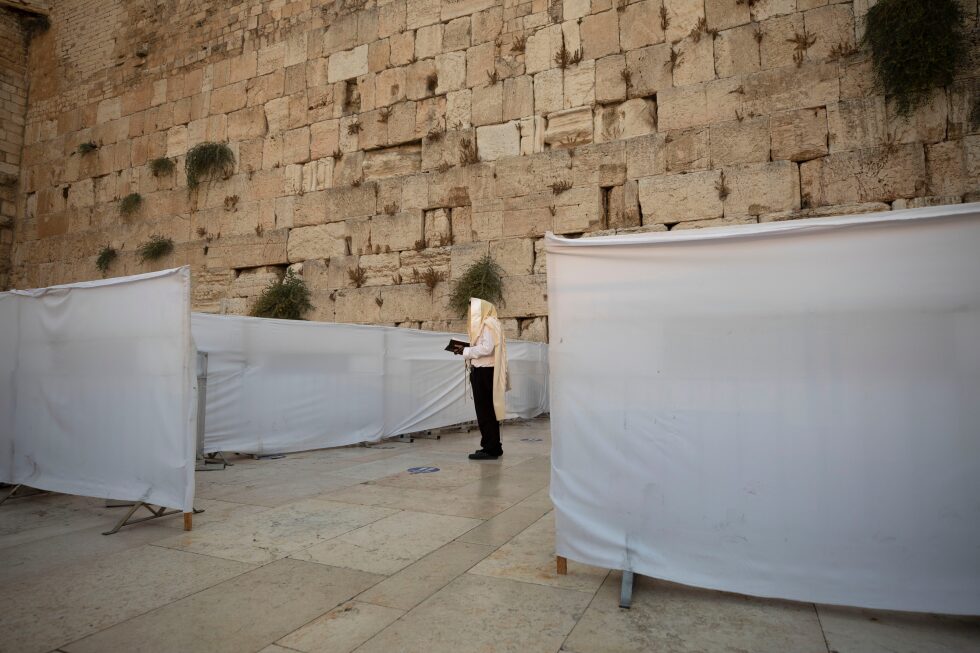
The Western Wall, a remnant of the Second Temple destroyed by Romans in 70 CE, holds immense religious significance for Jews worldwide. While its main plaza operates under strict Orthodox supervision with gender-segregated prayer areas, the less visible egalitarian section has provided an alternative for non-Orthodox worshippers.
This separate prayer space, however, remains far less accessible than the main plaza. Hidden behind a small doorway, the egalitarian section has fallen into disrepair. Since 2018, when a massive stone dislodged from the wall and fell onto the prayer platform, visitors have been prevented from touching the ancient stones by protective barriers. The area stands in stark contrast to the well-maintained main esplanade where gender-segregated prayer occurs daily.
The proposed legislation threatens to further strain already tense relations between Israel and the Reform movement, which represents the largest denomination of organized Judaism in the United States. While Reform Judaism maintains a dominant presence in America, it holds limited influence in Israel, where the Orthodox rabbinate maintains near-complete control over religious affairs including marriages and burials.
“Wherever ultra-Orthodox have the upper hand or have control, they’re trying to force gender segregation. They are trying to make women disappear,” Erez-Likhovski said.
The Israel Religious Action Center is currently representing the Reform movement, the Conservative movement, and Women of the Wall—a group advocating for gender equality at the site—in a Supreme Court case seeking to preserve and repair the egalitarian section.
Women of the Wall has long campaigned for equal prayer rights at the Western Wall, challenging Orthodox restrictions that prohibit women from reading from the Torah or wearing prayer shawls traditionally reserved for men at the main plaza.
The bill must still pass several additional legislative hurdles before becoming law, and no timeline has been established for when it might face a final vote of approval. However, with the current coalition government including several ultra-Orthodox and far-right parties that advocate for greater religious influence in public life, observers believe the legislation stands a reasonable chance of advancement.
Critics view the bill as part of a broader pattern of religious restrictions that could alienate diaspora Jews, particularly those from more liberal denominations that represent the majority of American Jewry. Should the legislation pass, it would likely trigger legal challenges and further complicate Israel’s relationship with Jewish communities abroad.
Fact Checker
Verify the accuracy of this article using The Disinformation Commission analysis and real-time sources.

6 Comments
Moves to restrict religious pluralism at the Western Wall are concerning. Maintaining open access and accommodating different traditions is crucial at such an important holy site.
The Western Wall is a potent symbol of Jewish identity and faith. Any changes to its governance and use should be made cautiously and through inclusive dialogue, not unilateral actions.
This is a sensitive issue regarding religious freedom and diversity at a sacred site. I hope lawmakers can find a balanced approach that respects all Jewish traditions and practices.
This is a complex issue with deep historical and cultural significance. I hope the Israeli government can find a compromise that respects the diversity of Jewish religious practice.
Restricting access and criminalizing certain prayer practices at the Western Wall seems concerning. Preserving religious pluralism and inclusion is important, even at such a historic location.
I agree, this legislation appears to favor one religious tradition over others. An egalitarian approach that welcomes all Jewish denominations would be more just.