


Listen to the article
Israel’s government has approved 19 new Jewish settlements in the occupied West Bank, Finance Minister Betzalel Smotrich announced Sunday, marking a significant expansion that threatens prospects for a future Palestinian state.
The latest approvals bring the total number of new settlements established during the current far-right government’s tenure to 69, a record pace of expansion according to Smotrich, who has championed settlement growth. This increase represents nearly a 50% jump in the West Bank’s settlement count, from 141 in 2022 to 210 today, based on figures from Peace Now, an anti-settlement watchdog organization.
Among the newly approved settlements are Kadim and Ganim, two areas previously evacuated in 2005 as part of Israel’s disengagement from Gaza. Their reestablishment follows the Israeli government’s March 2023 decision to repeal the act that originally mandated their evacuation and prohibited Israeli reentry.
The Cabinet decision includes retroactive legalization of previously established outposts and creation of settlements on land where Palestinians were previously evacuated. These settlements vary considerably in size, ranging from single dwellings to large residential developments with multiple high-rise buildings.
This aggressive settlement expansion occurs as the United States attempts to advance the second phase of the Gaza ceasefire that took effect on October 10. The U.S.-brokered plan envisions a potential pathway toward Palestinian statehood—a goal directly undermined by continued settlement activity in the West Bank, which is widely considered illegal under international law.
Israel captured the West Bank, East Jerusalem, and Gaza—territories Palestinians claim for their future state—during the 1967 war. Since then, Israel has established communities housing more than 500,000 Jews in the West Bank and over 200,000 in contested East Jerusalem.
The current Israeli government includes prominent settlement advocates, with key positions held by far-right figures like Smotrich and Cabinet Minister Itamar Ben-Gvir, who oversees Israel’s police force. Their influence has corresponded with increasing settler activity and violence throughout the West Bank.
During October’s olive harvest, the United Nations humanitarian office documented an average of eight settler attacks against Palestinians daily—the highest rate since the UN began collecting such data in 2006. This troubling trend continued into November, with at least 136 additional attacks recorded by November 24.
These attacks have involved burning cars, desecrating mosques, damaging industrial facilities, and destroying agricultural land. Israeli authorities have largely failed to take substantive action against this violence, limiting their response to occasional verbal condemnations.
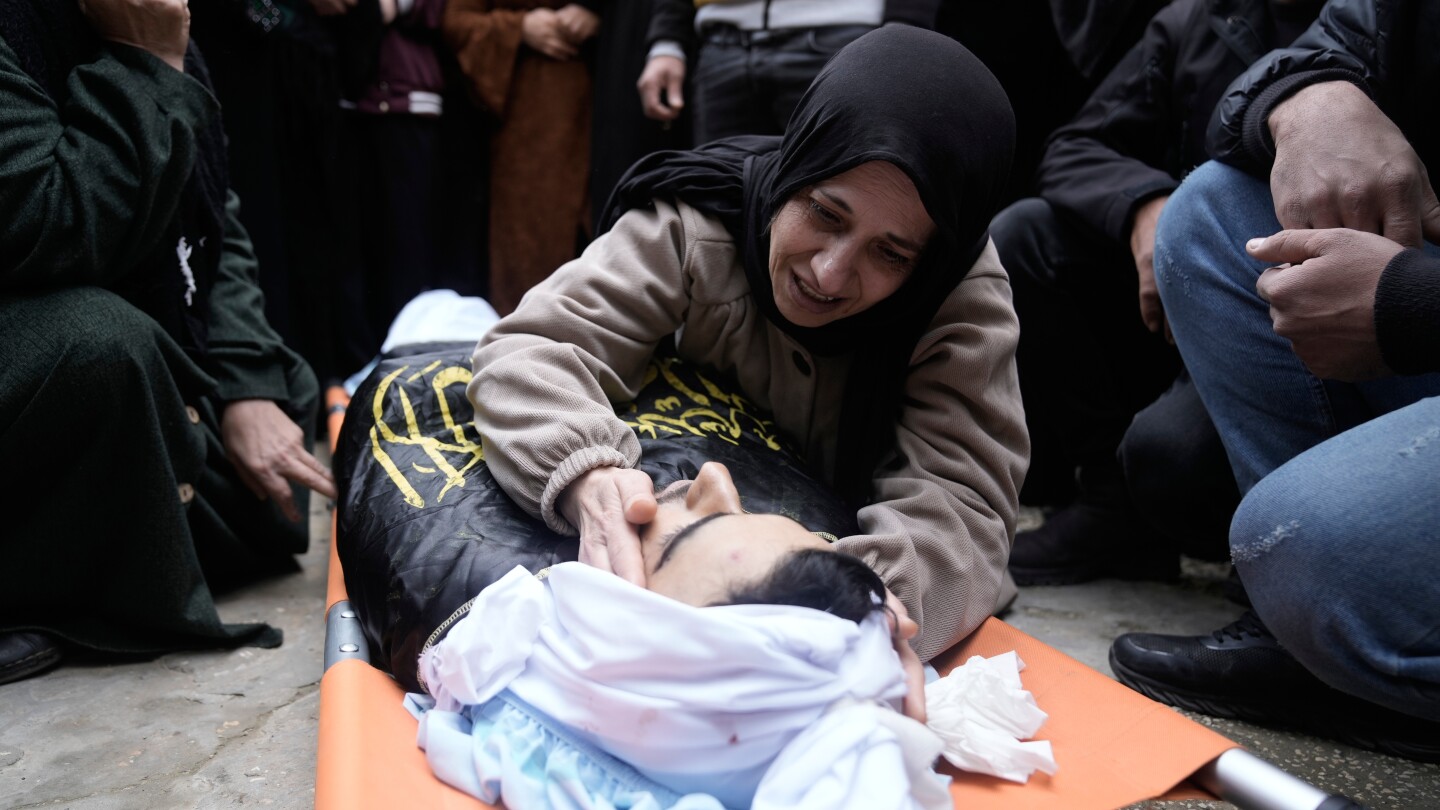
Meanwhile, violence continues in other forms across the West Bank. The Palestinian Health Ministry reported that two Palestinians, including 16-year-old Rayan Abu Muallah, were killed during clashes with Israeli military forces in the northern West Bank on Saturday night. Israel’s military claimed they shot a militant who threw a block at troops in Qabatiya, though Palestinian media aired security footage appearing to show Abu Muallah being shot as he approached troops without throwing anything. The military has stated the incident is under review.
The second Palestinian fatality was identified as 22-year-old Ahmad Ziyoud, whom Israeli forces said was killed after hurling explosives at troops operating in Silat al-Harithiya. Israel has significantly increased military operations in the West Bank since Hamas’s October 7, 2023 attack that triggered the war in Gaza.
Against this backdrop of ongoing conflict, Cardinal Pierbattista Pizzaballa, the top Catholic leader in the Holy Land, visited Gaza’s only Catholic church on Sunday, celebrating a pre-Christmas Mass that included a baptism. This marked his fourth visit to Gaza since the war began.
The Holy Family Parish compound, which has sheltered hundreds of displaced people including both Christians and Muslims, was damaged by fragments from an Israeli shell in July, killing three people. Israel called the incident an accident and expressed regret.
Despite the devastating conditions, Pizzaballa noted a new resilience among Gaza’s remaining population. “I saw the new desire for a new life,” he said, describing the Christian community’s aim to be a “stable, solid reference point in this sea of destruction” as rebuilding efforts slowly begin.
For those marking Christmas away from their homes, the occasion brought mixed emotions of gratitude and grief. “They welcomed us with great love and respect,” said 78-year-old Nazih Lam’e Habashi, who is staying at the church with his family. “This is the third holiday we are marking since the war.”
Fact Checker
Verify the accuracy of this article using The Disinformation Commission analysis and real-time sources.

12 Comments
This is a complex and contentious issue with deep historical roots. I’m curious to hear more perspectives on the potential impacts, both economic and political, of these new settlements.
Agreed, the expansion of settlements in the occupied West Bank is a highly divisive topic. It will be important to monitor how this develops and the reactions from the international community.
The expansion of settlements in the occupied West Bank is a concerning development that could further inflame tensions and undermine efforts towards a negotiated two-state solution. I wonder how this decision will be received by the international community.
You raise a good point. The international community’s response to this announcement will be closely watched, as it could shape the diplomatic dynamics going forward. Maintaining open channels of communication will be crucial.
This news highlights the ongoing challenges in the Israeli-Palestinian conflict. While the economic and security considerations are complex, I hope that all parties can work towards a just and peaceful resolution that respects the rights and aspirations of both peoples.
Agreed. Ultimately, a sustainable solution will require compromise and a willingness to address the root causes of the conflict, rather than further entrenching positions. The path forward is sure to be difficult, but dialogue and diplomacy remain essential.
The rapid pace of settlement growth is concerning and seems to undermine efforts towards a two-state solution. I wonder what the legal justifications are for reestablishing evacuated settlements.
The legality of these settlements is certainly debatable. It will be crucial for all parties to engage in constructive dialogue to find a path forward that respects international law and the rights of all people in the region.
This news highlights the complex and contentious nature of the Israeli-Palestinian conflict. I hope that all stakeholders can work towards a peaceful resolution that addresses the legitimate concerns and aspirations of both sides.
Achieving a lasting peace in this region will require compromise and goodwill from all parties involved. The international community will likely have an important role to play in facilitating dialogue and mediation efforts.
The approval of these new settlements is a concerning development that could further complicate efforts to achieve a lasting peace. I wonder what the potential regional and global implications might be, both economically and geopolitically.
This is a complex issue with far-reaching implications. It will be important to closely monitor how this situation unfolds and the reactions from key stakeholders, both within the region and internationally.