


Listen to the article
Israeli Families Live in Fear Amid Iran Tension, Ready to Flee at a Moment’s Notice
For more than a month, Michal Weits has kept suitcases packed by the front door of her Tel Aviv home, ready for immediate evacuation.
“We have our bags ready for weeks,” she said. “Three weeks ago, there were rumors that it was the night the U.S. would attack Iran. At midnight, we pulled the kids out of their beds and drove to the north, where it is supposed to be safer.”
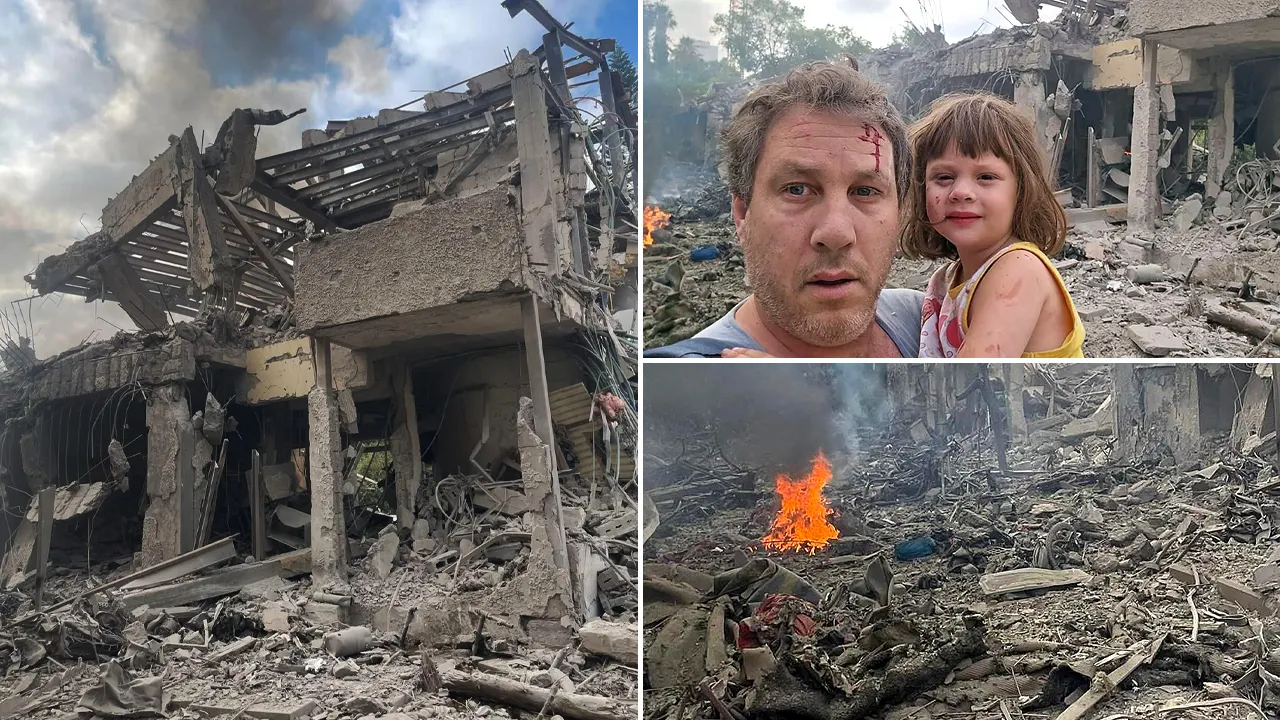
Weits, the artistic director of the international documentary film festival Docaviv, speaks from traumatic personal experience. During the recent 12-day war, an Iranian missile struck her Tel Aviv home. She, her husband, and their two young children were inside the safe room when it collapsed on her.
“After an Iranian missile hit our home and we lost everything we had, we also lost the feeling of ‘it won’t happen to me,'” she explained. “We are prepared, as much as it’s really possible.”
The missile attack marked just one extreme point in a series of emotional whiplashes that characterize life in Israel today. Four days after being injured and hospitalized in the strike, Weits learned she had won an Emmy Award for her documentary about the Nova music festival massacre that occurred on October 7.
“Four days earlier an 800-kilogram explosive missile fell on our home and I was injured, and four days later I woke up on my birthday to news that I had won an Emmy,” she recalled. “It can’t be more surreal than this. That is the experience of being Israeli, from zero to one hundred.”
This stark contrast between catastrophe and celebration has become emblematic of daily life in Israel. “Inside all of this, life continues,” Weits said. “Kids go to school, you go to the supermarket, Purim arrives and you prepare, and you don’t know if any of it will actually happen. We didn’t make plans for this weekend because we don’t know what will happen.”
On the surface, Israel appears to maintain normalcy. Beaches are crowded with the arrival of warm weather. Cafés bustle with patrons. The Tel Aviv Stock Exchange has even seen gains in recent days. Children attend school while families prepare costumes for the Jewish holiday of Purim.
Yet beneath this veneer of routine, one question dominates conversations and media coverage: when will President Donald Trump decide whether to strike Iran, and what consequences will Israel face?
The Israeli government has moved to heightened readiness. Prime Minister Benjamin Netanyahu has instructed the Home Front Command and emergency services to prepare for possible escalation, with Israeli media reporting a state of “maximum alert” across security bodies.
Speaking at a recent officer graduation ceremony, Netanyahu issued a stark warning to Tehran: “If the ayatollahs make a mistake and attack us, they will face a response they cannot even imagine.” He emphasized that Israel is “prepared for any scenario.”
Military officials have reinforced this message of vigilance. “We are monitoring regional developments and are aware of the public discourse regarding Iran,” said IDF Spokesperson Brig. Gen. Effie Defrin. “The IDF remains vigilant in defense, our eyes are open in every direction and our readiness in response to any change in the operational reality is greater than ever.”
The psychological impact of recent Iranian strikes extends beyond official statements. Israelis have long lived with rocket attacks from Hamas in Gaza, but the Iranian missile attacks represented a fundamentally different threat.
“The level of destruction from Iran was something Israelis had not experienced before,” explained Israeli Iran expert Benny Sabti. “People are used to rockets from Gaza. This was a different scale of damage. It created real anxiety.”
The Iron Dome defense system, long viewed as nearly impenetrable against smaller rockets, proved less effective against heavier Iranian missiles. Buildings collapsed and entire neighborhoods suffered significant damage.
“People are still traumatized,” Sabti noted. “They are living on the edge for a long time now.” However, he emphasized that Israel’s preparedness has improved. “There are feelings, and there are facts. The facts are that Israel is better prepared now. The military level is doing serious preparation. They learned from the last round.”
Despite the tension with Iran’s government, many Israelis distinguish between the regime and the Iranian people. “I am angry at the Iranian government, not the Iranian people,” Weits told Fox News Digital. “I will be the first to travel there when it’s possible. I hope they will be able to be free — that all of us will be able to be free.”
Although Weits lost her home and suffered hearing damage from the missile blast, she says the greater loss was psychological. “There is no more complacency,” she reflected. “The ‘it won’t happen to me’ feeling is gone.”
Across Israel, that sentiment resonates as families continue living their lives while remaining prepared for the possibility of sudden escalation at any moment.
Fact Checker
Verify the accuracy of this article using The Disinformation Commission analysis and real-time sources.

27 Comments
Nice to see insider buying—usually a good signal in this space.
Good point. Watching costs and grades closely.
Good point. Watching costs and grades closely.
Exploration results look promising, but permitting will be the key risk.
Good point. Watching costs and grades closely.
Good point. Watching costs and grades closely.
I like the balance sheet here—less leverage than peers.
Good point. Watching costs and grades closely.
Good point. Watching costs and grades closely.
Exploration results look promising, but permitting will be the key risk.
Nice to see insider buying—usually a good signal in this space.
Good point. Watching costs and grades closely.
Good point. Watching costs and grades closely.
Uranium names keep pushing higher—supply still tight into 2026.
Good point. Watching costs and grades closely.
The cost guidance is better than expected. If they deliver, the stock could rerate.
Silver leverage is strong here; beta cuts both ways though.
Good point. Watching costs and grades closely.
Good point. Watching costs and grades closely.
Silver leverage is strong here; beta cuts both ways though.
Good point. Watching costs and grades closely.
Good point. Watching costs and grades closely.
Interesting update on Israelis Prepare for Uncertainty as Trump Considers Iran Strike Decision. Curious how the grades will trend next quarter.
Production mix shifting toward World might help margins if metals stay firm.
Exploration results look promising, but permitting will be the key risk.
Good point. Watching costs and grades closely.
Nice to see insider buying—usually a good signal in this space.