


Listen to the article
In northern Israel, a town’s weary residents endure renewed Hezbollah attacks following the recent escalation with Iran. Gila Pahima, who returned to her hometown of Kiryat Shmona last spring after an 18-month evacuation, now finds herself amid constant air raid sirens and missile explosions.
“I feel like we’re in constant war,” Pahima said. “You feel like you’re on a battlefield all day.”
The situation represents a stark reversal from late 2024, when Israel appeared to have significantly weakened Hezbollah. The Iran-backed militant group had suffered devastating blows during the previous conflict, including the death of its top leader and the maiming of hundreds of operatives through booby-trapped pagers and walkie-talkies. Much of southern Lebanon lay in ruins when a ceasefire took effect in November.
However, Hezbollah resumed rocket attacks shortly after Israel and the United States launched strikes against Iran, which has subsequently fired multiple waves of missiles at Israeli territory.
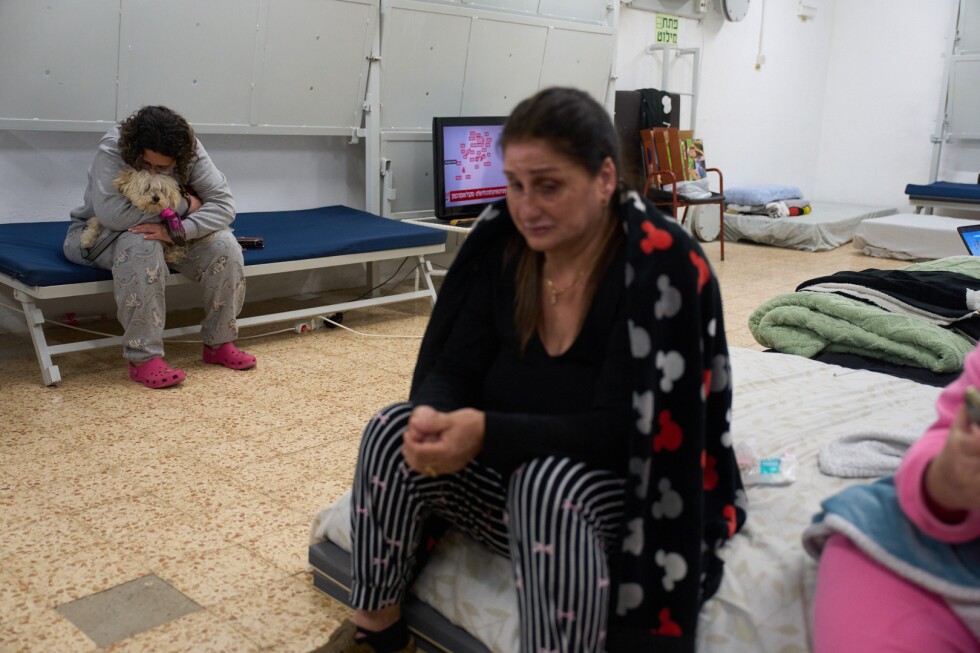
While most Israelis support the conflict with Iran in hopes it might bring lasting regional change, residents in northern communities like Kiryat Shmona are experiencing profound war fatigue. Many spend their days rushing to bomb shelters or have taken up permanent residence inside them. Questions about the effectiveness of Israel’s military strategy grow louder with each incoming rocket.
“You brought us here. You said, ‘Hezbollah is weakened,'” said longtime resident Avraham Golan, directing his frustration at the Israeli government. “Where is it weakened? They are worse than what they used to be.”
The current situation follows a familiar and exhausting pattern for residents. Israel evacuated approximately 60,000 people from northern communities when Hezbollah began firing missiles in solidarity with Hamas following the October 7, 2023 attack from Gaza. Residents only began returning after the Israel-Hezbollah ceasefire more than a year later.
Though support for Prime Minister Benjamin Netanyahu remains strong in conservative Kiryat Shmona, many residents express anger at the disconnect between Israel’s claims of military success and their lived reality under constant fire.
Golan, 79, who immigrated to Israel from Iraq in 1951 and previously worked in the region’s apple orchards, described nighttime as particularly harrowing. “The explosions are so close they feel like they’re coming directly into your room,” he said, visibly emotional. Most residents manage no more than two hours of continuous sleep, venturing out only briefly between sirens to purchase necessities.
Some residents have abandoned attempts at normal life entirely. Bruria Danino, 61, moved her extended family into a community shelter after breaking her nose while rushing to safety in the dark. They share the space with three other families, with steel bunk beds folding down from the walls. When her grandson’s online classes pause due to missile alerts, he simply switches to watching cartoons on his iPad from his inflatable mattress.
“They promised us a few years of quiet, but after 10 months, it’s the same situation,” Danino lamented.
Her daughter Hodaya described their daily existence as a “horror movie,” challenging the narrative of Israel’s resilient homefront. “People say Israel’s homefront is so strong, but we’re not strong, we all have post-trauma,” she said. She expressed frustration that the government isn’t covering evacuation costs as it did during the previous conflict, leaving those without financial means trapped in the danger zone.
In response to the renewed attacks, Israel has launched waves of airstrikes on southern Lebanon and Beirut’s southern suburbs—areas with significant Hezbollah presence but also home to hundreds of thousands of Lebanese civilians who already suffered heavy losses in the previous conflict. Israeli ground troops have pushed deeper into southern Lebanon as evacuation warnings expand to cover wider areas.
The Israeli strikes have killed hundreds of Lebanese civilians and displaced over a million people. Israel’s Defense Minister Israel Katz has stated that Lebanese evacuees will not return until northern Israel is secure. Meanwhile, Iranian missiles have killed at least 12 people in Israel, with two additional Israeli soldiers lost in ground combat in southern Lebanon.
Pahima, who raised four sons in Kiryat Shmona, fears her beloved city may never recover. She appreciates its greenery and peaceful pace, far from Israel’s busy urban centers. But the reality is that many evacuated residents, especially families with children, never returned after the last conflict. While official figures are unavailable, residents estimate at least half the evacuees remained elsewhere.
The economic impact compounds the security challenges. Kiryat Shmona, already struggling with geographic isolation, now offers even fewer opportunities for young people, further deterring resettlement.
“Maybe it will calm down for a few years,” Pahima reflected, “but then war will come back.”
Fact Checker
Verify the accuracy of this article using The Disinformation Commission analysis and real-time sources.

7 Comments
The renewed rocket attacks in northern Israel are deeply concerning. The residents of Kiryat Shmona have already endured so much and deserve to live without the constant fear of violence. I hope the parties involved can find a way to de-escalate the situation and protect innocent lives.
The escalation with Iran and renewed Hezbollah attacks are deeply concerning. Northern Israeli towns like Kiryat Shmona seem trapped in a cycle of conflict, unable to fully recover and rebuild. Civilians should not have to endure such relentless war fatigue.
You’re absolutely right. The people of Kiryat Shmona deserve to live without the constant fear of rockets and violence. I hope the parties involved can find a diplomatic resolution to end this cycle of conflict.
This is a troubling development. The constant threat of rockets and the reversal of hard-won progress must be exhausting for the residents of Kiryat Shmona. I hope a lasting solution can be found to bring peace and security to the region.
This situation highlights the fragility of the recent ceasefire and the ongoing challenges faced by border communities in northern Israel. The residents of Kiryat Shmona must be feeling incredibly frustrated and weary after experiencing such upheaval.
It’s distressing to see the hard-won progress in Kiryat Shmona undone by this renewed conflict. The people of northern Israel deserve to live in peace and security, not constant war fatigue. I hope the regional powers can work towards a diplomatic solution that prioritizes the well-being of civilians.
While the conflict with Iran may have strategic importance, the human toll on places like Kiryat Shmona is heartbreaking. Civilians should not have to live in a perpetual state of war. I hope a lasting political solution can be reached to bring true peace to the region.