


Listen to the article
Gaza’s ‘Yellow Line’ Creates Deadly Boundary for Palestinians
A dividing line, at times invisible, can mean life or death for Palestinians in Gaza. Those sheltering near the territory’s “yellow line” — established when Israeli forces withdrew under the October ceasefire — live in constant fear as soldiers direct near-daily fire at anyone who crosses or even approaches it.
Since the ceasefire began, at least 77 Palestinians have been killed by Israeli gunfire near the line, including 62 who crossed it, according to the Gaza Health Ministry. Among the victims were teenagers and young children, an Associated Press investigation found.
“We stay away from the barrels. No one dares to get close,” said Gaza City resident Ahmed Abu Jahal, noting that the markers are less than 100 meters from his house — far closer than the roughly 500 meters outlined in maps released by the Israeli military.
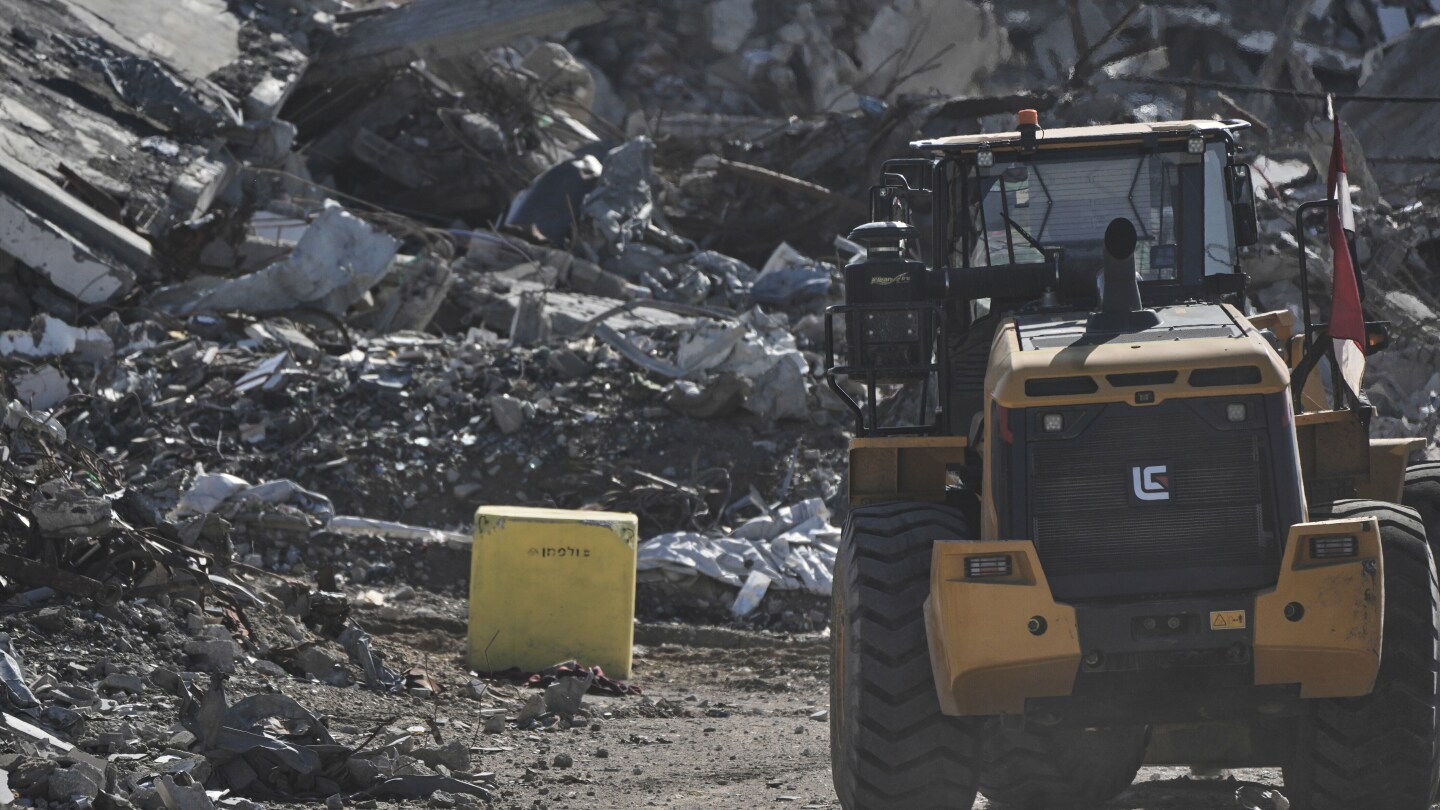
The Israeli military has placed yellow barrels and concrete barriers in some areas to mark the boundary of Palestinian zones. However, these demarcations are absent in many places and, according to Palestinians and mapping experts, have been positioned nearly half a kilometer deeper into Gaza than what was specified in the ceasefire agreement, effectively expanding Israeli-controlled territory.
As of Tuesday, the military acknowledged killing 57 people around the yellow line but claimed most were militants. Officials said troops comply with rules of engagement to counter militant groups and are informing Palestinians of the line’s location while marking it on the ground to “reduce friction and prevent misunderstandings.”
Confusion and Displacement
Under the ceasefire terms, Israel withdrew its troops to a buffer zone extending up to 7 kilometers deep into Gaza. This zone encompasses most of Gaza’s arable land, elevated points, and all border crossings, confining more than 2 million Palestinians to a narrow strip along the coastline and central Gaza.
Dr. Fadel Naeem, director of Gaza City’s Al-Ahli hospital, reported that people of all ages arrive at the emergency room almost daily with bullet wounds from approaching the line. Some are already dead upon arrival.
“Amid the vast destruction in Gaza, the demarcation line often isn’t easy to detect,” Naeem explained. He recounted nearly crossing the line himself during a recent visit to Khan Younis, only realizing his mistake when locals shouted warnings to turn back.
According to a military official who spoke anonymously, troops issue audible warnings followed by warning shots when someone crosses the line. While many civilians retreat when warning shots are fired, the official acknowledged that some have been killed.
Young Lives Lost
Zaher Shamia, a 17-year-old living with his grandfather in a tent 300 meters from the line in northern Gaza’s Jabaliya refugee camp, was playing with his cousin and friends near the boundary on December 10. Video he took before his death shows the teens’ activities suddenly interrupted by gunfire.
Witnesses said soldiers approaching with an armored bulldozer fired on the teenagers, hitting Zaher. His grandfather, Kamal al-Beih, said a neighbor eventually found the teen’s body, which had been crushed by the bulldozer: “We only recognized him from his head.”
Two doctors, Mohamed Abu Selmiya and Rami Mhanna, confirmed that the teenager had been killed by gunshots before being run over. The military official acknowledged that Shamia was a civilian and said the incident was being investigated.
In another tragic case, 3-year-old Ahed al-Bayouk was playing with siblings outside their tent near the yellow line along Gaza’s southern coast on December 7. Her mother, Maram Atta, was preparing lentils when she heard aircraft and gunfire. A stray projectile struck Ahed, who died before reaching medical care.
“I lost my daughter to what they keep calling a ‘ceasefire,'” Atta said, crying. “What ceasefire are they talking about?” Military officials denied responsibility for this killing.
Disputed Boundaries
The line’s exact location remains ambiguous, with discrepancies between maps released by the Israeli military and the White House. Neither matches the boundary troops appear to be marking on the ground.
Chris Osiek, an open source intelligence analyst, has geolocated yellow blocks using social media videos and found at least four urban areas where Israeli forces placed markers several hundred meters deeper into Gaza than specified on military maps.
“This is basically what you get when you simply let Trump make an image and post it on Truth Social and let the IDF make their own,” Osiek said. “If it’s not a proper system, with coordinates that make it easy for people to navigate where it is, then you leave the ambiguity free for the IDF to interpret the yellow line how they basically want.”
The military official dismissed such criticism, claiming any deviations from the map amount to just a few meters. However, for Palestinians dealing with widespread destruction and displacement, every meter lost represents another home they can’t shelter in — another they fear will never be returned.
Permanent Border?
Under the ceasefire agreement, Israeli forces are only supposed to remain at the yellow line until a complete withdrawal, though the deal specifies no timeline. With next steps in the agreement lagging and troops establishing fortified positions, Palestinians increasingly worry they are witnessing a permanent land grab.
In December, Israel’s defense minister described the yellow line as “a new border line — serving as a forward defensive line for our communities and a line of operational activity.”
The military continues leveling buildings inside the Israeli-held zone, transforming already damaged neighborhoods into barren landscapes. Almost all of Rafah, on Gaza’s border with Egypt, has been razed over the past year. Military officials say this destruction is necessary to eliminate tunnels and prepare the area for reconstruction.
In some locations, demolitions since the ceasefire have extended beyond the official yellow line. Satellite images from Planet Labs show that since November, troops have leveled a section of Gaza City’s Tuffah neighborhood extending some 300 meters outside the designated Israeli-held zone.
Abu Jahal, who returned to his damaged house in Tuffah when the ceasefire began, reported frequently seeing new yellow barrels appear as the military forces out anyone living on the Israeli side of these markers. On January 7, Israeli fire struck a nearby house, forcing its residents to evacuate. Abu Jahal fears his family — including his wife, child, and seven other relatives — may soon need to leave as well.
“The line is getting very close,” he said.
Fact Checker
Verify the accuracy of this article using The Disinformation Commission analysis and real-time sources.

9 Comments
Crossing an unmarked ceasefire line should not be a death sentence. Israel must be held accountable for these disproportionate and indiscriminate killings of Palestinians, including children. Clearer communication of the boundaries is the least they can do.
The lack of clear demarcation and shifting boundaries create a dangerous environment for Palestinians. More transparency and consistent enforcement of the ceasefire terms are needed to prevent further loss of innocent life.
I agree, the vagueness of the ‘yellow line’ is deeply problematic. All civilians should be able to move freely and safely within their own territory.
This highlights the need for an equitable and lasting peace agreement that protects the rights and safety of all people in the region, regardless of ethnicity or nationality. Unilateral actions that jeopardize civilian lives are unacceptable.
This report underscores the urgent need for a comprehensive peace agreement that provides unambiguous borders and freedom of movement for all. Relying on vague ceasefire lines and disproportionate force is a recipe for continued violence and loss of life.
The lack of clear physical markers and shifting boundaries create a precarious situation for Palestinians. Lethal force should only be used as an absolute last resort, not against those simply trying to access their own land.
I agree, this ambiguous ‘yellow line’ is extremely concerning. Civilians on both sides deserve to feel safe and secure within their own territory.
This is a tragic and complex situation. While the ceasefire lines may seem unclear, using lethal force against civilians trying to access their own land is unjustified. Both sides need to prioritize de-escalation and protecting human life.
It’s deeply troubling that the ceasefire lines are so ill-defined, putting Palestinian lives at constant risk. All parties must work towards a more stable and transparent delineation of borders to prevent further tragedies.