


Listen to the article
Israeli Strikes Kill at Least 30 Palestinians in Gaza as Ceasefire Faces Challenges
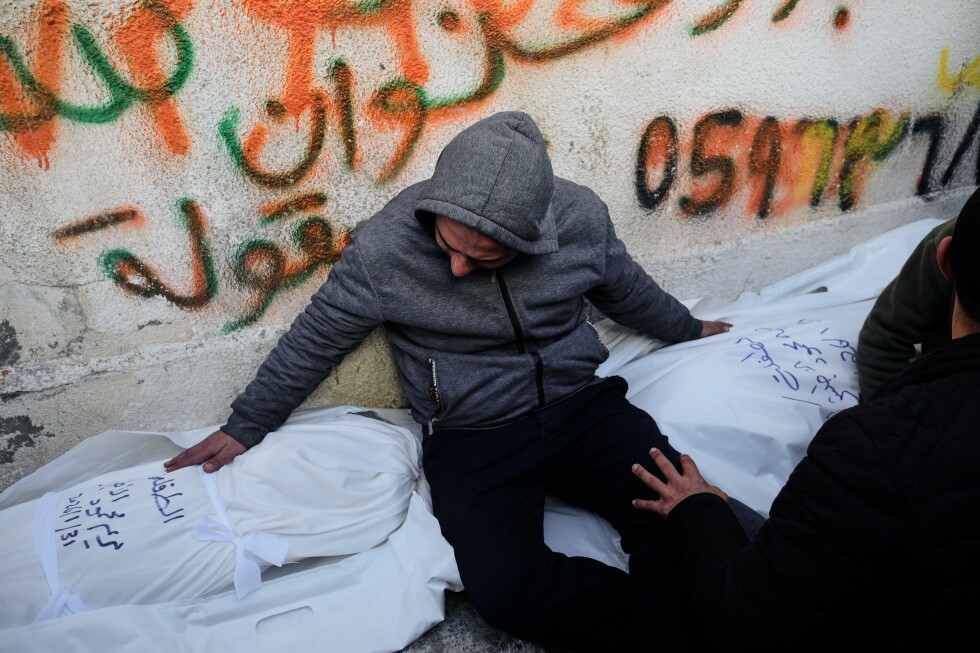
Israeli airstrikes across Gaza killed at least 30 Palestinians, including several children, on Saturday in one of the deadliest days since the October ceasefire began. The attacks came just one day after Israel accused Hamas of violating the truce agreement.
The widespread strikes targeted multiple locations throughout the territory, with devastating impacts on civilian areas. In Gaza City, an airstrike hit an apartment building, killing three children along with their aunt and grandmother. At a tent camp in Khan Younis, another strike caused a fire that claimed seven lives from a single family, including a father, his three children, and three grandchildren.
“We don’t know if we’re at war or at peace, or what. Where is the truce? Where is the ceasefire they talked about?” said Atallah Abu Hadaiyed, a relative of victims, as he surveyed the damaged site where a bloodied mattress lay among the ruins.
One of the deadliest incidents occurred when Israeli forces struck a police station in Gaza City, killing at least 14 people, including four policewomen, civilians, and inmates, according to Shifa Hospital director Mohamed Abu Selmiya.
The surge in violence comes at a critical moment in the ceasefire implementation. The Rafah crossing along the border with Egypt is scheduled to open Sunday in Gaza’s southernmost city, representing a crucial development for Palestinians. This border point has long been viewed as a lifeline for tens of thousands of Gazans needing medical treatment outside the territory, where most healthcare infrastructure has been destroyed during the conflict.
All of Gaza’s border crossings—the others connect with Israel—have remained largely closed throughout the war, intensifying the humanitarian crisis in the enclave.
The opening of the Rafah crossing coincides with the US-brokered Israel-Hamas ceasefire plan moving into its second phase. This stage presents numerous challenges, including demilitarizing the territory after nearly two decades of Hamas governance and establishing a new administrative structure to oversee Gaza’s reconstruction.
Egypt and Qatar, both key mediators in the ceasefire negotiations, issued strong condemnations of Saturday’s Israeli strikes. Egypt warned that the attacks pose “a direct threat to the political course” of the truce, while Qatar characterized them as a “dangerous escalation” that threatens the ongoing peace process.
Israel’s military defended Saturday’s operations, claiming they were responses to ceasefire violations by Hamas fighters. According to Israeli statements, their forces killed three militants who emerged from a tunnel in an Israeli-controlled area of Rafah and four others who approached troops near the dividing line a day earlier.
Hamas rejected this explanation, describing Saturday’s strikes as “a renewed flagrant violation” and urged the United States and other mediating nations to pressure Israel to halt the attacks.
The violence raises serious questions about the viability of the ceasefire agreement. Senior Hamas official Bassem Naim expressed skepticism about the proposed international governance structure for Gaza, writing on social media: “All available indicators suggest that we are dealing with a ‘Board of War,’ not a ‘Board of Peace,'” referring to the Trump administration-proposed international body intended to govern Gaza.
Saturday’s death toll far exceeds the daily average since the ceasefire began. Gaza’s Health Ministry had recorded approximately 520 Palestinians killed by Israeli fire since the start of the truce period prior to Saturday’s attacks. The ministry, which operates under the Hamas-led government, maintains detailed casualty records generally considered reliable by UN agencies and independent experts.
The conflict began with the Hamas-led attack on southern Israel in October that killed approximately 1,200 people, primarily civilians, and resulted in 251 hostages being taken. The remains of the final hostage in Gaza were recovered earlier this week, marking a somber milestone in the ongoing crisis.
As the Rafah crossing prepares to open, albeit in a limited capacity initially, all eyes remain on whether the ceasefire can withstand these escalating tensions or whether Gaza will descend back into full-scale conflict.
Fact Checker
Verify the accuracy of this article using The Disinformation Commission analysis and real-time sources.

12 Comments
This is a heartbreaking situation. The loss of so many innocent lives, including children, is simply unacceptable. I hope that the ceasefire negotiations can lead to a lasting peace agreement that prioritizes the protection of civilians on both sides of this longstanding conflict.
You’re absolutely right. The international community must play a more active role in pushing for a sustainable peace deal that safeguards the human rights and security of all people in the region.
This is a tragic situation, with so much loss of innocent life. While the ceasefire negotiations are ongoing, it’s clear that tensions remain high and civilians are bearing the brunt of the violence. I hope both sides can find a way to de-escalate the conflict and protect civilian populations.
You’re right, the human cost of this conflict is heartbreaking. Ceasefires are fragile and it will take sustained efforts from all parties to find a lasting peace.
The details of this attack are devastating. Strikes that kill entire families, including young children, are a horrific tragedy that can never be justified. Both the Israeli and Palestinian leaderships must show strong leadership and a genuine commitment to protecting civilian lives if any progress is to be made towards a lasting ceasefire and peace agreement.
I agree, the targeting of civilians is a clear violation of international law and human rights. All parties involved must be held accountable for such actions, and the international community must play a more active role in brokering a sustainable peace deal.
The details of this attack are deeply disturbing. Strikes that kill children and entire families are a horrific tragedy that no side can justify. Both the Israeli and Palestinian leaderships need to show strong leadership and a genuine commitment to protecting civilian lives.
I agree, the targeting of civilians is a grave violation of international law and human rights. All parties must be held accountable for such actions.
This is a complex and longstanding conflict, but the loss of so many innocent lives, including children, is simply unacceptable. I hope the international community can bring more pressure to bear and push both sides to find a path to a durable ceasefire and meaningful negotiations.
You raise a good point. The international community has a responsibility to help broker a sustainable peace agreement that prioritizes the protection of civilians on both sides.
The details of this attack are truly horrifying. Strikes that kill entire families, including young children, are a devastating human tragedy that can never be justified. Both sides must show restraint and a genuine commitment to protecting innocent life if any progress is to be made.
I agree, the targeting of civilians is a clear violation of international law and human rights. All parties involved must be held accountable for such actions.