


Listen to the article
Israel Warns Iran’s Ballistic Missile Program Remains Red Line in Diplomatic Talks
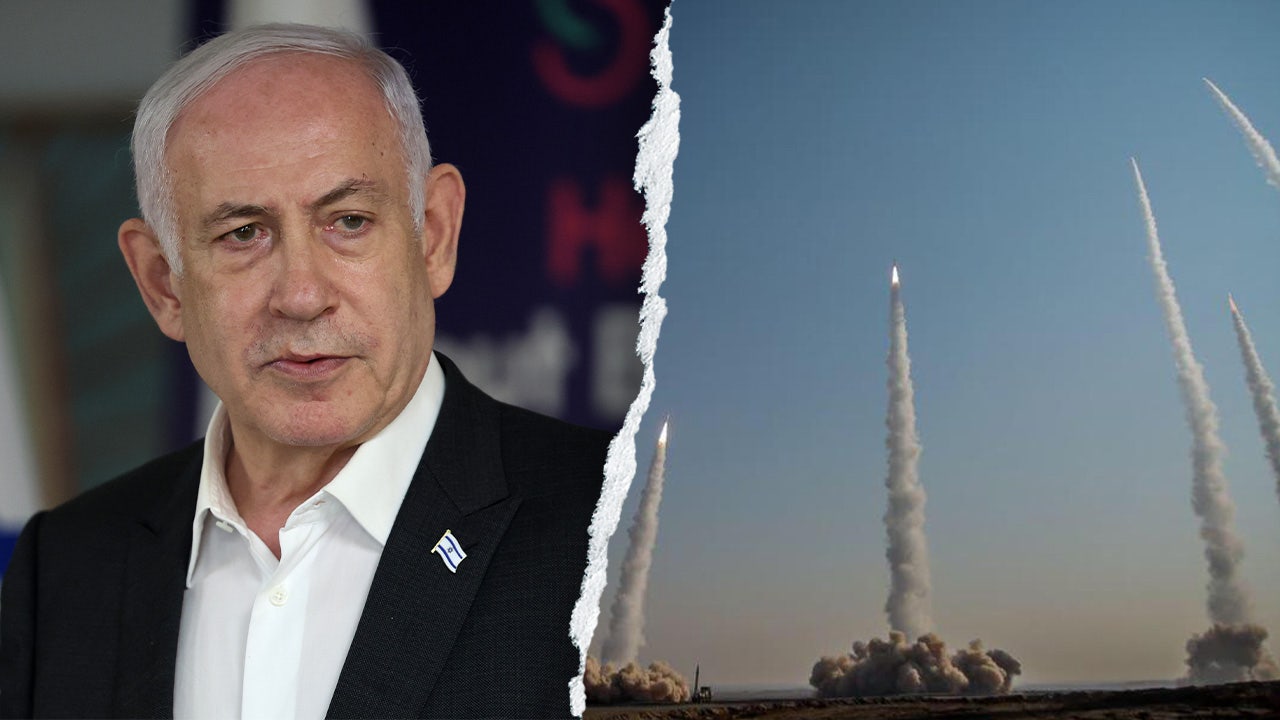
As Israeli Prime Minister Benjamin Netanyahu travels to Washington for high-level discussions, Israeli defense officials have issued stark warnings that Iran’s ballistic missile program constitutes an existential threat requiring decisive action, regardless of ongoing nuclear negotiations.
Netanyahu, prior to his departure, emphasized he would press Israel’s priorities during his upcoming talks. “I will present to the president our views regarding the principles of the negotiations — the important principles — and, in my view, they are important not only for Israel, but for anyone in the world who wants peace and security in the Middle East,” he stated.
According to reporting by The Jerusalem Post, Israeli defense officials have recently conveyed to their American counterparts that Iran’s missile capabilities represent an existential threat to Israel, and that Jerusalem is prepared to act unilaterally if necessary. These high-level exchanges reportedly included detailed operational concepts aimed at degrading Iran’s missile program, including potential strikes on manufacturing and development infrastructure.
Sima Shine, a former senior Israeli intelligence official and current researcher at the Institute for National Security Studies, emphasized the broader threat beyond nuclear capabilities. “If negotiations deal only with the nuclear file and ignore the missiles, Israel will remain exposed,” Shine told Fox News Digital. “Iran treats its ballistic missile program as its main deterrence and will not give it up.”
The missile issue represents a fundamental diplomatic impasse. Iranian Foreign Minister Abbas Araghchi has categorically rejected negotiating on ballistic missiles, dismissing a core U.S. demand and complicating prospects for a breakthrough agreement. This stance aligns with Tehran’s view of its missile arsenal as a defensive capability directly mandated by Iran’s supreme leader.
Shine suggested Iran may be employing strategic patience, assessing whether Washington might eventually narrow negotiations to nuclear constraints alone. “They have room to show flexibility on enrichment,” she noted, pointing out that nuclear enrichment activities slowed following recent strikes on facilities, “but missiles are different. That they would not discuss.”
Israeli concerns extend beyond diplomatic posturing to potential military action. A former Israeli intelligence official familiar with strategic planning confirmed Israel maintains independent strike capabilities if diplomatic efforts fail. “Israel can act by itself if there is no choice,” the official stated, adding that missile expansion and regional threats would be key triggers for such action.
However, Shine cautioned about the political ramifications of Israel appearing to pressure Washington toward military confrontation. “If missiles become the central public demand, it may look as if Israel is pushing the U.S. toward military action,” she said. “If that fails, Israel could be blamed.”
The missile crisis reflects a complex regional security dynamic. Iran’s arsenal serves multiple strategic purposes, aimed not only at Israel but forming part of Tehran’s broader deterrence strategy against the United States and regional rivals across the Middle East. This multifaceted challenge complicates any diplomatic solution.
For Israeli leadership, the calculation appears straightforward: a nuclear agreement that constrains uranium enrichment while leaving Iran’s missile infrastructure intact could potentially strengthen the regime while failing to address what Jerusalem considers an immediate existential threat.
As Netanyahu meets with U.S. officials, this missile issue will likely dominate discussions, potentially defining the parameters of future diplomatic and security cooperation between the allies. Israeli analysts suggest that any agreement failing to address the missile threat could cross a red line for Jerusalem, potentially triggering independent action regardless of international diplomatic progress on the nuclear file.
Fact Checker
Verify the accuracy of this article using The Disinformation Commission analysis and real-time sources.

22 Comments
Interesting update on Israeli Officials Warn Solo Military Action Possible if Iran Deploys Ballistic Missiles. Curious how the grades will trend next quarter.
Good point. Watching costs and grades closely.
The cost guidance is better than expected. If they deliver, the stock could rerate.
Good point. Watching costs and grades closely.
Good point. Watching costs and grades closely.
Production mix shifting toward World might help margins if metals stay firm.
Good point. Watching costs and grades closely.
Interesting update on Israeli Officials Warn Solo Military Action Possible if Iran Deploys Ballistic Missiles. Curious how the grades will trend next quarter.
Good point. Watching costs and grades closely.
Good point. Watching costs and grades closely.
I like the balance sheet here—less leverage than peers.
Good point. Watching costs and grades closely.
Good point. Watching costs and grades closely.
Uranium names keep pushing higher—supply still tight into 2026.
Good point. Watching costs and grades closely.
Good point. Watching costs and grades closely.
I like the balance sheet here—less leverage than peers.
Good point. Watching costs and grades closely.
Nice to see insider buying—usually a good signal in this space.
Good point. Watching costs and grades closely.
Good point. Watching costs and grades closely.
Nice to see insider buying—usually a good signal in this space.