


Listen to the article
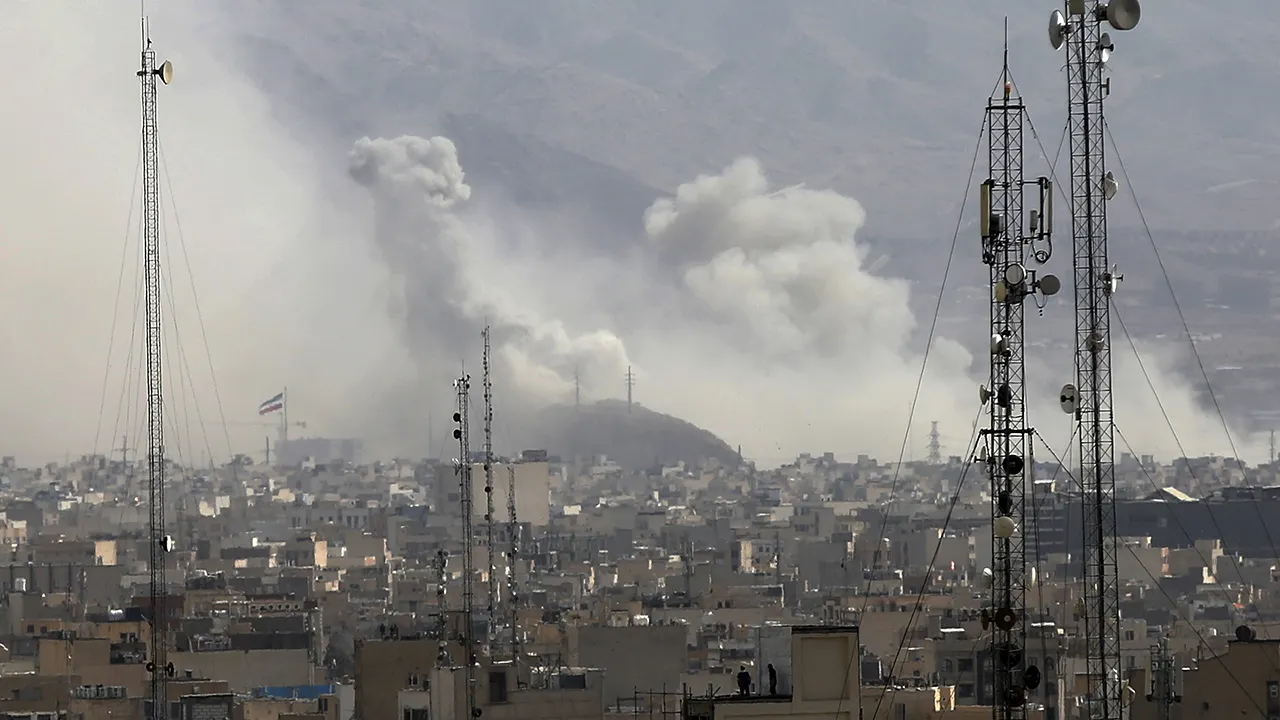
In a dramatic escalation of Middle East tensions, coordinated U.S.-Israeli military strikes hit key Iranian targets during predawn hours Saturday, targeting military installations, nuclear-related facilities, and leadership compounds across the country.
The precision strikes focused on what U.S. officials described as high-value Iranian targets, including Iranian Revolutionary Guard Corps (IRGC) command and control centers, naval assets, and underground facilities believed to be associated with Iran’s nuclear program. Air defense systems, missile and drone launch sites, and military airfields were also targeted in the sweeping operation.
In a significant development, President Donald Trump confirmed Saturday afternoon that Iran’s Supreme Leader Ayatollah Ali Khamenei was killed in the strikes. “Khamenei, one of the most evil people in History, is dead,” Trump wrote on his Truth Social platform. “This is not only Justice for the people of Iran, but for all Great Americans, and those people from many Countries throughout the World, that have been killed or mutilated by Khamenei and his gang of bloodthirsty THUGS.”
According to a senior Israeli official who spoke to Fox News, Khamenei was among more than 40 senior Iranian security and regime figures killed in the attack. These leaders had reportedly gathered at a compound in Tehran when the strikes occurred.
Sources indicated the operation, code-named “Operation Epic Fury,” was accelerated due to a “target of opportunity,” which explains why the strikes happened during daylight hours in Iran—maintaining the element of surprise despite the unusual timing. “There was a deliberate decision to accelerate the timeline,” one source explained.
The military campaign utilized Tomahawk cruise missiles in the initial phase, supplemented by one-way attack drones deployed for the first time in this conflict, according to a U.S. official. The multi-geographic targeting approach was designed to overwhelm Iran’s defensive capabilities.
Speaking from Mar-a-Lago, President Trump characterized the strikes as the beginning of “major combat operations” in the region. He stated that the campaign aimed to devastate Iran’s military capabilities and dismantle its nuclear program, while also urging the Iranian people to “take over” their government—suggesting a potential goal of regime change.
The operation represents a significant escalation in the ongoing tensions between Iran and the U.S.-Israel alliance, which have intensified in recent months. The targeting of sites associated with Iran’s Supreme Leader marks a particularly bold strategic move that could fundamentally alter the regional power dynamic.
Israeli forces played a central role in the operation, conducting what some reports describe as the country’s largest-ever military flyover to strike Iranian targets. The Israeli military specifically targeted sites linked to Khamenei, confirming their focus on decapitating the Iranian leadership structure.
The attacks could continue for multiple days, according to military sources, suggesting a sustained campaign rather than a one-off strike. This extended timeline indicates the operation’s comprehensive nature and determination to achieve strategic objectives beyond immediate tactical goals.
The strikes come at a time of heightened security concerns in the United States, with the FBI reportedly elevating counterterrorism teams to high alert amid fears of potential Iranian retaliation on American soil or against U.S. interests abroad.
The elimination of Khamenei, who has ruled Iran since 1989, creates a significant power vacuum in Tehran’s leadership structure. The timing of the operation and targeting of a large gathering of senior officials suggests careful intelligence work and operational planning by U.S. and Israeli forces.
Regional analysts will now be watching closely for signs of who might emerge from within Iran’s complex power structure to fill the leadership void, with particular attention to whether the IRGC will consolidate control or if internal power struggles might emerge.
Fact Checker
Verify the accuracy of this article using The Disinformation Commission analysis and real-time sources.

23 Comments
These strikes represent a major escalation in the ongoing tensions between Iran and the US/Israel. The targeting of military and nuclear facilities is concerning enough, but the reported death of Khamenei is a seismic event. I hope cooler heads can prevail to prevent an all-out regional war.
These strikes represent a significant ratcheting up of tensions between the US/Israel and Iran. While Khamenei was a hardliner, his death could lead to an even more confrontational Iranian regime. De-escalation seems increasingly elusive at this point.
Agreed, this may embolden Iran’s more radical elements. Maintaining open diplomatic channels will be critical to avoid an all-out regional war.
Strikes on Iran’s military and nuclear facilities are concerning, but the reported death of Khamenei is a game-changer. He was a key figure driving Iran’s regional influence and anti-Western policies. This could dramatically shift the balance of power in the Middle East.
If true, Khamenei’s death would be a major blow to Iran’s leadership. However, his replacement may prove to be just as hardline, so the path to de-escalation remains uncertain.
While the targets may have been described as ‘high-value’, this level of military intervention carries huge risks. De-escalation should be the priority now.
If the reports of Ayatollah Khamenei’s death are accurate, this would be a seismic event. I’m curious to see how Iran’s government and military respond.
Certainly a major development. Iran’s next moves will be closely watched globally as they navigate this significant leadership change.
Precision strikes on Iranian military and nuclear facilities suggest this was a carefully planned operation. I wonder what the intended strategic objectives are.
The reported death of Khamenei is a shocking development. While he was a highly controversial figure, his replacement could be even more hardline. I worry this will trigger a dangerous cycle of retaliation and counter-retaliation between Iran and the US/Israel.
You make a good point. Iran may feel compelled to retaliate forcefully to assert its regional influence and deter further attacks on its leadership. De-escalation seems like a distant prospect at the moment.
This is a major escalation in the tensions between the US/Israel and Iran. Targeting the Supreme Leader Khamenei is a bold and risky move. It will be interesting to see how Iran responds and what the broader regional and global implications are.
Agreed, this could have serious repercussions. The US and Israel are clearly taking a hardline stance against Iran, but the stakes are very high.
This is a concerning escalation in the Middle East. I hope diplomatic solutions can be found to reduce tensions and prevent further violence.
Agreed, further military action could have devastating consequences. All sides should exercise restraint and seek diplomatic avenues to resolve their differences.
Targeting Iran’s military and nuclear infrastructure is one thing, but the reported killing of Khamenei is a game-changer. This will have profound implications for the region and global security. I hope both sides can show restraint and seek a diplomatic solution.
These strikes highlight the complexity and volatility of the situation in the Middle East. I hope all parties can find a path forward that avoids further escalation.
I’m curious to see how Iran will respond to these strikes. They may lash out militarily or ramp up their nuclear program in retaliation. This could rapidly spiral into a broader regional conflict.
You raise a good point. Iran has shown it is willing to use proxies and asymmetric tactics to retaliate against the US and its allies. This could get very messy very quickly.
The targeting of Iranian leadership and infrastructure is a high-risk strategy. I wonder how this will impact regional stability and global energy markets.
A valid concern. Any disruption to oil and gas supplies from the region could have far-reaching economic impacts worldwide.
The targeting of Iran’s military and nuclear facilities is understandable from a security perspective, but the reported killing of Khamenei is a huge escalation. This could dramatically shift the regional balance of power, for better or for worse.
The confirmed death of Ayatollah Khamenei is a historic moment. However, the long-term ramifications for regional stability are concerning.