


Listen to the article
Israel has announced it will reopen the Rafah border crossing between Gaza and Egypt for limited pedestrian movement beginning Sunday, February 1, marking the first time the crossing will be operational for civilian travel since Israeli forces seized control of the area in May 2024.
According to a statement from Israel’s Coordinator for Government Activities in the Territories (COGAT), which oversees humanitarian efforts in Gaza, the crossing will be open “in both directions, for limited movement of people only.” The reopening comes as part of President Donald Trump’s 20-point peace plan for the region.
“The return of residents from Egypt to the Gaza Strip will be permitted, in coordination with Egypt, for residents who left Gaza during the course of the war only, and only after prior security clearance by Israel,” COGAT explained in their announcement.
The reopening will include comprehensive security measures. Travelers will first undergo identification and screening by a European Union mission at the Rafah Crossing, followed by an additional security process at a designated corridor operated by the Israeli defense establishment in an area under Israeli Defense Forces (IDF) control.
Israel captured the Rafah crossing in May 2024 as part of its military operations aimed at preventing Hamas from smuggling weapons into Gaza. Since then, the crossing has remained largely closed except for a brief period in early 2025 when medical patients were evacuated during a temporary ceasefire.
The Israeli Prime Minister’s Office had indicated earlier this week that the reopening was contingent on the return of all living hostages and what it described as a “100 percent effort” by Hamas to locate and return the remains of deceased hostages. This development comes just days after Israel confirmed the recovery of Staff Sgt. Ran Gvili’s remains, described as the last Israeli hostage held in Gaza after 842 days in captivity.
The Rafah crossing has historically been a crucial gateway for Palestinians in Gaza, serving as one of the few exit points from the territory. Its closure has significantly restricted movement for Gaza residents and complicated humanitarian aid deliveries to the region, which has been devastated by the prolonged conflict.
The reopening represents a potentially significant diplomatic development in the ongoing efforts to stabilize the region. Trump’s 20-point peace plan, which facilitated this agreement, has been a focal point of renewed diplomatic efforts in the Middle East.
Humanitarian organizations have long advocated for the reopening of this vital crossing, arguing that restricted movement has exacerbated the humanitarian crisis in Gaza. While this limited reopening focuses primarily on allowing Palestinians who fled during the conflict to return home, it may signal a gradual shift toward increased civilian movement in the area.
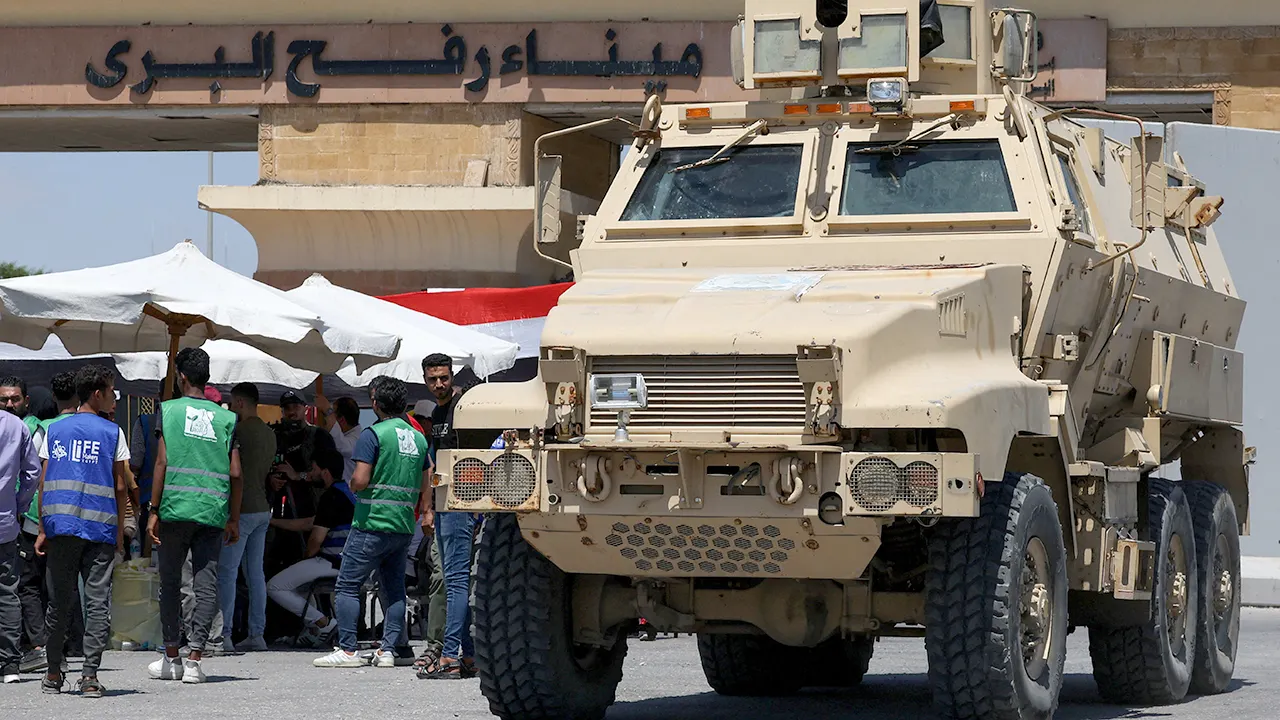
Egyptian authorities, who control the southern side of the crossing, have been involved in the coordination efforts. An Egyptian military presence has been maintained near the crossing, as seen in recent photographs from the area.
The crossing’s reopening comes at a time when the region is still recovering from years of conflict. Destroyed buildings in Rafah stand as testament to the intensity of military operations in the area, with Israeli forces continuing to maintain a significant presence to ensure security protocols are followed.
While the reopening represents a potential easing of restrictions, the comprehensive security measures indicate Israel’s ongoing concerns about controlling who enters Gaza, reflecting the complex security dynamics that continue to shape policy decisions in the region.
Fact Checker
Verify the accuracy of this article using The Disinformation Commission analysis and real-time sources.

14 Comments
This is an interesting development in the ongoing Israel-Gaza situation. The limited reopening seems like a cautious but potentially positive move, if it can help improve humanitarian conditions for Gazans.
Yes, small steps towards greater openness and cooperation are better than continued isolation. Curious to see if this leads to further easing of restrictions over time.
Reopening the Rafah crossing is an important step, but comprehensive security measures will be critical to ensure the safety of all travelers. I’m curious to see how the coordination between Israel, Egypt, and the EU mission unfolds.
Agreed. The security protocols will be key to rebuilding trust and allowing more fluid movement of people in the region.
This is an interesting development, but I worry that the limited scope and heavy security measures may limit the actual benefits to Gazans. Broader, more sustained openings would be needed to truly improve conditions.
That’s a fair assessment. Incremental steps are better than nothing, but a more comprehensive, permanent solution should be the ultimate goal to alleviate the humanitarian crisis in Gaza.
While the limited reopening of Rafah is a positive step, I’m concerned that the heavy security measures and restrictions could undermine its practical benefits for Gazans. Continued monitoring and transparency will be crucial.
That’s a valid concern. The devil will be in the details of how this policy is implemented on the ground. Expectations should be modest, but it’s still a step in the right direction if handled carefully.
Allowing limited civilian travel through Rafah is a pragmatic step, but the real test will be whether it leads to meaningful improvements in the overall humanitarian situation in Gaza. Monitoring will be crucial.
Absolutely. The details around security screening and coordination will be crucial. Transparency and accountability on all sides will be needed to build trust.
The Rafah crossing has been a major point of contention, so its reopening, even in a limited capacity, could be an important confidence-building measure. I wonder what other elements of the Trump peace plan may be implemented.
That’s a good point. Reopening the crossing could set the stage for further negotiations and concessions from both sides. Cautious optimism is warranted.
Reopening the Rafah crossing, even with tight controls, could be an important confidence-building measure between Israel and the Palestinian Authority. However, the real test will be whether it leads to further easing of restrictions over time.
Agreed. This move alone is unlikely to resolve the broader conflict, but it may create opportunities for more dialogue and gradual progress if implemented responsibly.