


Listen to the article
Israel has agreed to a limited reopening of the Rafah Crossing under President Donald Trump’s 20-point peace plan, according to an announcement from the Office of the Prime Minister on Sunday.
The reopening will be strictly limited to pedestrian traffic and will operate under full Israeli inspection procedures, the Prime Minister’s Office stated in a series of posts on the social media platform X. This development represents a potential shift in border policy that has significant implications for movement in and out of Gaza.
Israeli officials emphasized that the reopening comes with critical conditions. Most notably, it hinges on the return of all living hostages currently held by Hamas, alongside what the Prime Minister’s Office described as a “100 percent effort” by Hamas to locate and return the remains of deceased hostages.
The announcement specifically referenced an ongoing Israeli military operation related to one such hostage. “The IDF is currently conducting a focused operation to exhaust all of the intelligence that has been gathered in the effort to locate and return the fallen hostage, Master-Sgt. Ran Gvili, of blessed memory,” the statement read.
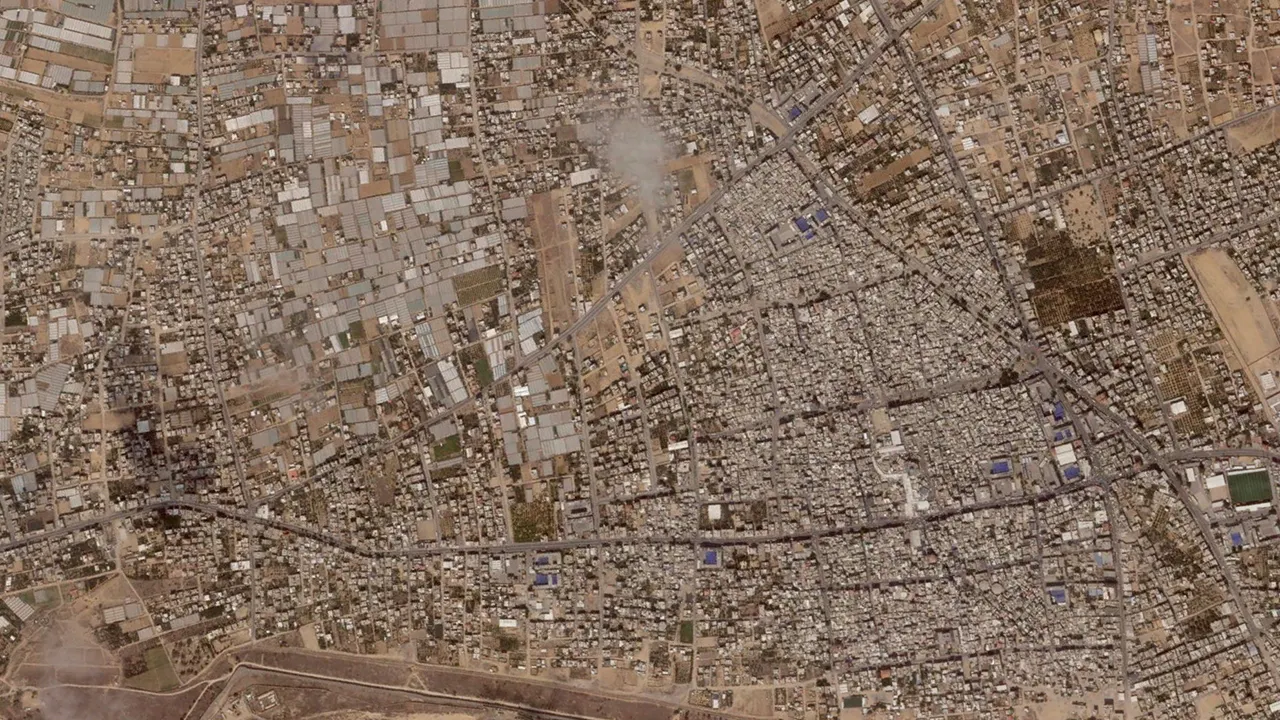
The Rafah Crossing, situated on Gaza’s border with Egypt, has been a crucial access point for humanitarian aid, civilian movement, and commercial goods. Its status has been a contentious issue throughout the conflict, with international organizations repeatedly calling for its reopening to address the humanitarian situation in Gaza.
The crossing’s operational status has fluctuated during the conflict, with periodic closures significantly impacting the flow of essential supplies and civilian movement. This latest agreement to reopen, albeit in a limited capacity, could provide some relief to the region while maintaining Israel’s security requirements.
The timing of this development aligns with broader diplomatic efforts to establish a sustainable peace framework in the region. President Trump’s 20-point plan, which serves as the foundation for this agreement, represents one of the most comprehensive recent attempts to address the complex dynamics of the Israeli-Palestinian conflict.
Regional observers note that the Rafah Crossing’s status has implications beyond immediate humanitarian concerns. The border point represents a strategic junction between Gaza, Egypt, and Israel, with its operation affecting regional security dynamics, economic conditions in Gaza, and broader diplomatic relations.
For Palestinians in Gaza, the reopening—even in limited form—could provide a vital lifeline for those seeking medical treatment, educational opportunities, or family reunification. However, the restricted nature of the reopening and the full inspection requirements mean that movement will remain tightly controlled.
Israel’s conditions regarding hostages highlight the ongoing challenge of resolving human concerns amid security priorities. The emphasis on returning fallen soldier Master-Sgt. Ran Gvili for “proper Jewish burial” underscores the cultural and religious aspects that complicate the conflict resolution process.
“The State of Israel is committed to the return of Israeli hero Master-Sgt. Ran Gvili and will spare no effort to bring him home,” the statement added, reflecting Israel’s longstanding commitment to recovering its soldiers.
The announcement comes as part of evolving regional dynamics, with multiple international actors involved in mediation efforts. Egypt has historically played a significant role in facilitating discussions around the Rafah Crossing, given its position as Gaza’s neighbor and the crossing’s location on Egyptian territory.
As the situation develops, humanitarian organizations will be monitoring the implementation of this agreement and its impact on civilian conditions in Gaza. The practical effects of the reopening will depend on factors including the volume of people permitted to cross, inspection procedures, and the sustainability of the arrangement.
Both Israeli and Palestinian officials, as well as international observers, will be closely watching how this development influences broader peace negotiations and the humanitarian situation in the coming weeks.
Fact Checker
Verify the accuracy of this article using The Disinformation Commission analysis and real-time sources.

10 Comments
Interesting development in the Israel-Gaza border situation. Reopening the Rafah Crossing, even in a limited capacity, could have important implications for movement and humanitarian access. Curious to see if this leads to further negotiations or concessions on both sides.
Yes, the conditions attached, like the return of hostages, will be critical. This seems like a cautious, incremental step rather than a major shift in policy.
From an energy and mining perspective, this could impact the movement of critical resources like uranium, lithium, and other commodities in and out of Gaza. Careful monitoring of the situation will be important for companies in those sectors.
Good point. Any disruptions to cross-border trade and logistics could ripple through global supply chains for key minerals and energy resources.
Overall, this seems like a cautious first step, but one that could have broader implications if it leads to more substantive negotiations and concessions on both sides. The mining and commodities industries will be watching developments closely.
Absolutely. This partial reopening is a small but potentially significant development that bears close monitoring in the weeks and months ahead.
The mining and commodities sectors will be watching this closely, as it could impact the flow of goods and materials in and out of Gaza. Stable borders and cross-border access are important for trade and investment in the region.
Absolutely. Any disruptions to border crossings can create logistical challenges and uncertainties for companies operating in the area or relying on supply chains through Gaza.
I’m a bit skeptical about the long-term viability of this partial reopening, given the history of tensions and broken agreements in the region. But it’s a positive step if it can lead to further dialogue and compromise.
Agreed, past experience suggests this may be a fragile arrangement. The details around Israeli inspection procedures and Hamas’ cooperation will be crucial.