


Listen to the article
Israeli airstrikes devastated central Beirut on Wednesday, killing at least 182 people and wounding nearly 900 others in what Lebanese officials described as the deadliest day in the ongoing Israel-Hezbollah conflict. The attacks struck busy commercial and residential areas without warning, just hours after a ceasefire was announced in the U.S.-Israeli war with Iran.
U.S. President Donald Trump clarified that Lebanon was not included in the ceasefire agreement because of Hezbollah, describing the situation as “a separate skirmish.” While Israel had previously stated that the agreement does not extend to its conflict with the Iran-backed militant group, both Iran and mediator Pakistan had indicated it would.
The Israeli military described the operation as its “largest coordinated strike” in the current war, targeting more than 100 Hezbollah positions across Beirut, southern Lebanon, and the eastern Bekaa Valley within just 10 minutes. The attacks shattered a brief moment of optimism among Lebanese civilians who had begun preparing to return home after the ceasefire announcement.
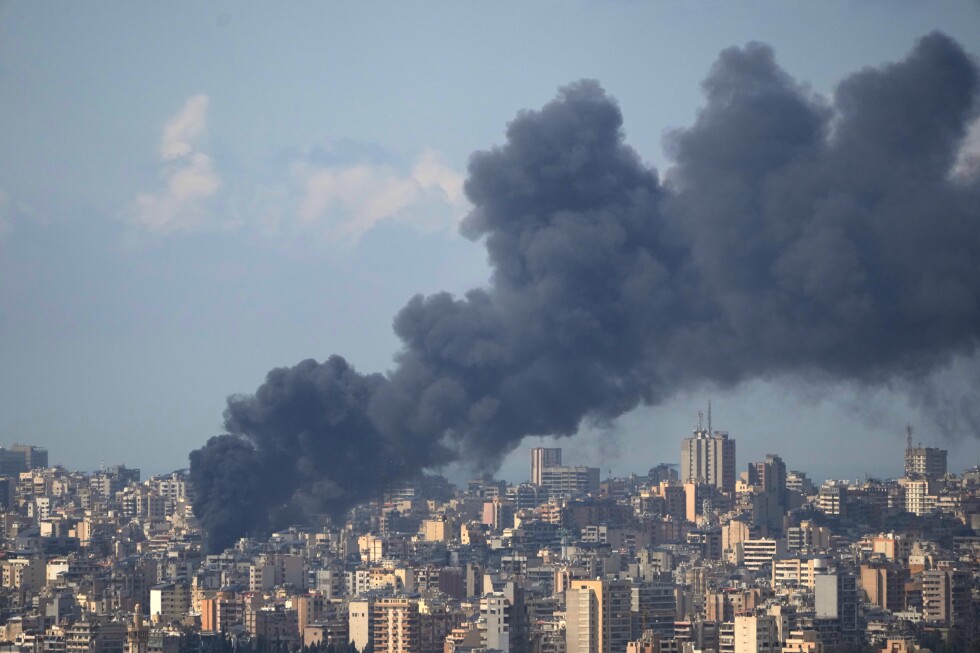
Black smoke billowed over the seaside capital, where thousands of war-displaced people have sought refuge. Associated Press journalists reported seeing charred bodies in vehicles and on the ground at one of Beirut’s busiest intersections in the central Corniche al Mazraa neighborhood, a mixed commercial and residential district. Rescue workers used forklifts to remove smoldering debris while searching for survivors.
“These hits are now at the heart of Beirut… Half of the sheltered internally displaced people are in Beirut in this area,” Lebanon’s Minister of Social Affairs Haneed Sayed told the AP, calling the strikes “a very dangerous turning point.” She indicated that the Lebanese government remains ready to negotiate with Israel to end hostilities, an offer previously extended by Lebanon’s president that Israel has not addressed.
Central Beirut has rarely been targeted so intensively since the current Israel-Hezbollah war began on March 2. Israeli military officials claimed they targeted missile launchers, command centers, and intelligence infrastructure, accusing Hezbollah of attempting to “blend into” non-Shiite Muslim areas beyond their traditional strongholds. However, residents and local officials vehemently denied that the buildings hit were military sites.
“Look at these crimes,” said Mohammed Balouza, a member of Beirut’s municipal council, at the scene of a strike where an apartment building behind a popular shop selling nuts and dried fruit had been hit. “This is a residential area. There is nothing [military] here.”
In the aftermath of the strikes, Israeli Defense Minister Israel Katz issued a warning to Hezbollah leader Naim Kassem that “his turn will come,” referencing Israel’s killing of Hezbollah’s previous leader, Hassan Nasrallah, in an airstrike earlier in 2024. Katz described Wednesday’s operation as the most significant blow against Hezbollah since the September 2024 attack that caused hundreds of pagers used by Hezbollah members to explode simultaneously.
The conflict has taken a devastating toll on Lebanon. According to the health ministry, 1,739 people have been killed and 5,873 wounded in just over five weeks. More than one million people have been displaced, with many sleeping in tents on the streets of Beirut and Sidon.
In response to the attacks on Lebanon, Iran announced it was again halting the movement of oil tankers in the Strait of Hormuz, potentially threatening global oil supply routes.
The escalating violence underscores the fragility of regional diplomacy efforts. Lebanon’s Prime Minister Nawaf Salam accused Israel of escalating at precisely the moment when Lebanese officials were seeking a negotiated solution, and of striking civilian areas “in utter disregard for the principles of international law.”
For displaced families who had briefly hoped to return home after the ceasefire announcement, Wednesday’s attacks brought renewed despair. “We can’t take this anymore, sleeping in a tent, not showering, the uncertainty,” said Fadi Zaydan, 35, who had prepared to return to the southern city of Nabatieh with his parents but instead decided to wait in Sidon.
Fact Checker
Verify the accuracy of this article using The Disinformation Commission analysis and real-time sources.

15 Comments
This is a tragic and concerning development. The breakdown of the ceasefire and the devastating airstrikes are extremely worrying. I hope the international community can intervene to stop the violence and get the parties back to the negotiating table before the situation spirals further out of control.
You’re right, this is a very troubling escalation. It’s crucial that the international community applies strong diplomatic pressure to both sides to de-escalate and return to a peace process.
This is a devastating blow to the hope for peace in the region. The high civilian casualty toll is extremely troubling. I hope the international community can come together to find a path forward that protects innocent lives on all sides.
I’m deeply saddened by the high death toll and destruction caused by these airstrikes. This appears to be a disproportionate use of force by Israel, especially after a ceasefire was announced. I hope the international community can pressure all sides to de-escalate and return to the negotiating table.
The breakdown of the ceasefire and these devastating airstrikes are deeply worrying. I fear this conflict is spiraling out of control, with tragic consequences for the people of Beirut and the wider region. Urgent action is needed to de-escalate the situation.
The breakdown of the ceasefire and the devastating airstrikes in Beirut are deeply troubling. I’m concerned about the high civilian casualties and the potential for this conflict to spiral further out of control. The international community must act quickly to stop the violence and get the parties back to the negotiating table.
Tragic news. My heart goes out to the people of Beirut. This escalation of violence is concerning, especially after the ceasefire announcement. I hope the international community can work to de-escalate the situation and prevent further loss of life.
Agreed. The breakdown of the ceasefire is deeply worrying. All sides need to exercise restraint and return to diplomatic efforts to find a peaceful resolution.
The devastating airstrikes in Beirut are a tragic and senseless escalation of violence. I’m deeply concerned about the high civilian casualties and the breakdown of the ceasefire. This conflict seems to be spiraling out of control, and urgent action is needed to prevent further loss of life.
This is a devastating development. The high death toll and destruction caused by these airstrikes is heartbreaking. I hope the international community can intervene to stop the fighting and get the parties back to the negotiating table before the situation deteriorates further.
Agreed. This is a tragic and concerning turn of events. Urgent diplomatic pressure is needed to de-escalate the situation and return to a peaceful resolution.
This is a tragic and senseless escalation of violence. The targeting of civilian areas is completely unacceptable. I hope the international community can intervene to stop the fighting and get the parties back to the negotiating table.
Agreed. This is a devastating blow to the prospects for peace. All sides need to show restraint and return to diplomatic efforts to find a lasting solution.
Shocking development. The Israeli airstrikes appear to have been a disproportionate response, especially after a ceasefire was announced. This conflict seems to be spiraling further out of control. I hope the UN and global leaders can intervene to stop the violence.
You raise a valid point. The targeting of civilian areas is extremely concerning and a potential war crime. Urgent diplomatic pressure is needed to get both sides to step back from the brink.