


Listen to the article
Israel Eliminates Two Top Iranian Officials as Regional Conflict Intensifies
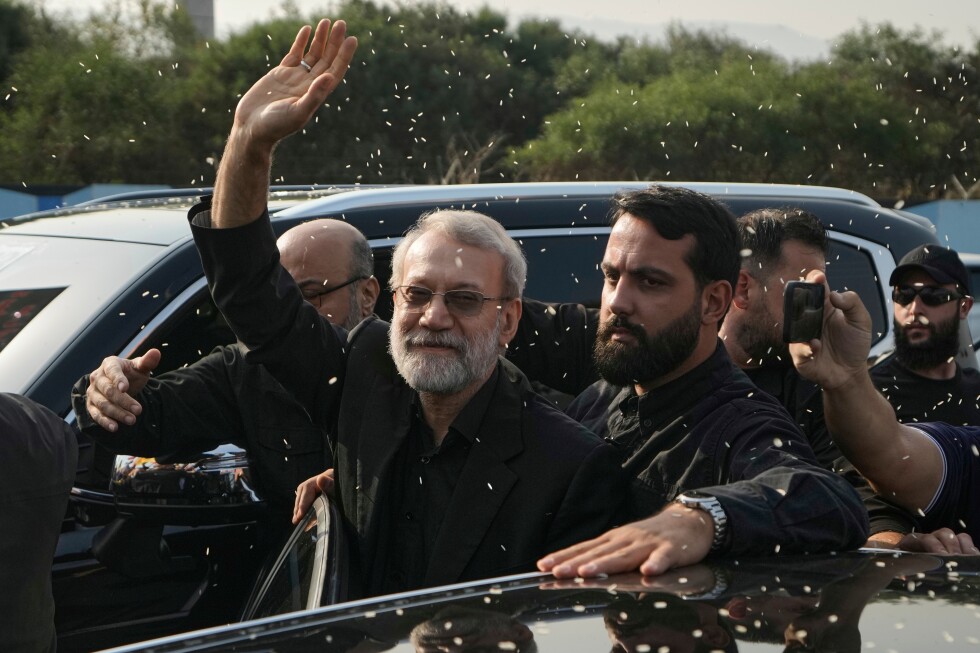
Israel announced Tuesday it had killed two senior Iranian officials in overnight strikes, dealing a significant blow to Iran’s leadership amid escalating regional hostilities. Defense Minister Israel Katz confirmed the deaths of Ali Larijani, secretary of Iran’s Supreme National Security Council, and Gen. Gholam Reza Soleimani, head of the Revolutionary Guard’s Basij force.
Following Supreme Leader Ayatollah Ali Khamenei’s death in an airstrike at the beginning of the conflict, Larijani had emerged as one of Iran’s most powerful figures. Both men played crucial roles in Iran’s crackdown on protests earlier this year that challenged the theocracy’s 47-year rule.
The killings strip Iran of key leadership at a critical moment as the Islamic Republic faces unprecedented challenges in its war with the United States and Israel. Iranian state media has not immediately confirmed either death.
Larijani, from one of Iran’s most influential political families, previously served as parliamentary speaker and senior policy adviser. He was appointed to advise Khamenei on strategy during nuclear negotiations with the Trump administration and was sanctioned by the U.S. Treasury in January for coordinating responses to nationwide protests.
Soleimani similarly faced sanctions from the U.S., European Union, and other nations for his role in suppressing dissent through the Basij forces. Meanwhile, Iran’s new Supreme Leader Mojtaba Khamenei, who succeeded his father, has not been seen in public since taking power, with Israeli intelligence suggesting he may have been wounded.
As the conflict intensifies, Iran continues targeting energy infrastructure throughout the Gulf region. A drone strike hit an oil facility in Fujairah, an emirate in the United Arab Emirates, though no injuries were reported according to state-run WAM news. Separately, a tanker anchored off Fujairah’s coast sustained minor damage from interception debris, according to the British-run UK Maritime Trade Operations center.
The human toll continues to rise, with authorities reporting that one person was killed by debris from an intercepted missile over Abu Dhabi, marking the eighth death in the UAE since hostilities began.
Iran’s aggressive posture toward the Strait of Hormuz, a vital waterway through which approximately 20% of the world’s oil passes, has raised serious concerns about a potential global energy crisis. While a handful of ships have navigated the strait, Iran has declared it closed to the United States, Israel, and their allies. About 20 vessels have been struck since the conflict erupted.
“They are flying, launching missiles, should we just sit back and do nothing in response?” Iran’s parliamentary speaker Mohammad Bagher Qalibaf said during a state television interview, defending Iran’s actions.
With oil prices climbing, U.S. President Donald Trump has called for multiple countries to deploy warships to secure passage through the Strait of Hormuz. However, his appeals have yielded no immediate commitments, with many nations expressing reluctance to enter a conflict without a clear exit strategy.
The UAE briefly shut down its airspace Tuesday as its military responded to missile and drone threats from Iran. Though the closure was soon lifted, explosions could be heard shortly after as defense systems intercepted incoming fire. Emirati authorities reported intercepting 10 ballistic missiles and 45 Iranian drones on Tuesday alone.
This disruption highlights the delicate balance Emirati officials must maintain to keep their major carriers Emirates and Etihad operating amid ongoing attacks. Other regional countries also faced Iranian fire, with Saudi Arabia intercepting drones and air defenses activating over Qatar’s capital, Doha. In Iraq, the U.S. Embassy in Baghdad was hit by shrapnel from intercepted drones launched by Iran-aligned forces.
The Israeli military confirmed launching new attacks across Tehran early Tuesday, targeting command centers, missile launch sites, and air defense systems. Information from Iran remains limited due to internet outages, continuous airstrikes, and restrictions on journalists. The Iranian Red Crescent reports that more than 1,300 people have been killed in Iran since the conflict began.
In Lebanon, Israel intensified strikes against Hezbollah, though specific details were not immediately released. The Lebanese army reported two soldiers seriously wounded in an airstrike on the village of Kfar Sir. Israeli operations have displaced over one million Lebanese citizens—approximately 20% of the population—with the Lebanese government reporting around 850 deaths.
Israeli troops have already moved into southern Lebanon, fueling concerns about a potential large-scale invasion. Meanwhile, Israel reported multiple Iranian missile salvos toward Tel Aviv and areas south of the Sea of Galilee, along with continued launches from Lebanon.
The death toll in Israel stands at 12 from Iranian missile fire, while at least 13 U.S. military personnel have been killed in the widening conflict.
Fact Checker
Verify the accuracy of this article using The Disinformation Commission analysis and real-time sources.

8 Comments
This is a worrying development that will surely impact the global commodity markets, especially energy and precious metals. Investors will be closely watching for any disruptions to oil and gas supplies, as well as potential volatility in gold and other safe-haven assets.
Absolutely, the commodities markets will be on edge. Heightened geopolitical tensions often lead to price swings in resources like oil, natural gas, and precious metals. Diversified investors may want to position themselves defensively in case of further escalation.
While I understand the strategic rationale behind these killings, I’m concerned about the broader regional implications. Escalating the conflict between Israel and Iran could have devastating consequences for the entire Middle East. Diplomacy and de-escalation should be the priority, not tit-for-tat attacks.
This is a significant blow to Iran’s leadership. The elimination of two senior officials like Larijani and Soleimani will undoubtedly weaken Tehran’s position in the ongoing regional conflict. It will be interesting to see how Iran responds to these targeted killings.
You’re right, this is a major development. Iran will likely retaliate in some form, escalating the tensions further. The power vacuum created by these losses could also lead to internal turmoil within the regime.
It’s difficult to assess the full strategic significance of these killings without more information. While they represent a major blow to Iran’s leadership, the long-term implications remain uncertain. Much will depend on how Iran chooses to respond in the coming days and weeks.
The timing of these strikes is curious, coming after the death of Ayatollah Khamenei. It seems Israel is taking advantage of the instability to severely weaken Iran’s leadership. However, this could backfire and provoke an even more aggressive response from Tehran.
That’s a good point. Israel may have calculated that this is the best opportunity to target these key figures, but the risk of retaliation is high. Iran will likely feel compelled to act forcefully to assert its authority and deter further attacks.