


Listen to the article
Hezbollah Launches Massive Attack on Israel, IDF Retaliates with Strikes on Beirut
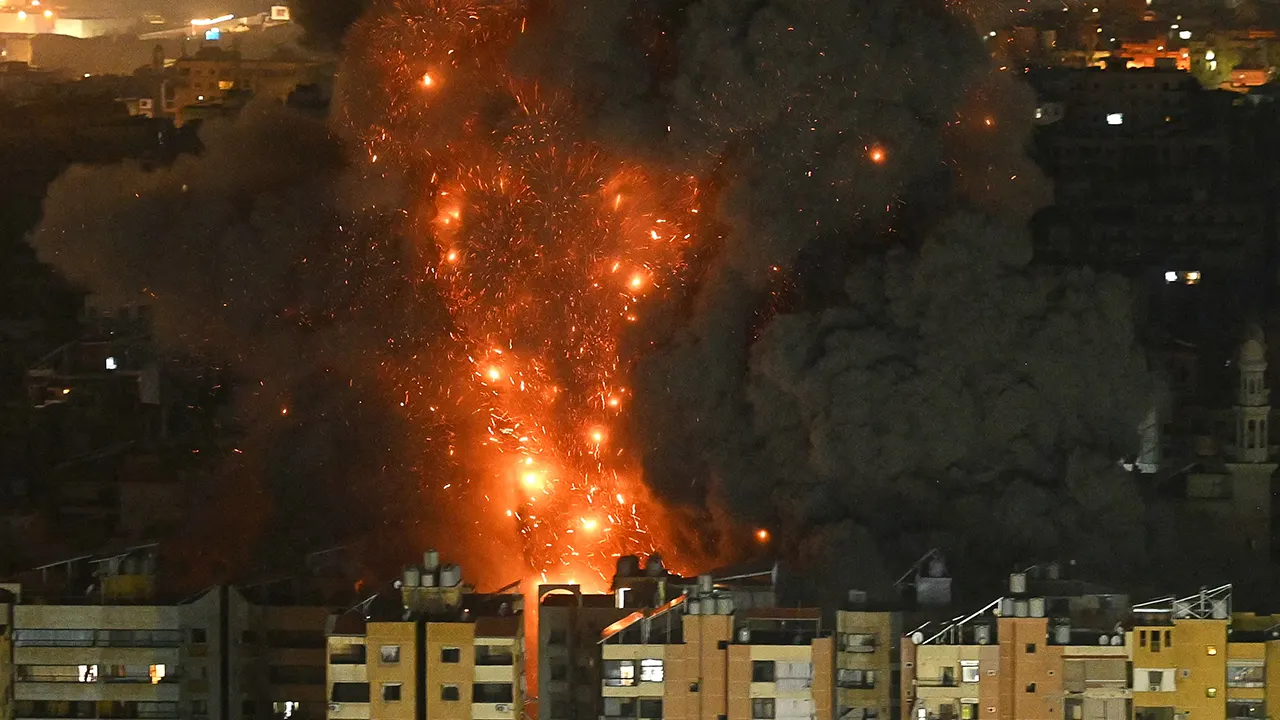
Iran-backed Hezbollah fired approximately 200 missiles and drones into Israel overnight and into Thursday in what Israeli media described as an “integrated Hezbollah and Iran joint attack.” The barrage prompted immediate and forceful retaliation from the Israel Defense Forces (IDF), which conducted strikes against Hezbollah strongholds in Beirut’s suburbs.
The IDF issued a statement emphasizing its resolve in confronting the threat: “The IDF is operating with determination against the Hezbollah terrorist organization following its deliberate decision to attack Israel on behalf of the Iranian regime. The IDF will not tolerate any harm to Israeli civilians and will forcefully respond against any threat posed to the State of Israel.”
Hezbollah has dubbed its latest offensive “Operation Eaten Straw,” claiming to have targeted Israeli military installations in Tel Aviv’s suburbs and other strategic locations. Matthew Levitt, a leading Hezbollah scholar from the Washington Institute, explained the significance of the operation’s name to Fox News: “The term comes from a Koran verse about destroying one’s enemies to the point that they are destroyed like grains of straw husks. In fact, it is going to lead to a massive Israeli response.”
The escalation comes just days after Lebanon’s President Joseph Aoun accused Hezbollah of pushing Lebanon toward becoming “a second Gaza,” highlighting growing domestic concern over the militant group’s actions and the potential consequences for the country.
Israeli security expert Sarit Zehavi from the Israel Alma Research and Education Center told Fox News Digital: “I think that Hezbollah is trying to scare Israel from launching further operations, and I truly hope that we will not be afraid, and our government will do what it has to do.”
The Lebanese armed forces previously failed to meet a deadline set by the Trump administration in 2025 to disarm Hezbollah, which is designated as a terrorist organization by the United States and several other countries.
While the Lebanese government announced on Tuesday its interest in direct talks with Israel to end the conflict, Israeli officials remain skeptical. One official claimed that Beirut was not “affecting Hezbollah’s behavior in any way,” according to a report from news site Y-Net cited by the Times of Israel.
Speaking at the United Nations Security Council in New York on Wednesday, Israel’s UN Ambassador Danny Danon presented Lebanon with an ultimatum: “Lebanon now faces two options: either the Lebanese government takes real actions and restrains Hezbollah, or Israel uses its force to dismantle this terrorist organization. There is no other option.”
Edy Cohen, a Lebanese-born Israeli scholar specializing in Hezbollah, dismissed the Lebanese government’s overtures to Israel as political theater. He referenced the 2006 war between Israel and Hezbollah that ended with UN Security Council Resolution 1701, which required the Lebanese state and army to disarm Hezbollah—a mandate that was never effectively implemented.
“I don’t believe the Lebanese government. It is a game between them and Hezbollah,” Cohen told Fox News Digital. “The Lebanese offered, for the first time since 1982, it would agree to dialogue with Israel. The first condition is a ceasefire. Hezbollah told the Lebanese government to give the Israelis this offer. Hezbollah wants to stop this war. And that is how the government of Lebanon jokes about us.”
At Wednesday’s UN Security Council meeting, Lebanese Ambassador Ahmad Arafa insisted that “The Lebanese people do not want war, and the Lebanese government is moving forward in implementing its decisions and will not backtrack.” He further claimed that “In our modern history, no Lebanese government has demonstrated this level of courage and determination to reclaim state authority, to restrict weapons to legitimate state institutions, and to extend the state’s control exclusively through its own forces over all Lebanese territory.”
An Israeli official delivered a stark warning to the Times of Israel: “The Lebanese government needs to get a grip on their country or Hezbollah parts of Beirut will soon look like Gaza.”
As tensions continue to escalate along Israel’s northern border, the latest exchange of hostilities threatens to push the region closer to a wider conflict, with significant implications for regional stability and the civilian populations caught in the crossfire.
Fact Checker
Verify the accuracy of this article using The Disinformation Commission analysis and real-time sources.

25 Comments
I like the balance sheet here—less leverage than peers.
Good point. Watching costs and grades closely.
Good point. Watching costs and grades closely.
Exploration results look promising, but permitting will be the key risk.
Good point. Watching costs and grades closely.
Good point. Watching costs and grades closely.
Interesting update on Israel Retaliates Following Coordinated Iran-Hezbollah Attacks, Calls on Beirut to Control Militants. Curious how the grades will trend next quarter.
Good point. Watching costs and grades closely.
Uranium names keep pushing higher—supply still tight into 2026.
Production mix shifting toward World might help margins if metals stay firm.
Nice to see insider buying—usually a good signal in this space.
Good point. Watching costs and grades closely.
Good point. Watching costs and grades closely.
Silver leverage is strong here; beta cuts both ways though.
Good point. Watching costs and grades closely.
Silver leverage is strong here; beta cuts both ways though.
Good point. Watching costs and grades closely.
Silver leverage is strong here; beta cuts both ways though.
Good point. Watching costs and grades closely.
Good point. Watching costs and grades closely.
If AISC keeps dropping, this becomes investable for me.
Good point. Watching costs and grades closely.
Interesting update on Israel Retaliates Following Coordinated Iran-Hezbollah Attacks, Calls on Beirut to Control Militants. Curious how the grades will trend next quarter.
Good point. Watching costs and grades closely.
Good point. Watching costs and grades closely.