


Listen to the article
Israeli and U.S. forces continue their military campaign against Iran with a dual strategy aimed at eliminating immediate threats while potentially creating conditions for regime change, according to a senior Israeli official.
In an interview on Monday, Israeli Minister of Diaspora Affairs Amichai Chikli outlined the mission’s two primary objectives. The first focuses on neutralizing existential threats to Israel, particularly Iran’s ballistic missile capabilities that were being rapidly rebuilt following last year’s Operation Midnight Hammer.
“These missiles are capable of sending missiles into the heart of our cities, into hospitals,” Chikli explained, emphasizing the urgent need to destroy such weaponry. He added that several components of Iran’s nuclear program also “still need to be removed,” suggesting the operation aims to set back Iran’s nuclear ambitions significantly.
The second and more ambitious goal involves creating conditions conducive to regime change in Iran. Chikli acknowledged that neither Israeli nor U.S. forces would directly install a new government, stating, “We are well aware of the fact that not the IDF and not the U.S. Army is going to replace the regime in Iran.”
Instead, he pointed to the Iranian people as the agents of change, suggesting they now have “the biggest opportunity in the last 40-plus years since the beginning of the revolution to do something in order to create a different reality in Iran and regain their freedom.”
This sentiment echoes recent statements by President Donald Trump, who on Saturday directly addressed the Iranian people, encouraging them to “seize control of their destiny” once military operations conclude. “The hour of your freedom is at hand,” Trump declared. “When we are finished, take over your government. It will be yours to take. This will be, probably, your only chance for generations.”
The ongoing military campaign, dubbed “Operation Epic Fury,” has already resulted in significant casualties among Iran’s leadership. A U.S. senior official confirmed to Fox News that Supreme Leader Ayatollah Ali Khamenei was among five to ten top Iranian leaders killed in an Israeli strike on Tehran, marking a dramatic escalation in the conflict.
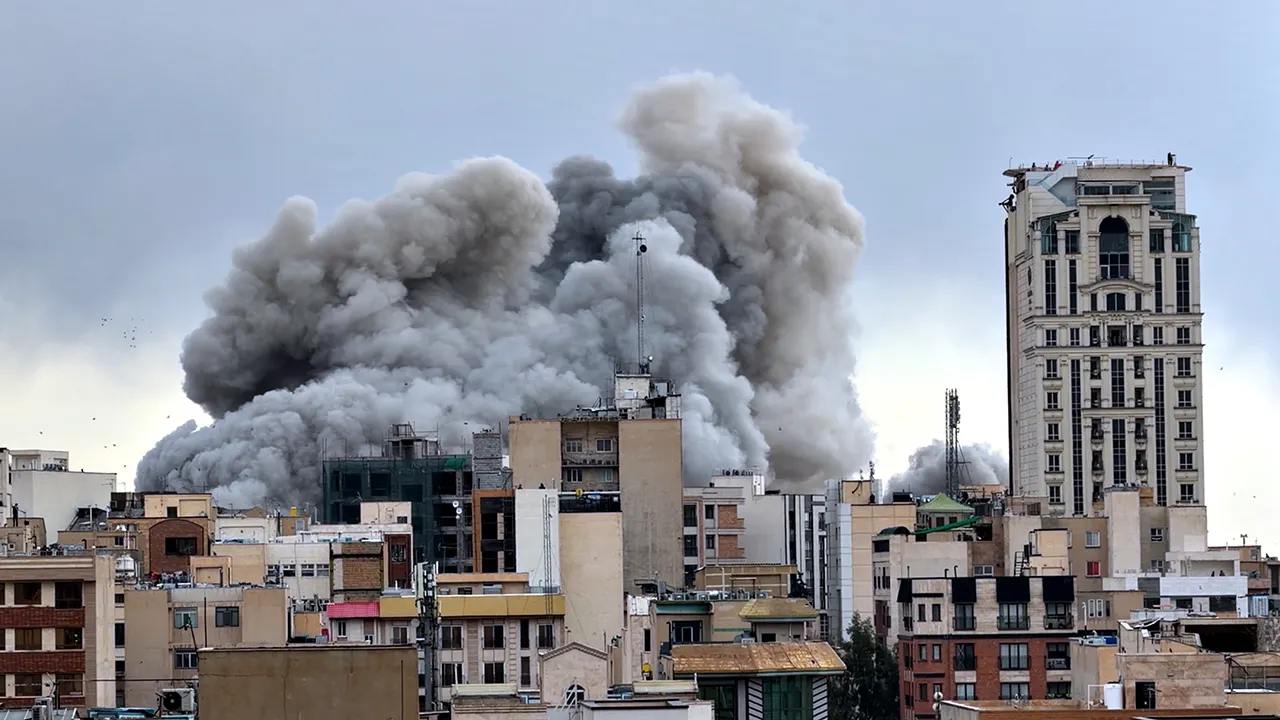
The strikes have targeted key infrastructure throughout Iran, including missile facilities, nuclear sites, and communications centers. Images show plumes of smoke rising over Tehran, with state television towers and buildings sustaining heavy damage.
Iran has responded by launching retaliatory strikes against Israel and U.S. assets across the Middle East, including military facilities in Bahrain, Qatar, Kuwait, and Jordan. These actions have prompted several Arab nations to condemn Iran’s aggression and express solidarity with each other, potentially reshaping regional alliances.
Chikli expressed optimism about the potential for a transformed Iran that could become integrated into the international community. “Iran is a major state with a lot of resources, and it can be an ally,” he said. “An ally of Israel, it can be an ally of the U.S., it can be an ally of the UAE, it can be an ally of Kuwait and every moderate regime in the region.”
The Israeli minister described a vision where Iran could be aligned “with the West, with freedom, with human dignity,” suggesting that the current operation might catalyze fundamental changes in regional politics.
The ongoing military action represents one of the most significant direct confrontations between Western powers and Iran since the 1979 Islamic Revolution. Analysts note that the targeting of Iran’s supreme leader and other top officials indicates a strategy aimed at decapitating the regime’s leadership structure rather than merely degrading its military capabilities.
As the conflict intensifies, international concerns are growing about the potential for a wider regional war. The coming days will be crucial in determining whether the U.S.-Israeli operation achieves its stated goals or leads to further escalation in an already volatile region.
Fact Checker
Verify the accuracy of this article using The Disinformation Commission analysis and real-time sources.

16 Comments
This provides a helpful overview of Israel’s strategic priorities in their ongoing campaign against Iran. The focus on eliminating the ballistic missile and nuclear threats is understandable, but the goal of regime change seems extremely ambitious and fraught with risks. I’m curious to see how they try to achieve that without direct military intervention.
Yes, the regime change objective is the real x-factor here. It’s a high-risk, high-reward strategy that could backfire if not executed very carefully.
The details on the dual objectives – neutralizing threats and creating conditions for regime change – provide an interesting perspective on Israel’s strategy. While the immediate threat reduction is clear, the longer-term goal of regime change seems very ambitious and fraught with challenges.
Yes, the regime change piece is the more contentious and uncertain part of the mission. It will be important to watch how they try to shape the conditions for that without direct military intervention.
This provides helpful insight into Israel’s strategic calculus in their ongoing campaign against Iran. Neutralizing the immediate threats from missiles and nuclear capabilities is an understandable priority. But the goal of creating conditions for regime change seems incredibly complex and prone to unintended consequences. I’ll be curious to see how they try to walk that line.
Yes, the regime change objective is the real challenge here. It’s a high-risk, high-reward strategy that could easily backfire if not executed flawlessly. Very delicate diplomatic and covert maneuvering will be required.
Interesting to see the details on Israel’s dual objectives in this Iran mission – eliminating the missile and nuclear threats, while also trying to create conditions for potential regime change. The threat reduction piece makes sense, but the regime change goal seems incredibly ambitious and fraught with risk. I wonder what specific tactics they have in mind to try and influence that outcome without direct military intervention.
Absolutely, the regime change objective is the real wildcard here. It’s an incredibly complex and high-stakes gambit that could easily spiral out of control. They’ll need to tread extremely carefully to avoid unintended consequences.
The details on Israel’s dual objectives – threat reduction and potential regime change – offer an interesting perspective on their strategy. While the immediate security concerns around missiles and nukes are clear, the longer-term aim of influencing regime change in Iran seems incredibly complex and risky. I wonder what specific tactics they have in mind to try and shape that outcome.
Agreed, the regime change piece is the real wildcard here. It’s an ambitious and fraught goal that could easily spiral out of control if not handled with extreme caution.
This highlights the complex geopolitical dynamics at play in the Middle East. Eliminating the immediate threats from Iran’s missile and nuclear programs is understandable, but the regime change ambitions raise some concerns around potential unintended consequences. I hope they can pursue this carefully.
Agreed, the regime change goal is particularly risky and could lead to further instability in the region. They’ll need to tread very carefully.
Interesting to see the details on Israel’s objectives in this Iran mission. Neutralizing the ballistic missile and nuclear threats seems like a critical priority, but the more ambitious goal of regime change will be challenging. I wonder what the specific conditions they hope to create for that?
Yes, the regime change objective is certainly ambitious. It will be tricky to create the right conditions without directly intervening with military force.
Intriguing that the mission has these two distinct but related objectives – addressing the immediate missile and nuclear threats, while also trying to set the stage for potential regime change in Iran. The latter goal seems quite ambitious and fraught with risks. I wonder what specific tactics they have in mind to try and influence that outcome.
Exactly, the regime change piece is the real wild card here. It will be crucial to see how they try to create those conditions without triggering further conflict and instability.