


Listen to the article
After nearly six weeks of restrictions on public gatherings due to the conflict with Iran, Jerusalem’s holy sites reopened to worshippers Thursday, bringing relief to adherents of three major religions who had been unable to fully practice their faith traditions.
Israeli authorities announced Wednesday they would lift all restrictions on Jerusalem’s religious sites and deploy hundreds of officers and volunteers throughout the city to maintain security. The move comes as tensions ease following a period when missile attacks from Iran frequently sent Jerusalem residents seeking shelter.
During the conflict, access to Christian, Jewish, and Muslim holy sites had been either completely prohibited or severely limited to just a few dozen faithful at a time. The restrictions had significantly subdued observances of major religious holidays, including Lent, Passover, and Ramadan.
The Al-Aqsa Mosque compound, Islam’s third holiest site, reopened for dawn prayers Thursday according to Jerusalem’s Islamic Waqf, the Jordanian religious authority that administers the compound. The mosque had remained largely closed throughout Ramadan and the Eid al-Fitr holiday, causing distress among Muslim worshippers.
At the adjacent Western Wall—Judaism’s holiest prayer site—dozens of men and women were observed praying Thursday morning as restrictions were lifted. The site holds profound significance for Jews worldwide as the last remaining structure from the Second Temple.
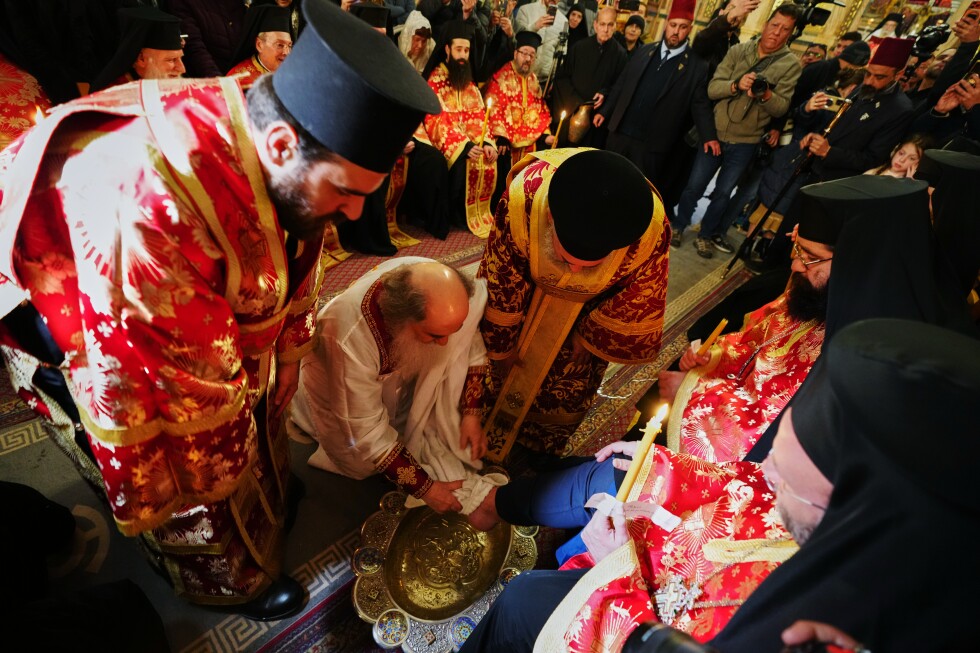
The timing of the reopening is particularly fortunate for Orthodox Christians, who are preparing to celebrate Easter on Sunday. The celebration comes just before the centuries-old Holy Fire ceremony, a ritual of immense significance for Eastern Orthodox Christians.
During this ceremony, thousands of faithful will gather inside the Church of the Holy Sepulchre—a sprawling 12th-century basilica built on the site where Christian tradition holds that Jesus was crucified and buried. The Greek Orthodox Patriarch will light candles in a ritual believed to represent a miracle, with the flame subsequently passed from one candle to another among the gathered worshippers.
The restrictions had sparked international backlash in March when Israeli police prevented Cardinal Pierbattista Pizzaballa, the Latin Patriarch of Jerusalem, and other Catholic leaders from entering the Church of the Holy Sepulchre to celebrate Palm Sunday Mass—breaking a centuries-old tradition. The incident drew sharp criticism from the United States and other nations.
Israeli Prime Minister Benjamin Netanyahu later clarified there was no “malicious intent” behind the action, attributing it to safety concerns. Cardinal Pizzaballa was subsequently permitted to enter the church on Easter Sunday for holiday celebrations.
The reopening elicited emotional responses from worshippers who had been unable to access these sacred spaces for weeks.
“It is as if human beings are reborn,” said Mohammed Al-Qassas about returning to Al-Aqsa. He described being unable to pray during the restricted period as “feeling hungry all the time.”
International visitors also expressed relief at finally being able to visit these significant religious sites. “It’s impossible to describe this feeling… It was one of the most happiest moments in my life,” said Biljana Vaslic, a tourist from Serbia who had been unable to enter the Church of the Holy Sepulchre until now.
Not everyone viewed the reopening without skepticism, however. Some accused Israeli authorities of exploiting the conflict as a pretext for restricting access, particularly to Al-Aqsa. “This is a grace from God after 40 days of using the war as a pretext, but God has granted steadfastness in this mosque,” said Omar al-Kiswani, director of the mosque.
Even before the recent conflict, access to Al-Aqsa had been subject to limitations. During Ramadan prayers in early February, Israel had restricted Palestinian entry from the West Bank to 10,000 people, allowing only men over 55, women over 50, and children under 12. Israeli authorities have implemented similar restrictions in the past, citing security concerns.
The reopening of Jerusalem’s holy sites marks a significant step toward normalcy in a city central to three major world religions, though tensions over access to these sacred spaces remain a complex and ongoing issue in the region’s broader political landscape.
Fact Checker
Verify the accuracy of this article using The Disinformation Commission analysis and real-time sources.

6 Comments
Reopening the holy sites is a positive step, but I hope the authorities can ensure this is done safely and without further escalation of tensions. Protecting religious freedom is crucial, while also addressing the underlying conflicts.
You raise a fair point. Balancing security and religious freedom is a delicate challenge, but it’s crucial that all sides work together constructively to find solutions.
After a difficult period, it’s heartening to see Jerusalem’s holy sites reopening. This will be a relief for the faithful who have been unable to fully observe their religious practices. Careful monitoring will be needed to ensure the transition is peaceful.
This is great news for religious communities in Jerusalem. Lifting the restrictions will allow them to fully practice their faith traditions again after a challenging period. It’s important to maintain security while respecting freedom of religion.
The resumption of access to the holy sites is an important step, but it will be critical to maintain tight security to prevent any further flare-ups of violence. Preserving freedom of religion while upholding public safety is a complex but necessary goal.
While the reopening of Jerusalem’s religious sites is encouraging, I hope the authorities can find ways to ease tensions and prevent future conflicts that disrupt the ability of worshippers to freely practice their faiths. Ongoing dialogue and compromise will be essential.