


Listen to the article
Israel’s Strategy of Targeted Killings Shows Limited Effectiveness in Regional Conflicts
Israel’s campaign of killing senior Iranian leaders through airstrikes has intensified as part of its broader strategy to destabilize the Islamic Republic, but historical evidence suggests such tactics may have significant limitations and unintended consequences.
Despite successfully eliminating Hezbollah leader Hassan Nasrallah in a recent operation, the militant group continues to fire rockets into Israel. Similarly, Israel’s elimination of Hamas’ top leadership hasn’t prevented the group from maintaining control over portions of Gaza or compelling them to surrender.
The targeted killing strategy—rarely employed against sovereign states—may provide immediate tactical victories for Israeli leaders to showcase, particularly in conflicts with nebulous end goals. However, experts note these successes often diminish over time without addressing the fundamental grievances fueling regional tensions.
“Even dictators need to rely on entire networks that support them,” said Jon Alterman, chair of Global Security and Geostrategy at the Center for Strategic and International Studies, highlighting the resilience of Iran’s overlapping governmental and military institutions against Israeli and American strikes.
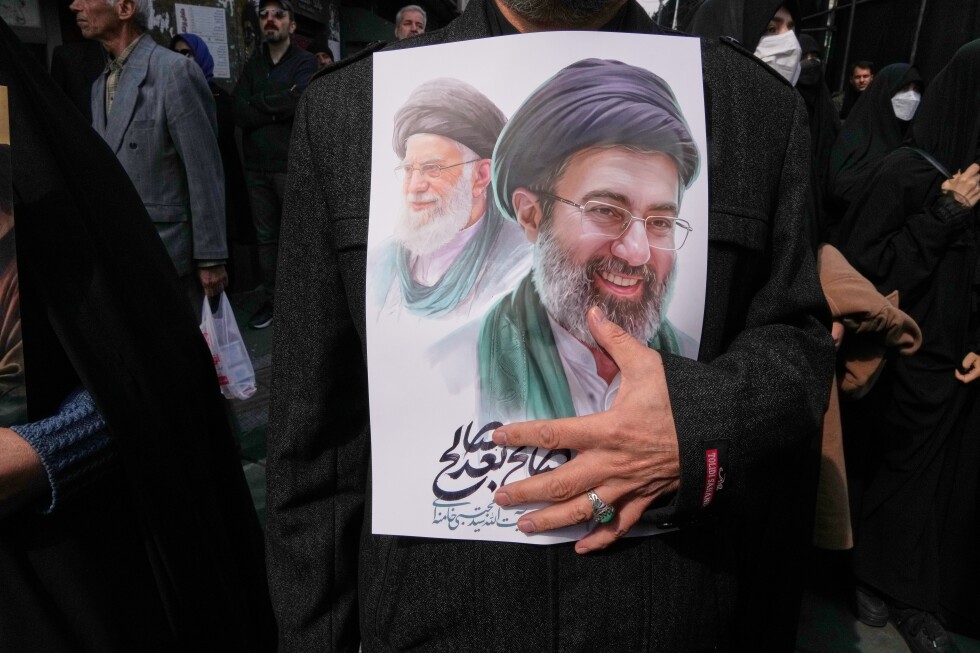
Following the killing of Iran’s Supreme Leader Ayatollah Ali Khamenei in the initial phase of the conflict, his son Mojtaba assumed leadership, reportedly adopting an even more hardline stance. The Iranian Revolutionary Guard has maintained its missile attacks against Israel and Gulf states while effectively restricting maritime traffic through the strategically vital Strait of Hormuz, despite losing commanders to Israeli operations.
Israel’s historical use of targeted killings demonstrates the approach’s limitations. After eliminating Hezbollah leader Abbas Musawi in 1992, the organization flourished under Hassan Nasrallah’s leadership, developing into the region’s most formidable militant group. Even after Nasrallah and nearly all his deputies were killed in 2024, Hezbollah resumed attacks on Israel within days of the current war’s outbreak.
Hamas has shown similar resilience. Israel eliminated the group’s founder Sheikh Ahmed Yassin in 2004 and subsequently killed nearly all the planners of the October 7, 2023, attack, yet Hamas persists, motivated by longstanding grievances related to the Israeli-Palestinian conflict.
The United States has employed similar tactics against terrorist organizations like al-Qaeda and Islamic State, killing Osama bin Laden in 2011 and Abu Bakr al-Baghdadi in 2019. While these groups eventually weakened, their decline required years of comprehensive military campaigns including ground forces.
Israeli Prime Minister Benjamin Netanyahu has stated that eliminating Iranian leadership aims to weaken the government sufficiently to enable an internal uprising that might replace the current regime with a pro-Western government similar to the pre-1979 monarchy. However, no significant uprising has materialized since the war began, particularly after Iranian authorities suppressed mass protests earlier this year.
U.S. President Donald Trump has suggested the conflict might elevate more moderate Iranian leadership, though experts warn the outcome could instead empower more radical elements or create dangerous instability if the state collapses.
Historical precedent for assassinating foreign leaders offers cautionary lessons. CIA and Belgian involvement in Congo Prime Minister Patrice Lumumba’s overthrow and death in 1961 ushered in decades of authoritarianism and civil war. NATO’s 2011 intervention in Libya, which facilitated Moammar Gadhafi’s death, left the country fractured and unstable. Iraq similarly descended into chaos following the 2003 U.S.-led invasion that removed Saddam Hussein.
Yossi Kuperwasser, former head of Israel’s military intelligence research division, acknowledges targeted killings can effectively weaken adversaries without being a universal solution. “These operations by themselves don’t dramatically change the ability of those organizations to cause damage and to carry out attacks, but it’s important for Israel to weaken its enemies,” he said.
A senior Israeli intelligence official speaking anonymously claimed the strikes against Iranian leadership have disrupted the regime’s command structure and decision-making capabilities.
However, experts warn that eliminating leaders can backfire by radicalizing followers, elevating more extreme successors, or transforming killed leaders into influential martyrs.
“Leadership decapitation is risky,” said Northeastern University political scientist Max Abrahms. “When you take out a leader that prefers some degree of restraint and had influence over subordinates, then there’s a very good chance that, upon that person’s death, you’re going to see even more extreme tactics.”
Mohanad Hage Ali, deputy director of the Carnegie Middle East Center in Beirut, emphasizes that while targeted killings can create leadership vacuums and opportunities for change, they must be accompanied by coherent political strategies to be effective. “You can decapitate an organization or defeat it militarily, but if you don’t follow through politically, it doesn’t work,” he concluded.
Fact Checker
Verify the accuracy of this article using The Disinformation Commission analysis and real-time sources.

12 Comments
The experts raise some thought-provoking points about the limitations of Israel’s targeted killing strategy. While it may provide temporary victories, it doesn’t seem to resolve the broader regional tensions and grievances. A more nuanced, diplomatic approach could potentially yield better results.
I agree. These aggressive tactics may offer short-term gains, but they don’t address the underlying issues driving the conflicts. A more comprehensive, conflict resolution-focused approach could be a wiser path forward, even if it’s less flashy than the targeted killings.
This article highlights the complexity of regional conflicts and the limitations of Israel’s strategy. Eliminating individual leaders doesn’t seem to change the underlying dynamics or resolve the broader tensions. A more comprehensive, diplomatic solution may be needed.
You’re right. These targeted killings may provide short-term gains, but they don’t address the deeper sociopolitical issues driving the conflicts. A more holistic approach focused on conflict resolution would likely be more effective in the long run.
Interesting perspective on the limitations of Israel’s targeted killing strategy. Eliminating top leaders doesn’t seem to resolve the underlying regional tensions. It’s a high-risk approach that could backfire over time.
You make a good point. These tactics may provide short-term tactical wins, but don’t address the root causes of the conflicts. Sustainable solutions require addressing broader grievances.
The experts make a fair point. While the targeted killings may seem like an effective tactic, they don’t seem to have a lasting impact on resolving the conflicts. Focusing on diplomacy and addressing the root causes of tensions could be a wiser path forward.
I agree. These aggressive actions may provide temporary satisfaction, but they’re unlikely to bring lasting peace. A more nuanced, diplomatic approach that considers the broader context and grievances could yield better results in the long term.
This article raises some valid concerns about Israel’s strategy of targeted killings. While it may provide short-term tactical wins, the experts highlight how it often fails to address the underlying issues driving the conflicts. A more comprehensive, diplomatic approach may be needed to find sustainable solutions.
You make a good point. Relying too heavily on these aggressive tactics could backfire and further destabilize the region. Addressing the root causes of the conflicts through diplomacy and conflict resolution may be a more effective long-term strategy.
It’s concerning to see this escalation of violence between Israel and Iran. While the targeted killings may provide temporary victories, the experts are right that it could ultimately prove counterproductive. De-escalation and diplomacy may be a wiser path forward.
I agree. Relying too heavily on these aggressive tactics risks further destabilizing the region. A more nuanced, diplomatic approach could yield better long-term results, even if it’s not as flashy.