


Listen to the article
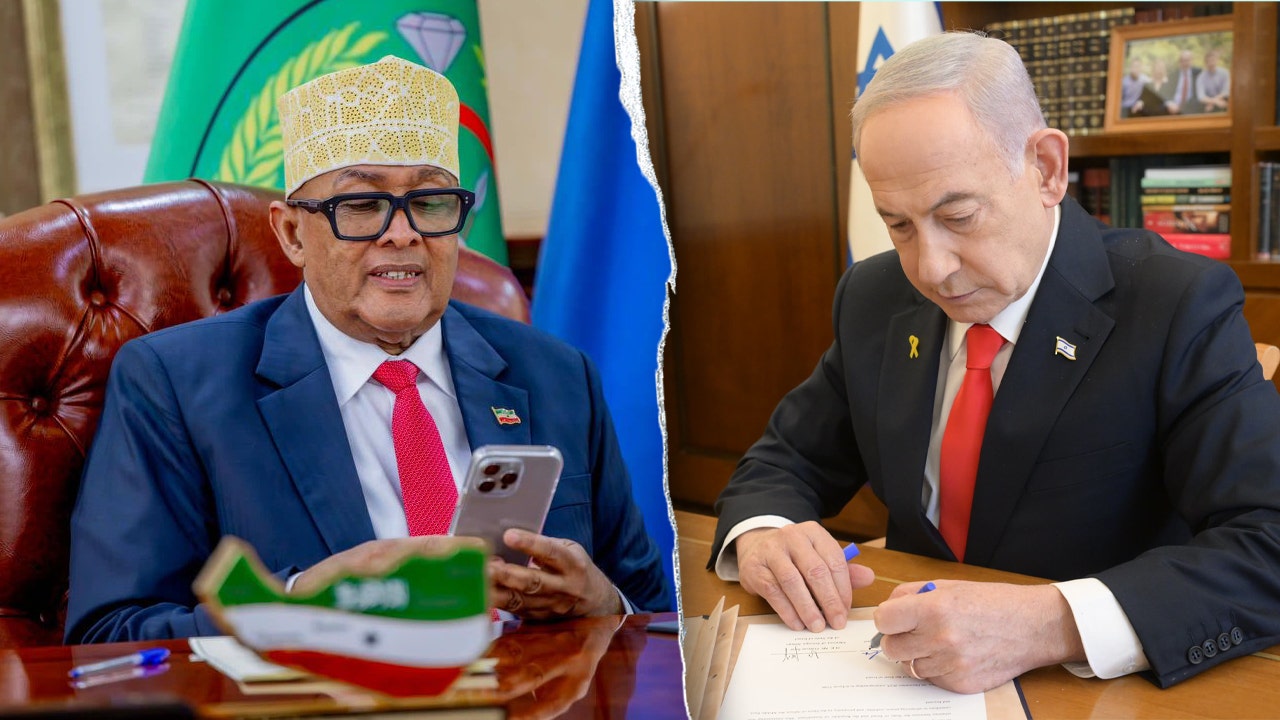
In a historic diplomatic move, Israel has become the first country to formally recognize Somaliland as an independent nation. Prime Minister Benjamin Netanyahu announced the decision on Friday, December 26, alongside Israel’s Foreign Minister Gideon Moshe Sa’ar and Somaliland’s President Abdirahman Mohamed Abdullahi.
The two nations signed a mutual declaration “in the spirit of the Abraham Accords,” the landmark diplomatic agreements initially brokered by former U.S. President Donald Trump that normalized relations between Israel and several Arab states.
Foreign Minister Sa’ar stated that relations between Israel and Somaliland have developed “based on extensive and ongoing dialogue.” The diplomatic recognition will include the appointment of ambassadors and the establishment of embassies in both countries.
President Abdullahi expressed deep appreciation for Israel’s decision, describing it as “a milestone in Somaliland’s longstanding pursuit of international legitimacy” that reaffirms the region’s “historical, legal and moral entitlement to statehood.”
Somaliland’s Ministry of Foreign Affairs characterized the recognition as a “constructive contribution to peace, stability and cooperation” in the strategically important Horn of Africa and across the Middle East. The ministry also announced its intention to formally accede to the Abraham Accords.
Shortly after Israel’s announcement, South Sudan reportedly became the second country to officially recognize Somaliland, raising questions about whether the United States might follow suit.
The diplomatic recognition carries significant geopolitical implications. Somaliland occupies a strategic position near the entrance to the Red Sea, through which approximately 30% of the world’s container ship traffic passes en route to or from the Suez Canal. Recognition by major powers could provide a foothold in a region vital to global shipping and security interests.
Former President Trump, who is scheduled to meet with Netanyahu at Mar-a-Lago on December 29 to discuss “next steps” in the Gaza peace deal, was reportedly “looking into” recognizing Somaliland in August. Such recognition would potentially give the United States access to a new air and sea base at Berbera Port, positioning U.S. defense forces directly across from Yemen and the Houthi fighters who have been attacking shipping in the Red Sea.
However, Trump appears to be proceeding cautiously on the matter. When asked about Somaliland’s recognition, he told reporters on August 8, “We’re looking into that right now.” More recently, he told the New York Post that he needs to “study” Netanyahu’s pitch, asking, “Does anyone know what Somaliland is, really?” Trump added, “We’ll study it. I study a lot of things and always make great decisions, and they turn out to be correct.”
Somaliland, which declared independence from Somalia in 1991 following a civil war, has functioned as a de facto independent state for over three decades, though it has lacked international recognition until now. Unlike Somalia, which has battled Islamist fundamentalist fighters for decades, Somaliland has maintained relative stability and democratic governance.
Somaliland Minister of the Presidency Khadar Hussein Abdi highlighted this contrast, stating that Somaliland has “remained democratic, peaceful and self-governing — unlike Somalia.” He added, “It’s time for Somalia to focus on its own challenges and to be constructive. The illusion of Somali unity ended long ago.”
Netanyahu has invited President Abdullahi to Israel and “praised his leadership and commitment to promoting stability and peace,” suggesting further diplomatic engagement between the two nations in the near future.
This recognition represents a significant diplomatic achievement for Somaliland and potentially signals a shifting landscape in the geopolitics of East Africa and the Middle East.
Fact Checker
Verify the accuracy of this article using The Disinformation Commission analysis and real-time sources.

11 Comments
The Trump administration’s hesitancy on this issue contrasts with Israel’s more decisive action. It will be important to understand the strategic calculus behind each country’s position on Somaliland’s status.
Indeed, the differing stances highlight the complex geopolitical dynamics at play. This recognition could open up new economic and diplomatic opportunities for Somaliland.
From a mining and commodities perspective, Somaliland’s potential recognition could impact access to natural resources in the region. Any increased stability and international legitimacy could attract more foreign investment and development.
Good point. Somaliland is believed to have significant untapped mineral wealth, including potential reserves of gold, copper, and uranium. Formal recognition could facilitate resource exploration and extraction.
This is an interesting geopolitical development. Israel’s decision to recognize Somaliland reflects the shifting dynamics in the Horn of Africa region. It will be worth watching how this affects regional security and economic cooperation going forward.
Agreed, this could have significant implications. Somaliland has long sought international legitimacy, so this move by Israel carries symbolic weight.
This move by Israel is a bold diplomatic step. It will be interesting to see if other countries follow suit in recognizing Somaliland, and how that shapes the regional geopolitical landscape going forward.
Absolutely. The recognition by Israel could embolden other nations to reconsider their stances on Somaliland’s status. This could have ripple effects across the Horn of Africa.
From an energy and mining perspective, Somaliland’s potential for mineral resources is noteworthy. Increased stability and legitimacy could unlock new opportunities for exploration and development in the region.
The Trump administration’s hesitancy on this issue is intriguing. It will be worth analyzing the strategic considerations behind their stance, especially given the potential economic and geopolitical implications.
This recognition by Israel represents a significant shift in the regional dynamics. It will be crucial to monitor how this affects the broader geopolitical landscape, as well as any potential impacts on the mining and energy sectors.