


Listen to the article
Israel and Lebanon Set for Direct Talks Amid Escalating Violence
Tensions between Israel and Lebanese militant group Hezbollah intensified Friday, just days before planned direct negotiations between the Israeli and Lebanese governments are set to begin in Washington under U.S. mediation.
The talks, scheduled for Tuesday, come amid contradictory statements about their scope and conditions. While Lebanese President Joseph Aoun’s office emphasized Beirut’s position that the talks be held under a ceasefire or truce, Israeli Ambassador to the U.S. Yechiel Leiter described them as “formal peace negotiations” and explicitly stated that a ceasefire was not on the agenda.
“Israel refused to discuss a ceasefire with the Hezbollah terrorist organization, which continues to attack Israel and is the main obstacle to peace between the two countries,” Leiter’s statement read, directly contradicting the Lebanese position.
The diplomatic maneuvering occurs against a backdrop of escalating violence. On Friday, an Israeli strike on a government building in the southern Lebanese city of Nabatieh killed at least 13 members of Lebanon’s State Security forces. Meanwhile, Hezbollah claimed responsibility for an attack targeting an Israeli naval base in Ashdod, approximately 145 kilometers from the Lebanese border, along with 31 other attacks on northern Israel and Israeli ground forces in southern Lebanon.
The current conflict intensified after Israel launched an aerial campaign and ground invasion of southern Lebanon following Hezbollah’s rocket attacks on northern Israel on March 2, which the group launched in solidarity with Iran, its key patron.
The human toll has been devastating. According to Lebanon’s Health Ministry, at least 1,953 people have been killed by Israeli strikes since the conflict began. Wednesday marked the bloodiest day of the current hostilities, with at least 303 people killed in a rapid series of 100 Israeli strikes across Lebanon, including multiple dense residential and commercial areas in central Beirut. Civil Defense first responders continue searching for bodies trapped under rubble in the Lebanese capital.
Medical infrastructure is increasingly threatened. Officials at Beirut’s main government-run hospital, Rafik Hariri University Hospital, fear it could be targeted after the Israeli military issued evacuation warnings for surrounding suburbs, including the busy Jnah neighborhood where the hospital is located. The World Health Organization has called for the hospital to be spared and has received assurances it would not be struck.
“The entire zone around the hospital was threatened and deemed dangerous,” said Dr. Mohammad Cheaito, who heads the emergency department. “But at the end of the day, we have a humanitarian duty.”
The path to negotiations remains complicated by differing perspectives. Israeli Prime Minister Benjamin Netanyahu announced Thursday that the talks would focus on disarming Hezbollah and establishing “peaceful relations” between the two countries. A Lebanese official, speaking on condition of anonymity, emphasized that a halt in fighting is a critical condition for Lebanon to engage in direct talks with Israel.
This isn’t the first time such negotiations have been proposed. President Aoun had initially suggested direct talks earlier in the conflict, hoping to prevent an escalation in airstrikes and a ground invasion. At that time, with only France’s backing, the proposal failed to gain traction.
Complicating matters further, the United States and Iran announced a temporary ceasefire on Wednesday in the wider regional conflict that began on February 28, with mediator Pakistan stating it included Lebanon. However, both Israel and the United States subsequently denied this, indicating a preference for separate diplomatic tracks for the different regional conflicts.
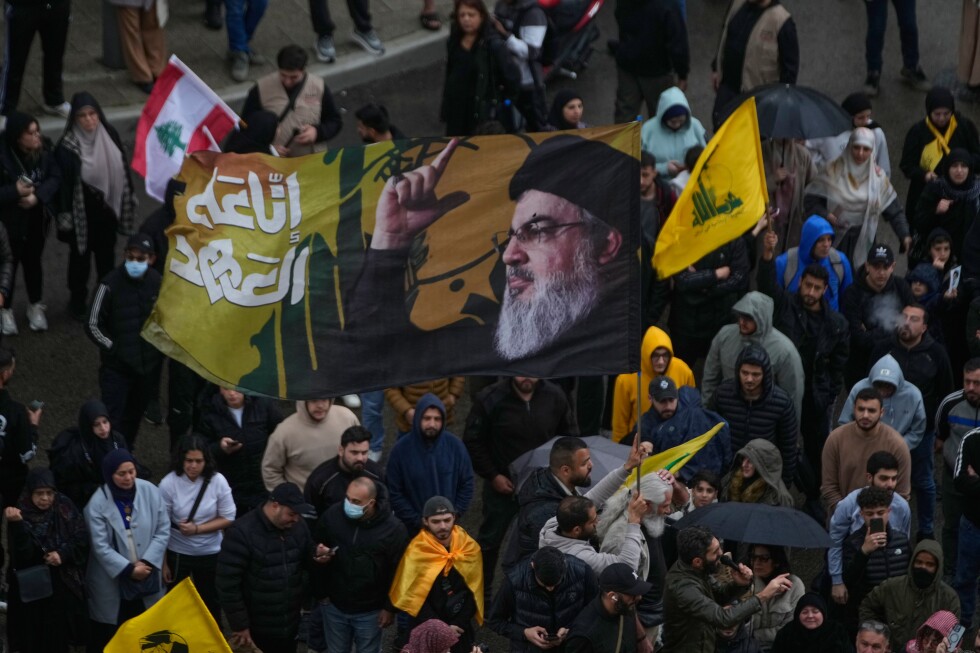
Hezbollah’s leadership has expressed opposition to the talks. Secretary-General Naim Kassem called on the Lebanese government to “stop giving free concessions” to Israel, while dozens of the group’s supporters protested outside the Lebanese prime minister’s office in central Beirut, viewing the scheduled direct talks as surrender to Israel.
“Our blood has been spilled on this land, and our state is conspiring against us,” protester Hassan Shuaib told reporters. “Our state wants to kill us; our state wants to strip us of our weapons.”
As Tuesday’s talks approach, the gap between the Lebanese government’s hope for a truce and Israel’s refusal to discuss a ceasefire with Hezbollah presents a significant challenge to any diplomatic progress, while civilians across the region continue to bear the brunt of the escalating violence.
Fact Checker
Verify the accuracy of this article using The Disinformation Commission analysis and real-time sources.

13 Comments
The timing of these attacks is particularly concerning, as it could jeopardize the upcoming negotiations. Both sides need to demonstrate a genuine commitment to peace and be willing to make difficult compromises for the talks to be successful.
The situation remains delicate, with Israel and Hezbollah exchanging strikes. It’s crucial that the upcoming talks are held in a constructive atmosphere, with a genuine willingness to compromise from all parties.
The contradictory positions on the scope and conditions of the talks are concerning. The parties need to find a way to align their expectations and establish a framework for productive discussions that can lead to tangible progress.
Agreed. Establishing clear ground rules and a shared understanding of the objectives will be crucial for the talks to have any chance of success.
This conflict has a long and complex history, and finding a sustainable solution will require patience, compromise, and a willingness to address the underlying issues. I hope the upcoming talks can lay the groundwork for a more stable and peaceful future.
The escalation of violence is worrying, as it could undermine the chances of successful negotiations. Both sides need to demonstrate restraint and a commitment to finding a diplomatic solution that addresses the core concerns of all parties.
The escalation of violence is deeply troubling, and it highlights the fragility of the situation. The parties need to find a way to de-escalate and create an environment conducive to productive negotiations that can lead to a lasting resolution.
The timing of the increased attacks is concerning, as it could jeopardize the chances of a productive dialogue. Both sides should exercise restraint and focus on finding a diplomatic solution that addresses the core issues.
This conflict has lasted for decades, and it will take significant political will and creativity to break the deadlock. I hope the upcoming negotiations can lay the groundwork for a more stable and peaceful relationship between Israel and Lebanon.
This situation is quite concerning, with the escalation of violence ahead of the crucial talks. Both sides need to approach the negotiations in good faith and be willing to make concessions for any meaningful progress to be achieved.
I agree, constructive dialogue and compromise will be key. The stakes are high, so they need to find a way to de-escalate and work towards a lasting solution.
The contradictory statements from Israel and Lebanon on the scope and conditions of the talks are not encouraging. They need to align on the framework before sitting down to negotiate, or else the discussions may be doomed to fail.
Interesting developments in the Israel-Lebanon tensions. The upcoming talks seem to have some disagreement over the conditions, with Israel refusing a ceasefire. Curious to see if they can find common ground and make progress.