


Listen to the article
Iraq’s Dominant Political Bloc Nominates al-Maliki for Prime Minister
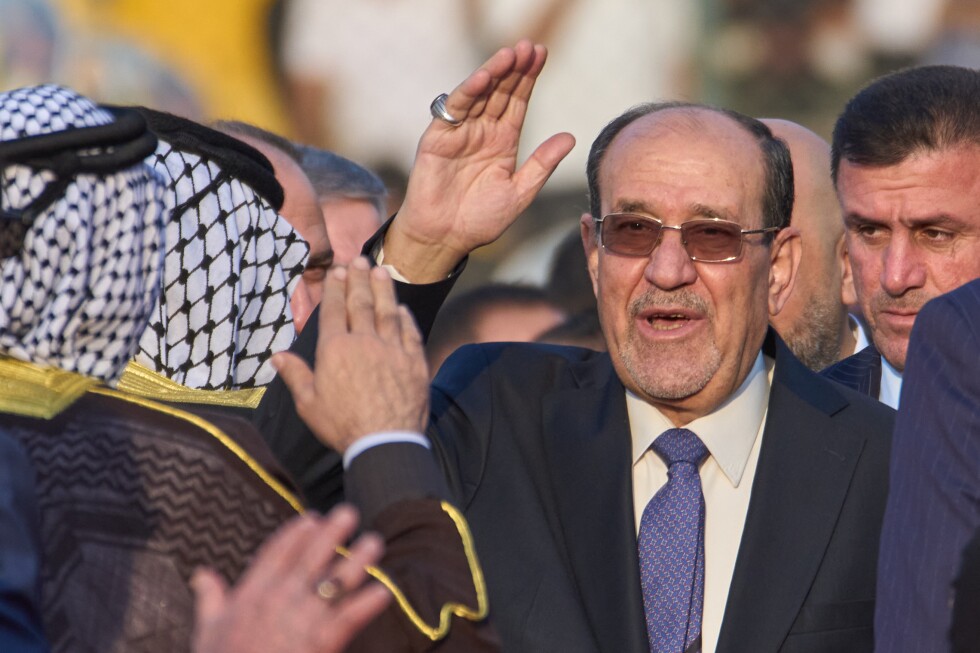
Iraq’s dominant political bloc has nominated former prime minister Nouri al-Maliki as its candidate to lead the country’s next government, setting the stage for what could be a contentious return to power for the polarizing figure.
The announcement from the Coordination Framework, a collection of Shiite parties that secured the largest share of seats in November’s parliamentary elections, came after caretaker Prime Minister Mohammed Shia al-Sudani withdrew from consideration earlier this month. This development effectively ended the competition between the two politicians for the bloc’s backing.
In its statement, the Coordination Framework cited al-Maliki’s extensive political and administrative experience as key factors in their decision. The bloc has called on parliament to convene a session to elect the president, who would then formally name al-Maliki as prime minister-designate.
Under Iraq’s constitutional process, the president is elected by parliament and subsequently appoints a prime minister, who is then responsible for forming a new government. This system was established following the U.S.-led invasion that toppled Saddam Hussein’s regime in 2003.
Al-Maliki’s potential return to power carries significant historical weight. He previously served as prime minister from 2006 to 2014, making him the only Iraqi leader to secure a second term in the post-Saddam era. His bid for a third consecutive term failed amid accusations of monopolizing power and alienating Sunni and Kurdish communities.
The nomination has already exposed deep divisions within Iraq’s political landscape. The National Political Council, a coalition of Sunni parties, issued a statement urging the Coordination Framework to exercise “historical responsibility” and warned against recycling leaders “whose past experiences have failed” to achieve stability or restore public trust—a clear reference to al-Maliki’s controversial tenure.
However, the Sunni political bloc appears divided on the matter. The influential Sunni Azm Alliance rejected the council’s statement and expressed support for al-Maliki, highlighting fractures within Iraq’s sectarian political system.
The next Iraqi government faces formidable challenges both domestically and internationally. Chief among these is the delicate balancing act between relations with the United States and neighboring Iran, two geopolitical rivals with significant influence in Iraq.
One particularly thorny issue will be addressing the status of non-state armed groups, many of which have ties to Iran. The United States has consistently pressed Iraq to disarm these militias—a difficult proposition given their substantial political power and Tehran’s likely opposition to such measures.
Many of these groups emerged as fighting forces against the Islamic State (IS) during its territorial expansion across Iraq a decade ago. Disarming them faces resistance amid growing concerns about a potential IS resurgence fueled by ongoing instability in neighboring Syria.
Adding to these security concerns, the U.S. military announced Wednesday that it has begun transferring some of the 9,000 IS detainees held in more than a dozen detention centers in northeast Syria to facilities in Iraq—a move that will place additional pressure on Iraq’s security apparatus.
If confirmed as prime minister, al-Maliki would inherit a country grappling with persistent governance challenges, economic difficulties despite substantial oil resources, and the continued influence of external powers in its domestic affairs. His previous governing record suggests a strongman approach that consolidated power in the executive branch, which could further complicate Iraq’s fragile political balance.
The coming weeks will be crucial as Iraq’s political factions negotiate the formation of a new government, with al-Maliki’s nomination representing a potential return to a more centralized governance model in a country still struggling to achieve lasting stability.
Fact Checker
Verify the accuracy of this article using The Disinformation Commission analysis and real-time sources.

6 Comments
Bringing back al-Maliki as PM could be controversial given his past tenure, which was marked by sectarian tensions and accusations of authoritarianism. However, his experience may also be seen as an asset in navigating Iraq’s complex political dynamics. Curious to see how this unfolds.
You raise a good point. Al-Maliki’s previous time as PM was indeed contentious, so his nomination is likely to stir up debate. His track record will be heavily scrutinized as the process moves forward.
The nomination of al-Maliki signals the continued dominance of Shiite political forces in Iraq. It will be interesting to see how this affects the country’s relations with its Sunni and Kurdish populations going forward. Effective governance and inclusive policymaking will be crucial.
Iraq’s political landscape remains fluid and unpredictable. The al-Maliki nomination adds another layer of complexity to the ongoing efforts to form a new government. Curious to see how this impacts the country’s stability and relations with its neighbors.
Interesting developments in Iraqi politics. The nomination of al-Maliki as PM candidate by the dominant bloc signals potential power struggles and divisions within the political landscape. It will be important to watch how this plays out and the implications for the country’s stability.
With al-Maliki’s controversial history, his nomination raises concerns about potential sectarian tensions and power struggles in Iraq. However, his political experience may also be seen as an asset in navigating the country’s complex political dynamics. Time will tell how this plays out.