


Listen to the article
As uncertainty shrouds Tehran following Israeli-American strikes, questions persist about Khamenei’s fate amid extensive damage to leadership compounds.
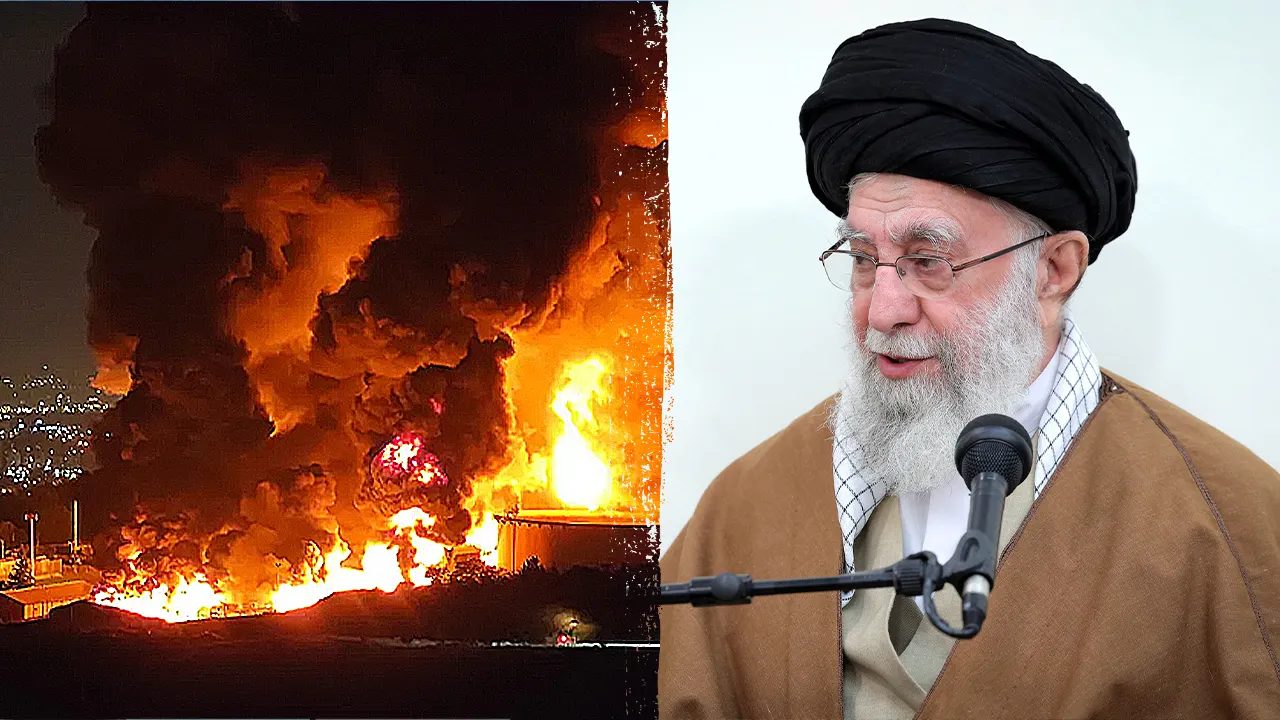
Satellite imagery has revealed significant destruction at Ayatollah Ali Khamenei’s heavily fortified compound in Tehran, with several buildings, including what is believed to be his residence and the House of Leadership, reduced to rubble following coordinated Israeli-U.S. military strikes.
The precision strikes targeted key Iranian leadership infrastructure at a time when regional reports suggest a high-level meeting of Khamenei’s top lieutenants may have been underway. Additional missile strikes reportedly hit areas near the presidential palace and other leadership sites north of Tehran’s capital.
Israeli officials, speaking to reporters on condition of anonymity, indicated they were still assessing the results of the operation and could not confirm the 86-year-old supreme leader’s fate. They notably did not rule out the possibility that Khamenei had been killed in the attack.
Iranian officials, meanwhile, have issued contradictory statements. Some insist that both Khamenei and President Masoud Pezeshkian remain safe, characterizing the strikes as a failed assassination attempt. However, a spokesperson for Iran’s Ministry of Foreign Affairs told the BBC he was “not in a position to confirm” whether the supreme leader had survived the attack.
The uncertainty surrounding Khamenei’s status comes at a critical juncture for the Islamic Republic. The supreme leader has survived decades of internal unrest, previous assassination attempts, and consistent international pressure since assuming power. His public appearances are rare and typically surrounded by multiple layers of security protection.
Security analysts note that Khamenei operates through an elaborate network of loyalists embedded throughout Iran’s military, intelligence, and political institutions. According to Kasra Aarabi, director of Islamic Revolutionary Guard Corps (IRGC) research at United Against Nuclear Iran, Khamenei’s system amounts to a “parallel state” within Iran’s formal governmental structure.
“The Bayt is the hidden nerve center of the regime in Iran… it operates as a state within a state,” Aarabi told reporters. This institutional machinery, involving approximately 4,000 core staff and tens of thousands of operatives across Iranian society, is designed specifically to ensure continuity of the supreme leader’s authority.
This structural redundancy could prove crucial in the current situation. “Even if he is eliminated, the Bayt as an institution enables the Supreme Leader to function,” Aarabi explained. “Think of the Supreme Leader as an institution rather than just a single individual.”
Throughout his long tenure, Khamenei has positioned himself not merely as a political figure but as the apex of a system engineered to withstand both internal and external pressures. He has successfully navigated multiple waves of domestic unrest, including mass protests in 2009, 2022, and early 2026. Each time, his regime responded with forceful crackdowns that ultimately consolidated control rather than weakening it.
He has also weathered numerous covert operations, cyber campaigns, and targeted strikes against key Iranian figures throughout the region over several decades.
The scale of these latest strikes, however, appears unprecedented in their direct targeting of leadership infrastructure. If Khamenei’s death is confirmed, it would mark the most significant decapitation of Iranian leadership since the 1979 Islamic Revolution. Such an outcome would immediately raise complex questions about succession within a system that Khamenei has carefully engineered to prevent sudden collapse.
Conversely, if Khamenei survived this direct attack, it would likely reinforce his image of resilience among supporters and underscore the difficulty of eliminating Iran’s core power structure, even with the combined military capabilities of Israel and the United States.
As intelligence assessments continue, regional experts caution that either outcome—Khamenei’s elimination or survival—carries profound implications for Middle Eastern stability and the future of Iran’s theocratic system. For now, the world watches and waits as the smoke clears over Tehran.
Fact Checker
Verify the accuracy of this article using The Disinformation Commission analysis and real-time sources.

14 Comments
The targeting of Khamenei’s compound is a bold and risky move. If he was indeed present, his survival or death could trigger a major shift in Iran’s leadership and foreign policy. This bears close watching.
Agreed. The stakes are incredibly high, and the potential ramifications are far-reaching. It’s crucial that all sides exercise restraint and prioritize diplomatic solutions to this crisis.
The strike on Khamenei’s compound represents a significant escalation in the ongoing tensions between Iran and its adversaries. The uncertainty surrounding his fate will only heighten regional instability and the risk of further conflict.
Absolutely. This is a highly volatile and dangerous situation that requires careful navigation by all parties involved. Constructive dialogue and a commitment to conflict resolution will be critical in the days ahead.
This is a significant and concerning development. The Supreme Leader’s fate is critical for the future of Iran and the region. We’ll have to see how this plays out and how Iran responds.
Agreed, this could have major geopolitical implications depending on the outcome. Transparency and clarity from all sides will be crucial moving forward.
This is a highly volatile and unpredictable situation. The future of Iran’s leadership and the regional balance of power hang in the balance. We can only hope for a peaceful resolution that minimizes further escalation and bloodshed.
Well said. Regardless of one’s political views, the human toll of this conflict is deeply concerning. Diplomacy and de-escalation should be the top priorities for all stakeholders.
This is a significant and potentially game-changing event in the complex geopolitics of the Middle East. The Supreme Leader’s fate will have far-reaching implications for Iran’s domestic and foreign policy. We can only hope for a peaceful resolution that prioritizes stability and diplomacy.
Well said. The stakes are incredibly high, and the potential for unintended consequences is significant. All stakeholders must exercise restraint and work towards de-escalation through diplomatic channels.
The destruction of Khamenei’s compound suggests a major intelligence and military operation. If he was indeed present, his survival or death would dramatically reshape the Iranian political landscape.
Absolutely, this is a high-stakes situation. The conflicting reports from Iranian officials only add to the uncertainty and speculation.
This is an incredibly complex and fast-moving situation. The fate of Iran’s supreme leader will have far-reaching consequences, both domestically and regionally. We’ll need to closely monitor developments in the coming days and weeks.
Well said. This strike represents a major escalation, and the outcome could significantly alter the balance of power in the Middle East. Careful diplomacy and de-escalation will be critical.