


Listen to the article
Iran’s Supreme Leader Khamenei Killed in Israeli Strike, Ending Decades-Long Rule
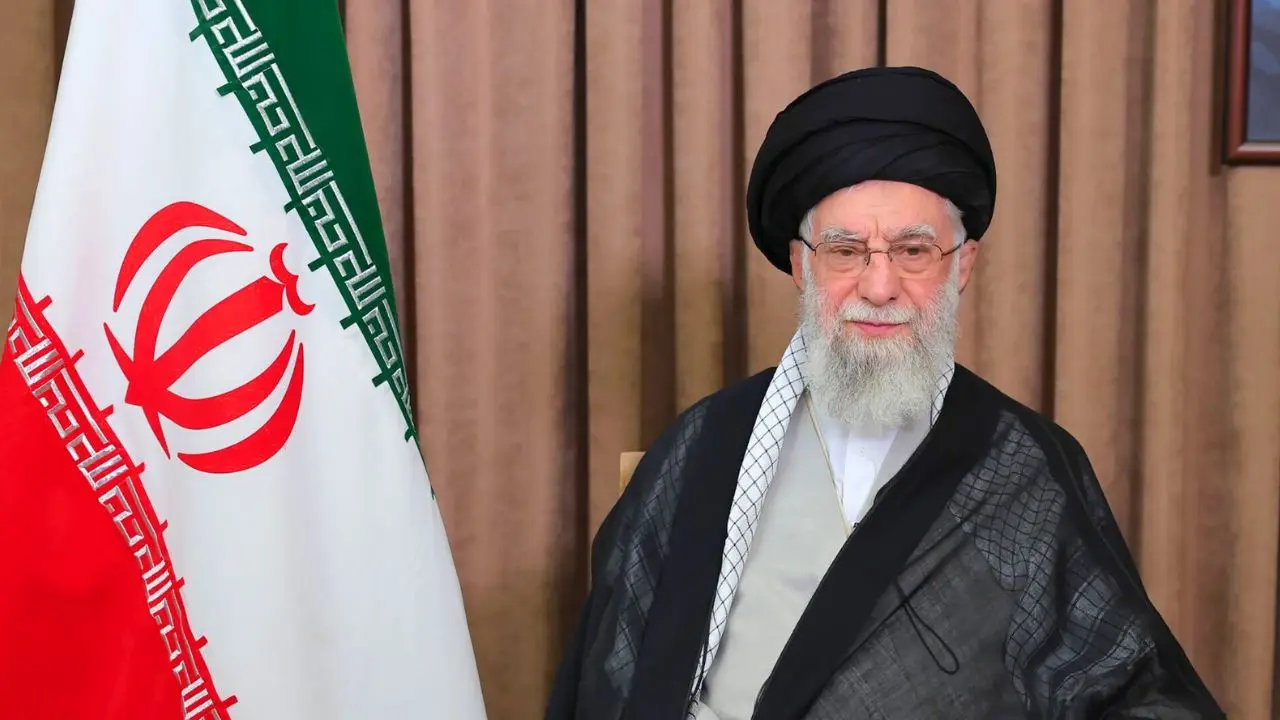
Iran’s Supreme Leader Ayatollah Ali Khamenei, who ruled the Islamic Republic with an iron grip for more than three decades, has been killed following an Israeli strike in Tehran that reduced his compound to rubble, according to a senior Israeli official who spoke to Fox News Digital.
Khamenei, 87, was the longest-serving autocrat in the contemporary Middle East, maintaining power through a combination of ideological fervor and ruthless pragmatism. His 35-year tenure as supreme leader was defined by militant anti-Americanism, antisemitism, and the brutal suppression of internal dissent.
“Khamenei was an ideologue, but one who ruthlessly pursued the preservation and protection of his ideology, often taking two steps forward and one step back,” said Behnam Ben Taleblu, senior director of FDD’s Iran program. “His worldview was shaped by his militant anti-Americanism and antisemitism, which first manifested itself in his protests against the Shah of Iran.”
Born April 19, 1939, in Mashhad, eastern Iran, Khamenei was among the key Islamist activists in the 1979 revolution that overthrew the U.S.-backed Shah Mohammad Reza Pahlavi. A close ally of Iran’s first supreme leader, Ayatollah Ruhollah Khomeini, Khamenei served as president from 1981 to 1989 before ascending to the position of supreme leader following Khomeini’s death.
During his leadership, Khamenei steadily consolidated his control over Iran’s political, military, and security apparatus. He engineered a system that marginalized reformists and moderates while empowering hardliners loyal to his vision of Islamic governance.
“Ayatollah Ali Khamenei’s rule has been marked by unrelenting brutality and repression, both within Iran and beyond its borders,” said Lisa Daftari, an expert on Iran and editor-in-chief of The Foreign Desk. She noted that executions and strict social controls were hallmarks of his leadership.
His regime faced several significant domestic challenges. In 2009, massive protests erupted across the country following disputed elections in which Khamenei declared victory for incumbent president Mahmoud Ahmadinejad. The government’s response was swift and brutal, with protesters beaten, imprisoned, and in some cases, killed.
More recently, Iran witnessed widespread demonstrations in 2022 after the death of Mahsa Amini, a 22-year-old woman who died in the custody of the morality police for allegedly wearing her headscarf improperly. These protests, which came to symbolize broader resistance to the regime’s restrictions, were violently suppressed.
According to an Iran International investigation, as many as 30,000 people may have been killed across just two days in January 2026 during another wave of protests. Human rights organizations have consistently raised alarms about the escalating use of capital punishment under Khamenei. Amnesty International reported that Iranian authorities executed more than 1,000 people in 2025 alone, the highest yearly figure recorded in at least 15 years.
Beyond Iran’s borders, Khamenei invested heavily in a network of proxy militias and armed groups, using them to project Iranian influence across the Middle East. From Hamas in Gaza to Hezbollah in Lebanon, from the Houthis in Yemen to various militias in Iraq, Iran under Khamenei’s leadership funneled hundreds of millions of dollars to these groups to advance its regional agenda and counter U.S. and Israeli influence.
However, this network faced severe setbacks following the October 7, 2023, Hamas attack on Israel. During a 12-day war in June 2025, Israeli forces successfully targeted many of Khamenei’s closest aides and senior security figures, significantly weakening his position before the final strike that claimed his life.
Despite these challenges, analysts point to Khamenei’s institutional legacy as perhaps his most enduring impact. He created a vast parallel power structure known as the Bayt (the Office of the Supreme Leader), which operates as “a state within a state,” according to Kasra Aarabi, co-author of a report by United Against Nuclear Iran (UANI).
“It is the hidden nerve center of the regime in Iran,” Aarabi told Fox News Digital. “Even if he is eliminated, the Bayt as an institution enables the Supreme Leader to function. Think of the Supreme Leader as an institution rather than just a single individual.”
This institutionalization of power represents Khamenei’s most significant departure from his predecessor. “Unlike Khomeini, the founding father of the Islamic Republic, Khamenei institutionalized his power. Today, the Islamic Republic is more a product of Khamenei than Khomeini,” noted FDD’s Ben Taleblu.
Khamenei’s death creates an unprecedented moment of uncertainty for Iran’s Islamic Republic, as the regime confronts the challenge of succession amid escalating regional tensions and persistent domestic unrest. The extensive apparatus he constructed over decades, however, ensures that his influence will outlive him, complicating any immediate hopes for fundamental change in Iran’s governance or its approach to the international community.
Fact Checker
Verify the accuracy of this article using The Disinformation Commission analysis and real-time sources.

9 Comments
I’m skeptical about the veracity of this report. Khamenei is a notoriously secretive and guarded figure, and his death would be a major geopolitical event. More reliable sources and confirmation are needed before accepting this claim.
Agreed, this seems like an unsubstantiated rumor at the moment. Khamenei’s death would be a massive development, and I think we need to see corroborating evidence from credible outlets before believing it.
Khamenei’s death would be a seismic shift in the Middle East power dynamics. As Iran’s supreme leader for over 30 years, he has been a central figure in the region’s geopolitics. This event bears close watching.
The succession process in Iran will be critical to observe. Whomever assumes the role of supreme leader will have a significant impact on Iran’s domestic and foreign policies.
A monumental event if true. Khamenei’s death would mark the end of an era for Iran. I wonder how this will impact the country’s politics and relations with the West going forward.
The implications of Khamenei’s potential death are significant. Iran will likely face a power struggle and uncertainty about the future direction of the country.
If true, Khamenei’s death could reshape the balance of power in the Middle East. As Iran’s supreme leader for over three decades, he has been a dominant force in regional affairs. His removal from power would have far-reaching implications.
This is a shocking development if confirmed. Khamenei has been a central figure in Iran for decades, shaping its policies and ideology. His demise would create a power vacuum that could be destabilizing.
The loss of Khamenei’s leadership could allow more moderate voices to emerge in Iran, but it could also embolden hardliners seeking to consolidate control.