


Listen to the article
Iran Enters Uncertain Era as Supreme Leader Khamenei’s Death Triggers Transition
Iran faced a pivotal moment Saturday following the death of Supreme Leader Ayatollah Ali Khamenei in an Israeli strike, ending his more than three decades of authoritarian rule and activating a leadership transition mechanism the Islamic Republic has long prepared for.
Despite the significant blow to the regime’s power structure, Tehran appears to have anticipated this possibility. A senior Arab diplomat told The Times of Israel that while Khamenei’s demise represents a “massive blow” to the Islamic Republic, the government had taken precautionary measures to withstand such a scenario.
“Mere survival, at this point, would be considered a victory,” the diplomat noted, referring to the regime’s immediate priorities following the U.S. and Israeli strikes across the country.
The Council on Foreign Relations (CFR) recently outlined three potential trajectories for post-Khamenei Iran: managed regime continuity, a military takeover (either overt or gradual), or systemic collapse. However, the report cautions that even with leadership change at the highest level, meaningful political reform remains unlikely in the near term due to the regime’s deeply entrenched power structure.
The most probable scenario, according to experts, is what the CFR describes as “Khamenei-ism without Khamenei” – a successor emerging from within the regime who maintains the Islamic Republic’s ideological framework while relying on established security institutions to preserve stability.
“The Islamic Republic’s constitution includes a succession process. The Assembly of Experts, a clerical body, is constitutionally charged with selecting the next supreme leader,” explained Jason Brodsky, policy director of United Against Nuclear Iran (UANI). “In the interim, should there be a leadership vacancy, an interim leadership council is formed comprised of the president, chief justice, and a member of the Guardian Council selected by the Expediency Council.”
Brodsky emphasized the critical role the Islamic Revolutionary Guard Corps (IRGC) will play in this transition: “The IRGC is a key stakeholder in this process, and will heavily influence its outcome.”
Over Khamenei’s three decades in power, the Office of the Supreme Leader (Bayt-e Rahbari) evolved into what a February UANI report characterized as a “sprawling parallel state” operating alongside Iran’s formal institutions. This office functions as the regime’s “hidden nerve center,” extending control across military, security and economic foundations in ways that make the system’s authority institutional rather than dependent on any single individual.
“The supreme leader today is no longer just one man; he is represented through an all-encompassing institution that consolidates power, manages succession, and guarantees continuity,” according to UANI. “The Islamic Republic’s most enduring strength lies in this hidden architecture of control, which will continue to shape the country’s future long after Khamenei himself departs from the scene.”
This institutionalized power structure suggests that while Khamenei’s death marks a significant moment in Iran’s history, the fundamental character of the regime may remain largely unchanged in the immediate future. The real balance of power continues to rest within a tight circle of clerical elites and the IRGC, who have repeatedly demonstrated their willingness to use force to maintain control.
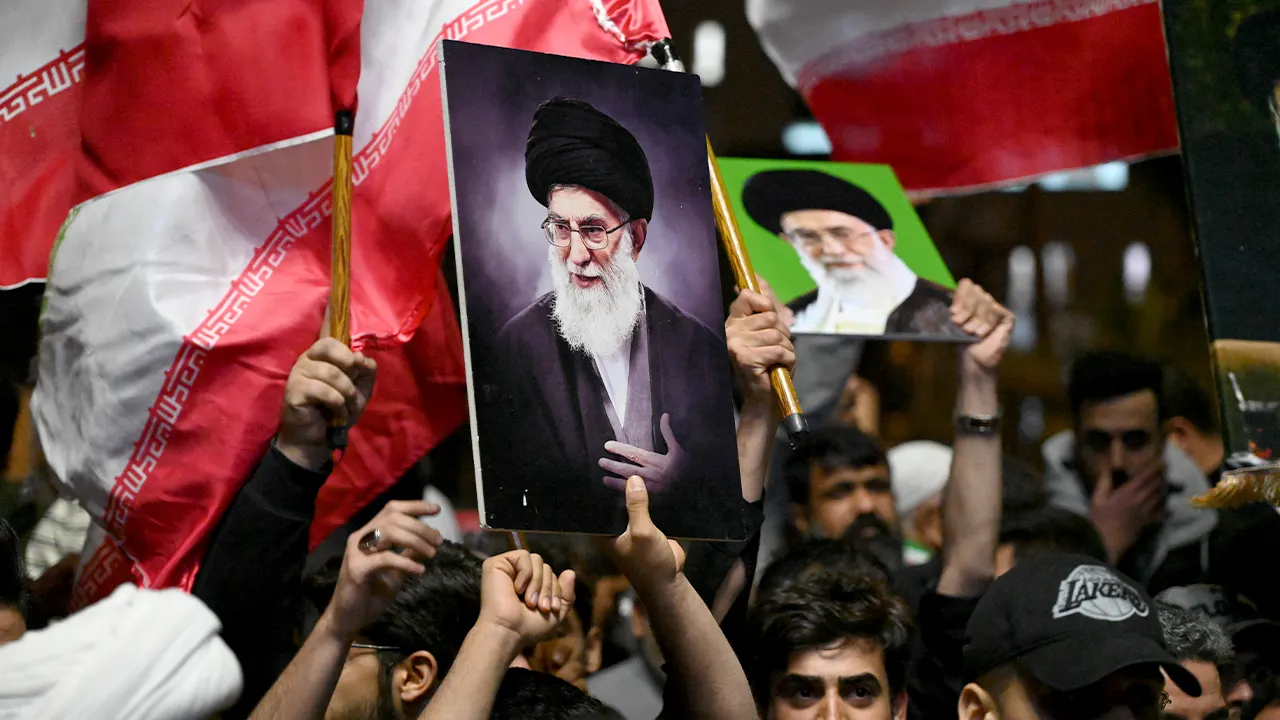
As thousands gathered in Tehran’s central square following the announcement of Khamenei’s death, international observers remain watchful of how the succession process unfolds. The transition comes at a particularly volatile time, with escalating regional tensions following Iranian missile attacks on Israel and subsequent retaliatory strikes by Israel and the United States.
For now, Iranian officials appear focused on projecting stability and continuity as they navigate this unprecedented transition period, while regional and global powers closely monitor developments that could reshape the Middle East’s geopolitical landscape.
Fact Checker
Verify the accuracy of this article using The Disinformation Commission analysis and real-time sources.

8 Comments
Khamenei’s passing marks the end of an era for Iran’s theocratic leadership. The regime has planned for this scenario, but the path forward remains uncertain. Will they be able to ensure a smooth succession, or could this spark deeper unrest and potential reforms?
Khamenei’s death is a significant development that could have far-reaching implications for Iran and the broader region. The potential trajectories outlined by the CFR provide an interesting framework to watch how this unfolds. This bears close monitoring in the weeks and months ahead.
The loss of Khamenei is a major blow to Iran’s power structure. While the regime appears to have contingency plans, this transition period will be crucial. It will be important to see how the various factions within the government jockey for position and influence.
This is certainly a pivotal moment for Iran. The death of Khamenei will have major implications for the future direction of the regime. While regime continuity is possible, the potential for instability and shifts in power dynamics is high.
The passing of Khamenei marks the end of an era for Iran’s leadership. It will be intriguing to see if this sparks meaningful political reforms, a military takeover, or the regime’s ability to ensure continuity. The future direction of Iran is highly uncertain at this juncture.
Khamenei’s death is a seismic event for Iran. The regime’s response and ability to manage the transition will be crucial. Investors in Iran-related commodities and equities will be closely monitoring developments to assess the potential implications.
The transition of power in Iran bears watching closely. Khamenei’s long reign has come to an end, but it’s unclear whether the regime can maintain its grip on power or if this could catalyze deeper changes. Interesting times ahead for the region.
This is a critical time for Iran as it navigates the transition following Khamenei’s demise. The regime’s ability to maintain stability and continuity will be tested. Investors will be closely watching to see if this leads to any shifts in Iran’s regional policies or economic orientation.