


Listen to the article
Iran’s Supreme Leader Brands Trump “Criminal” as Protest Death Toll Reaches Thousands
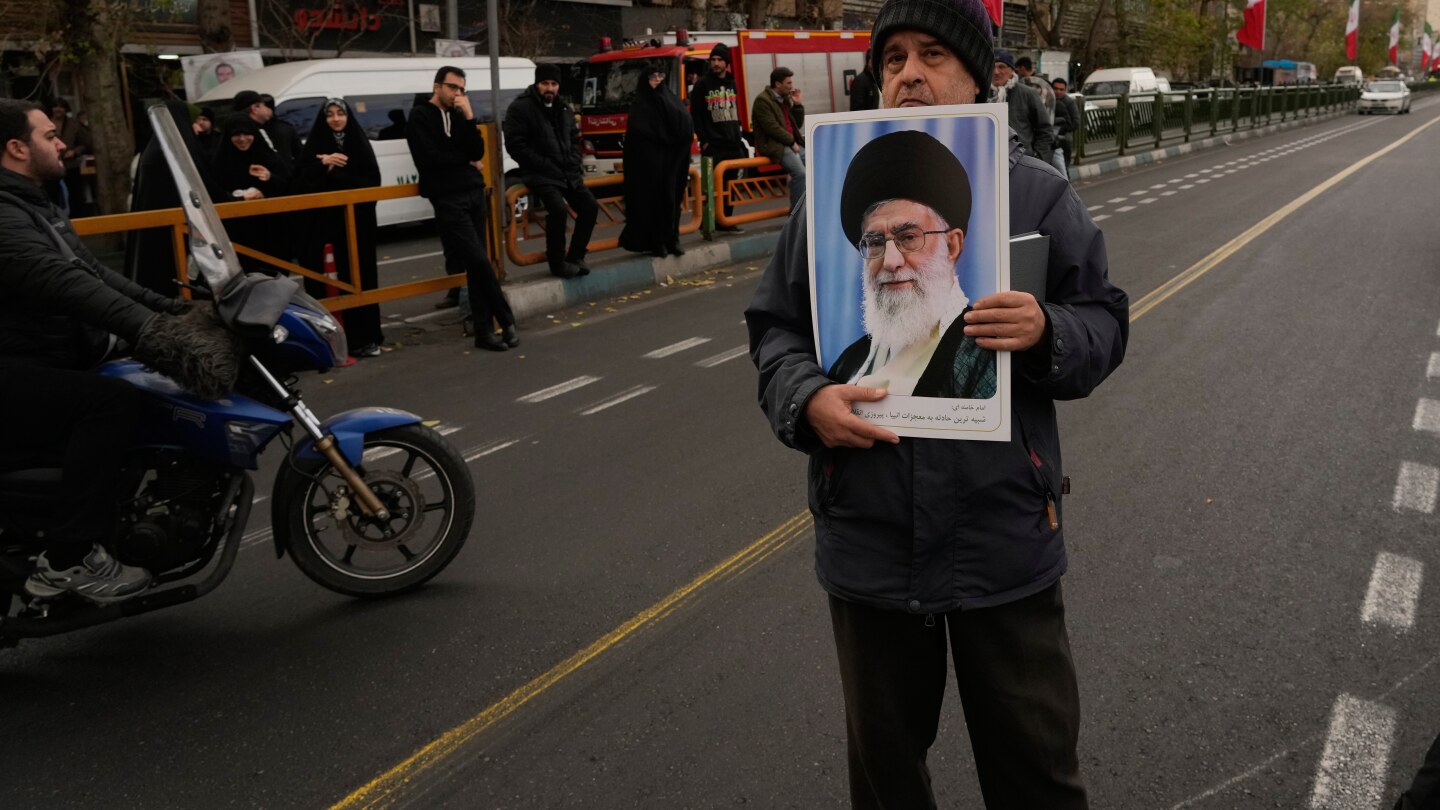
Iran’s Supreme Leader Ayatollah Ali Khamenei has accused U.S. President Donald Trump of criminal behavior for supporting Iranian protesters and claimed the recent demonstrations have left “several thousand” people dead. His remarks, broadcast on state television Saturday, represent the first acknowledgment by an Iranian leader of the staggering casualty count from protests that began December 28.
“In this revolt, the U.S. president made remarks in person, encouraged seditious people to go ahead and said: ‘We do support you, we do support you militarily,'” Khamenei stated, reiterating accusations that the United States seeks to dominate Iran economically and politically. He referred to protesters as “foot soldiers” of the U.S., claiming they destroyed mosques and educational centers.
Trump responded swiftly, calling for an end to Khamenei’s nearly four-decade rule. “The man is a sick man who should run his country properly and stop killing people,” Trump told Politico. “His country is the worst place to live anywhere in the world because of poor leadership. It’s time to look for new leadership in Iran.”
This heated exchange followed Trump’s more conciliatory tone a day earlier, when he claimed “Iran canceled the hanging of over 800 people” and expressed respect for this purported decision. Iranian officials quickly refuted this claim, with Tehran Prosecutor General Ali Salehi dismissing Trump’s statement as “futile and irrelevant.”
In recent days, Trump had promised protesting Iranians that “help is on the way” and warned that his administration would “act accordingly” if the killing of demonstrators continued or if Iranian authorities executed detained protesters.
Khamenei claimed protesters were armed with live ammunition imported from abroad, though he didn’t specify which countries. “We do not plan, we do not take the country toward war. But we do not release domestic offenders, worse than domestic offenders; there are international offenders. We do not let them alone either,” he said, urging officials to pursue legal cases against demonstrators.
Iran has returned to an uneasy calm following the brutal crackdown on protests that began over economic grievances. According to the U.S.-based Human Rights Activists News Agency, at least 3,308 people have been killed in the government response—exceeding casualties from any other period of unrest in Iran since the 1979 revolution. The Associated Press has been unable to independently confirm this toll, though the monitoring group has maintained accurate records throughout years of demonstrations through its network of activists inside Iran.
Iranian officials have consistently accused the United States and Israel of instigating the unrest. On Friday, Iran’s President Masoud Pezeshkian reinforced this narrative during a phone conversation with Russian President Vladimir Putin, blaming both countries for meddling in Iran’s internal affairs.
The streets of Tehran have returned to normal in recent days with no visible signs of protests. Iranian authorities had implemented a complete internet blackout beginning January 8, though on Saturday, text messaging and limited internet services briefly resumed in parts of the country. Some users reported access to local websites through domestic internet services, while others noted limited international connectivity via VPNs.
The reason behind this partial restoration remains unclear. Internet monitoring service Cloudflare and advocacy group NetBlocks reported slight increases in connectivity Saturday morning. Some analysts speculate officials may have temporarily restored services to support businesses, particularly banks that have struggled to process transactions during the outage.
Meanwhile, a call by exiled Crown Prince Reza Pahlavi for renewed demonstrations from Saturday through Monday appeared to go unheeded. Pahlavi, whose father was overthrown in Iran’s 1979 Islamic Revolution, maintains support among diaspora monarchists but has struggled to gain broader appeal within Iran. Nevertheless, he continues to position himself as a potential transitional leader should the current government fall.
As international tensions rise, the situation in Iran highlights the ongoing struggle between the Islamic Republic’s leadership and a population increasingly frustrated with economic hardship and political repression.
Fact Checker
Verify the accuracy of this article using The Disinformation Commission analysis and real-time sources.

12 Comments
Khamenei’s accusations against Trump are a predictable attempt to deflect blame from the regime’s own brutality. While Trump’s rhetoric may have been unhelpful, the core issue is the Iranian government’s repression of its citizens and the excessive use of force against protesters. Responsibility for the loss of life ultimately rests with Iran’s leadership.
While Trump’s comments may have been inflammatory, the responsibility for the loss of life lies squarely with the Iranian government and its security forces. Khamenei’s attempt to portray the protesters as US ‘foot soldiers’ is a transparent effort to avoid confronting the regime’s own brutality.
This is a complex and fast-moving situation. While Trump’s comments may have been unhelpful, Khamenei’s accusations about US ‘military support’ for the protesters appear to be a calculated attempt to deflect blame. The core issue is the Iranian government’s repression of its own citizens, which must be condemned.
This is a deeply concerning situation, and Khamenei’s claims about ‘thousands’ killed are troubling, even if difficult to verify. Regardless of Trump’s rhetoric, the primary culpability lies with Iran’s leadership and its violent crackdown on protesters. The scale of the unrest suggests genuine domestic grievances that the government is struggling to control through force.
Khamenei’s statement is a predictable attempt to scapegoat the US and distract from the regime’s violent crackdown on protesters. The scale of the unrest and casualties suggests a genuine domestic grievance that the government is struggling to control through force. Trump’s rhetoric may have added fuel to the fire, but the ultimate responsibility lies with Iran’s leadership.
You make a fair point. While Trump’s comments may have been unhelpful, the core issue is the Iranian government’s brutality against its own citizens. Khamenei’s accusations are likely a smokescreen to deflect attention from the regime’s human rights abuses.
Khamenei’s portrayal of the protesters as ‘foot soldiers’ of the US is a common tactic used by authoritarian regimes to delegitimize popular uprisings. However, the scale of the protests and reported casualties suggests a genuine domestic grievance against the government’s policies and human rights record.
You’re right, the regime is clearly trying to shift blame and avoid accountability for its heavy-handed response. Cracking down on protesters and blaming foreign interference is a well-worn playbook for repressive governments.
This is a concerning situation. Khamenei’s accusations of the US ‘militarily supporting’ the protesters seem like an attempt to deflect blame away from the regime’s violent crackdown. While Trump’s rhetoric may have inflamed tensions, the root cause is Iran’s authoritarian government and its repression of dissent.
It’s deeply troubling to see the scale of violence and casualties reported in Iran. Khamenei’s claims about ‘thousands’ killed seem difficult to verify, but the regime’s history of cracking down on dissent makes such figures plausible. Regardless of Trump’s rhetoric, the primary culpability rests with Iran’s leadership.
This is a deeply concerning situation. Khamenei’s claims about ‘thousands’ killed seem difficult to verify, but the regime’s track record of repressing dissent makes such figures plausible. Regardless of Trump’s rhetoric, the primary culpability lies with Iran’s leadership and its violent crackdown on protesters.
I agree. Khamenei’s attempt to blame the US and protesters themselves for the deaths is a transparent effort to avoid accountability. The scale of the unrest and reported casualties suggests a genuine domestic grievance that the government is struggling to control through force.