


Listen to the article
US-Iran Diplomatic Impasse: The Challenge of Negotiating When the Supreme Leader Stays Behind the Curtain
As indirect talks between the United States and Iran commenced in Oman on Friday, a fundamental diplomatic challenge has emerged: the absence of Iran’s true power holder from the negotiating table. Vice President JD Vance highlighted this dilemma earlier in the week, questioning how effective diplomacy can be when “you can’t even talk to the person who’s in charge of the country.”
“It is bizarre that we can’t just talk to the actual leadership of the country. It really makes diplomacy very, very difficult,” Vance remarked during an appearance on Megyn Kelly’s podcast.
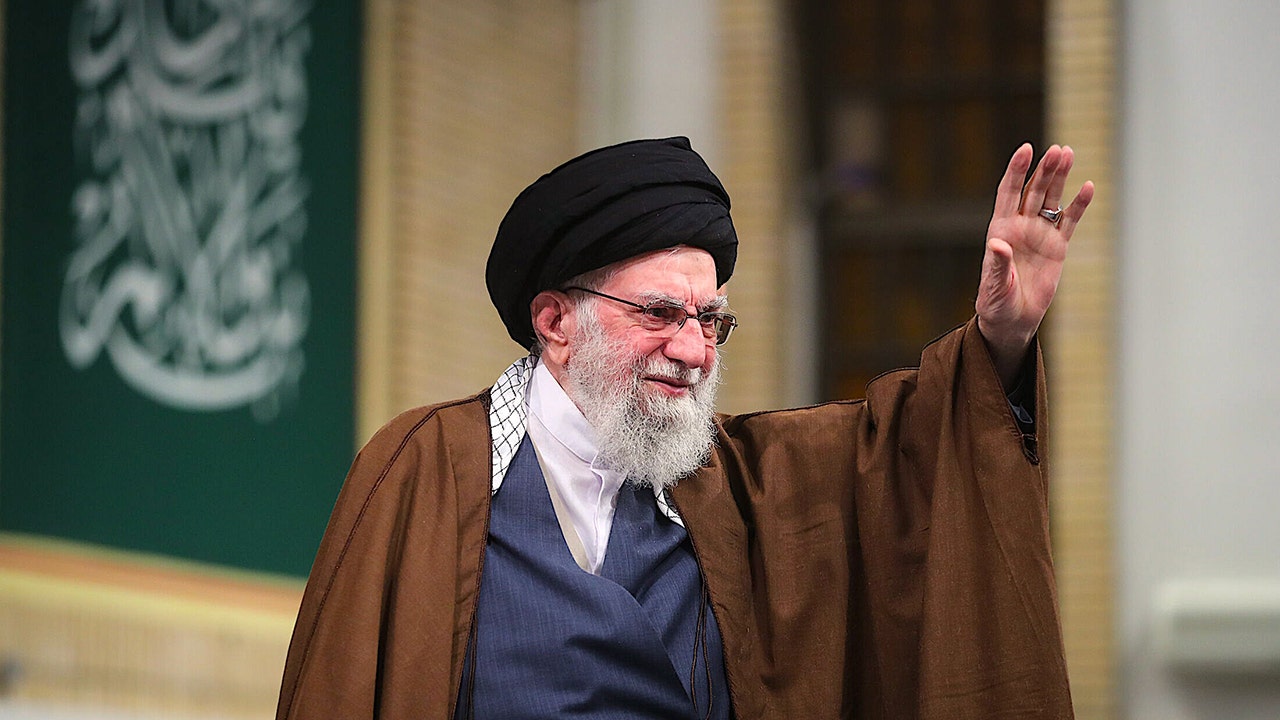
At the center of this diplomatic conundrum stands Ayatollah Ali Khamenei, Iran’s 86-year-old supreme leader who has ruled since 1989. As both the highest political and religious authority in Iran, Khamenei maintains ultimate control over the country’s military, security apparatus, and strategic decision-making.
Sina Azodi, director of the Middle East Studies Program at George Washington University, explained to Fox News Digital why Khamenei wields such immense power: “He is very powerful because he is the commander in chief of the armed forces and appoints the heads of the IRGC, the Artesh (conventional military), the judiciary and other important institutions.”
The absence of Khamenei from diplomatic discussions is not simply an oversight but reflects deliberate protocol within Iran’s system. “Iranians are very adamant about diplomatic protocols — that since other countries don’t have the equivalent rank, he does not participate in any negotiations because his ‘equal’ rank does not exist,” Azodi noted. This rigid hierarchy is visible even during high-level visits, where “even when foreign heads of state visit him, there is only the Iranian flag, and foreign flags are not allowed.”
According to sources familiar with internal Iranian discussions, Khamenei views his confrontation with Washington as central to his historical legacy. A Middle Eastern source speaking on condition of anonymity told Fox News Digital, “The supreme leader sees the confrontation with Washington as defining his historical role and believes Iran can retaliate against U.S. interests in the region. Khamenei is not focused on personal risk and views strategic confrontation as part of preserving his legacy.”
Behnam Ben Taleblu, senior fellow at the Foundation for Defense of Democracies, emphasized Khamenei’s decisive role in Iran’s political structure: “He wields great influence in Iran but also exercises the greatest veto in Iran’s political hierarchy.”
Iran’s diplomatic strategy reflects this duality, with the regime simultaneously signaling willingness to negotiate while preparing for potential confrontation. “The Iranian strategy is to raise the cost of war in the thinking of the adversary,” Taleblu explained, warning that “regimes that are afraid and lethal and weak can still be dangerous.”
This approach may explain why Tehran believes threatening U.S. assets could deter broader conflict, even though such escalation risks triggering a more substantial American response.
Azodi suggested that Khamenei’s worldview is shaped by existential concerns about American intentions: “I think that he thinks that the U.S. is definitely after a regime change and that needs to be resisted at all costs.” For Khamenei, the current tensions represent “the continuation of the June 2025 conflict and the recent protests, which he called ‘an American coup.'”
Within Iran, public frustration with Khamenei has become increasingly visible. A journalist reporting from inside Iran told Fox News Digital: “What people want more than anything else is for Khamenei to die… I hear it every day, everywhere I go — why doesn’t he die?” The reporter added that many Iranians no longer believe political reform is possible and instead see generational change as the only path forward.
Mehdi Ghadimi, an Iranian journalist in exile, offered insight into the theological dimension of the diplomatic standoff: “The Islamic government considers itself obligated to enforce Islamic law across the entire world… In such a structure, the leader is seen as more than a political ruler; he is perceived as God’s representative, while leaders of enemy states are viewed as representatives of Satan, which is why he never meets with them.”
This religious framework creates the need for intermediaries in diplomatic contexts. “For this reason, groups labeled as ‘moderate,’ ‘reformist,’ or ‘pro-Western’ are created so that the West can negotiate with them,” Ghadimi explained. “The diplomats presented to Western politicians as moderates are tasked with using diplomacy to buy time for Khamenei.”
The current negotiations unfold against a backdrop of heightened regional tensions, increased U.S. military deployments in the Middle East, and unresolved disputes over Iran’s nuclear program and missile capabilities.
For American diplomats, the central challenge remains unchanged: while negotiations can proceed through various channels, the final decision ultimately rests with one man — a leader shaped by decades of confrontation with the United States, focused on regime survival, and determined to preserve his legacy as Iran enters another round of high-stakes international talks.
Fact Checker
Verify the accuracy of this article using The Disinformation Commission analysis and real-time sources.

17 Comments
The absence of Iran’s supreme leader Khamenei from these diplomatic negotiations is concerning. Given his immense power and influence over the country’s policies, his direct participation seems essential for any potential breakthrough.
The fact that Iran’s supreme leader Khamenei is not directly involved in these diplomatic negotiations is troubling. His outsized influence over the country’s decision-making process makes his participation essential for any potential breakthrough.
This is a complex situation where the absence of Iran’s supreme leader from the negotiations poses a significant obstacle. Khamenei’s tight grip on power in Iran means his participation is essential for any meaningful progress.
You’re right, it’s a concerning dynamic. Without Khamenei’s direct involvement, it’s hard to see how these negotiations can lead to a lasting agreement.
The absence of Iran’s supreme leader from the negotiations is a significant obstacle. Khamenei’s tight control over the country’s military, security, and strategic decisions makes his participation crucial for any meaningful diplomatic breakthrough.
I agree. It’s puzzling why Khamenei would avoid direct engagement, especially on such an important issue. His participation seems essential for resolving this diplomatic impasse.
The challenge of negotiating with Iran when the supreme leader is not at the table is a concerning dynamic. Khamenei’s outsized influence over the country’s policies and decision-making process makes his direct involvement critical for any potential deal.
This is a challenging diplomatic situation where the lack of direct engagement from Iran’s supreme leader Khamenei is a major hurdle. His tight control over the country’s military, security, and strategic decisions means his participation is essential for resolving the impasse.
I agree, Khamenei’s absence from the negotiations is a significant obstacle. Without his direct involvement, it’s hard to see how these talks can lead to any meaningful progress.
The fact that Iran’s supreme leader Khamenei is not directly engaged in these diplomatic talks is troubling. His outsized influence over the country’s decision-making process makes his participation crucial for any potential breakthrough.
This is a complex diplomatic challenge, where the lack of direct engagement from Iran’s supreme leader Khamenei is a major hurdle. His tight control over the country’s military, security, and strategic decisions means his participation is crucial for resolving the impasse.
You make a good point. Without Khamenei’s direct involvement, it’s hard to see how these negotiations can lead to a lasting agreement that addresses the core issues.
This is a complex diplomatic situation with Iran’s leadership structure. It’s concerning that the Supreme Leader Khamenei is not directly engaged in the negotiations, which could undermine their effectiveness.
You raise a good point. Without the direct involvement of the top decision-maker, it’s hard to see how significant progress can be made in these talks.
The fact that Iran’s supreme leader Khamenei is not directly engaged in these diplomatic talks is troubling. His outsized influence over the country’s decision-making process makes his participation essential for any potential breakthrough.
This is a concerning diplomatic situation where the absence of Iran’s supreme leader Khamenei from the negotiations poses a significant obstacle. Given his tight control over the country’s military, security, and strategic decisions, his direct involvement seems crucial for resolving the impasse.
I agree, Khamenei’s lack of participation is a major challenge. Without his direct engagement, it’s difficult to see how these talks can lead to a meaningful and lasting agreement.