


Listen to the article
Trump’s Potential Iran Interlocutor: A Hardliner With Limited Authority
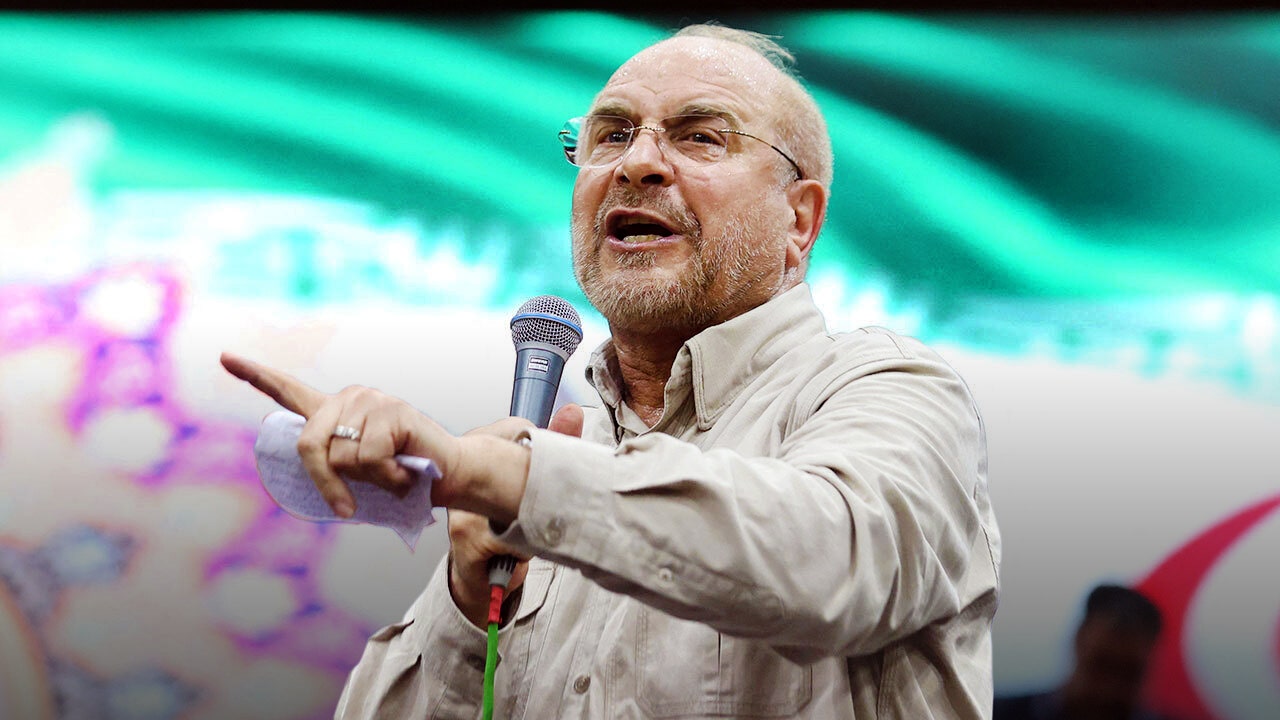
The man reportedly being floated by the Trump administration as a possible interlocutor with Iran presents a significant contradiction in diplomatic strategy. Mohammad Bagher Ghalibaf, Iran’s parliament speaker and longtime Revolutionary Guards commander, is widely regarded as a loyal “yes man” with deep ties to the regime’s inner circle and a record of threats against the United States.
This apparent contradiction raises a crucial question facing U.S. policymakers: Even if Washington is speaking to the “right people,” as President Donald Trump has claimed, can someone like Ghalibaf actually deliver meaningful results?
“Ghalibaf doesn’t have an independent line. His strength is that he is a ‘yes man,'” explains Beni Sabti, an Iran expert at the Institute for National Security Studies. “If he is told to shake hands with Special Envoy Steve Witkoff, he will do it. If he is told to escalate, he will. It is not about moderation, it is about who gives the orders.”
Rise Through the Ranks
Ghalibaf, 64, is a product of Iran’s security establishment. He rose through the ranks of the Islamic Revolutionary Guard Corps (IRGC) during the Iran-Iraq War, eventually becoming commander of the IRGC air force.
“He even completed flight training abroad, which was not unusual at the time, with France reportedly assisting at one stage. Until recently, he was still conducting training flights in France,” Sabti notes.
Later, Ghalibaf served as Iran’s national police chief, overseeing internal security forces responsible for suppressing protests, including the 1999 student uprising, alongside the notorious Qassem Soleimani.
After transitioning into politics, he attempted to run for president multiple times but failed. Instead, Ghalibaf built his career through loyalty to the system, serving as Tehran’s mayor for more than a decade before becoming speaker of parliament in 2020.
His reputation has been tarnished by corruption allegations. “His name has been linked to multiple corruption allegations, including misuse of oil revenues and sanctions evasion networks involving his family,” says Sabti. “His sons have reportedly been involved and are under sanctions. There have also been public scandals involving family members traveling abroad and making luxury purchases, including widely circulated images of them arriving with numerous high-end Gucci suitcases.”
Hardline Rhetoric
Ghalibaf’s public statements reflect the hardening tone inside Iran’s leadership. He has rejected ceasefire terms, declaring Iran would continue fighting “until the enemy truly regrets its aggression.” He has also warned that attacks on Iranian infrastructure would trigger retaliation across the region, including against energy targets.
At the same time, he has publicly denied any negotiations with the United States, calling reports of talks “fake news” and accusing Washington of manipulating markets.
In remarks aired on Iranian television earlier this year, he warned that U.S. forces would face catastrophic consequences if they confronted Iran. “Come, so you can see what catastrophe befalls American bases, ships and forces,” he said, adding that American troops would be “burned by the fire of Iran’s defenders.”
In the same broadcast, he described the U.S. president as “delusional and arrogant” and framed Iran’s ideology as a growing global movement.
More recently, he escalated further, warning that “the blood of American soldiers is the personal responsibility of Trump,” and vowed Iran would “settle accounts with the Americans and Israelis,” adding that “Trump and Netanyahu crossed our red lines and will pay the price.”
A Messenger, Not a Decision-Maker
Despite being positioned as a potential interlocutor, experts emphasize that Ghalibaf lacks independent decision-making authority.
“He’s considered relatively moderate in the current Iranian context, but he’s not the one calling the shots. He’s not the leader himself,” says Danny Citrinowicz, a Middle East, national security and intelligence expert. “If you want to speak to someone in Iran, he’s probably the point of contact, but he’s not deciding anything. Even if he wants to do something, he has to get approval from the IRGC and the supreme leadership.”
Sabti dismisses the notion that Ghalibaf represents a moderate voice: “Some point to periods during Rouhani’s presidency when he appeared to align with Rouhani and describe him as somewhat moderate, but that is misleading.”
Systemic Challenges to Diplomacy
Analysts argue that the bigger issue is not Ghalibaf himself but the system he operates within. The Iranian regime has become more fragmented and radicalized in recent years, making negotiations significantly more difficult.
Behnam Ben Taleblu, a senior fellow at the Foundation for Defense of Democracies, notes: “Those who see the ascendance of someone like Ghalibaf, who is an IRGC veteran, as extending power outside his traditional civilian role have missed how personality, not profession, has been the driving force in Iranian politics for decades.”
“The system today is more radicalized and decentralized,” Citrinowicz agrees. “It’s not one person. It’s multiple actors you need to coordinate with, which makes it much harder to negotiate.”
From Tehran’s perspective, the current situation may appear advantageous. “From Iran’s perspective, they are winning, not losing,” Citrinowicz observes. “They are using their strategic capabilities and effectively threatening a choke point in the global economy, namely the Strait of Hormuz. That only reinforces the radicalization taking place inside the regime. Under those conditions, they will be the ones making demands of Trump, not the other way around.”
Even if talks were to take place, Ghalibaf would not be able to commit Iran without broader approval from the regime’s power centers, raising serious questions about the viability of any diplomatic initiative channeled through him.
Fact Checker
Verify the accuracy of this article using The Disinformation Commission analysis and real-time sources.

8 Comments
The idea of a hardliner like Ghalibaf leading Iran’s diplomatic efforts is certainly a contradiction. His lack of an independent position could undermine the credibility of any potential negotiations. However, if he is simply following orders, it raises the question of who is truly driving Iran’s diplomatic strategy.
This is a fascinating development, though the concerns around Ghalibaf’s background and authority are valid. It will be important to closely monitor how he navigates the diplomatic process and whether he is able to deliver meaningful results, or if he is simply a mouthpiece for the regime’s broader agenda.
Agreed, the dynamics at play here are quite complex. Ghalibaf’s lack of independent decision-making power could limit his ability to engage in genuine, constructive diplomacy. The true power dynamics within Iran’s leadership will be crucial to understand in this context.
This is an interesting development. Ghalibaf’s background as a hardliner and IRGC commander raises concerns about Iran’s diplomatic approach. However, the report suggests his authority may be limited, so it remains to be seen if he can deliver meaningful results in negotiations.
You make a good point. Ghalibaf’s lack of an independent line could undermine his ability to broker a constructive agreement, as he may simply be following orders rather than acting as an effective interlocutor.
This is a complex situation. On one hand, Ghalibaf’s ties to the regime and history of threats against the US are concerning. But if he’s truly just a ‘yes man’ without much independent authority, can he really be an effective negotiator? The dynamics at play here are worth watching closely.
I agree, the tensions between Ghalibaf’s hardline background and his potential role as a diplomatic conduit are quite puzzling. It will be critical to understand the extent of his influence and decision-making power in these talks.
This is a puzzling development, as Ghalibaf’s hardline background seems at odds with the role of a diplomatic interlocutor. The report’s suggestion that he is a ‘yes man’ without much independent authority raises questions about Iran’s broader strategic objectives in these talks. It will be important to closely watch how this situation unfolds.