


Listen to the article
Iran’s Ethnic Minorities Could Be Key to Regime’s Future
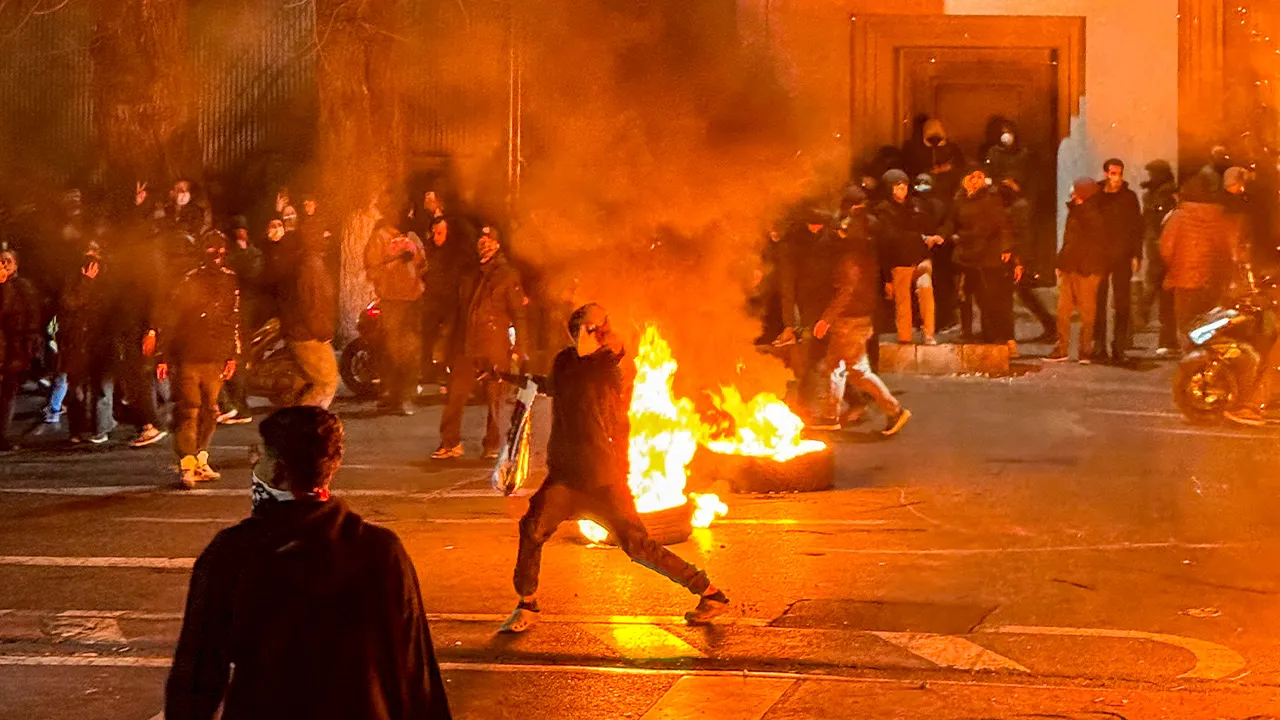
As anti-regime protests appear to be slowing down across Iran, experts are highlighting a critical factor in the country’s political future: its diverse ethnic minority population, which comprises nearly half of Iran’s 93 million people.
Shukriya Bradost, a leading academic expert on Iran’s minorities who was born in the Kurdistan region of Iran, told Fox News Digital that “Ethnic groups from the establishment of the Islamic constitution in 1979 did not support it and have been fighting for their rights for 47 years.”
According to Bradost’s research, while 51% of Iran’s population is Persian, the country includes significant minority populations: Azeris (24%), Kurds (8-17%), Arabs (3%), and Baluch minorities (2%). This ethnic tapestry represents a complex political landscape that has often been at odds with the central government.
“The regime cannot survive anymore. The regime will fight to the last bullet if Khamenei is still alive,” Bradost stated, referring to Iran’s Supreme Leader Ali Khamenei, who reportedly ordered security forces to crack down on demonstrators.
The human toll of the ongoing unrest has been severe. The U.S.-based Human Rights Activists in Iran has documented 2,571 deaths from the protests, while Iranian opposition figure Reza Pahlavi claims the minimum death toll is around 12,000 people.
Sardar Pashaei, president of Hiwa, a nonprofit organization focusing on Kurdish activism, emphasized the structural importance of ethnic minorities in any political transition. “Ethnic minorities make up nearly half of Iran’s population, and no meaningful political transition can succeed without them,” he told Fox News Digital.
Pashaei, a former world champion wrestler who once coached Iran’s elite Greco-Roman team, noted that Kurdish regions in particular have been consistent in their resistance to authoritarian rule. “Kurdish political culture strongly favors democratic values, pluralism and women’s participation, which is why there is almost no support among them for monarchy or lifetime rule.”
He drew parallels to regional examples, pointing out that “In Syria and Iraq, Kurdish-administered areas became among the most stable after the collapse of dictatorships, and Kurdish regions in Iran would likely be among the most stable after the fall of the Islamic regime.”
Khalil Kani Sanani, spokesperson for the Kurdistan Freedom Party (PAK), identified two provinces as particularly significant in the current political landscape. “Today, Kermanshah and Ilam are prepared to play that role. The organizations of the Kurdistan Freedom Party and the units of the National Army of Kurdistan in the cities of those two provinces are both managing the uprising process and carrying out resistance and legitimate defense.”
The current wave of protests follows the “Women, Life, Freedom” movement that began in September 2022 after the death of Mahsa (Jina) Amini, a young Iranian-Kurdish woman killed by Iran’s morality police for allegedly not wearing her hijab properly. The movement, also known as the “Jina uprising,” initially spread from Kurdish regions to Tehran and then across the country.
Kani Sanani claimed that operations against Islamic Revolutionary Guard Corps (IRGC) forces have boosted public morale in several regions. “If the airspace of those regions were to be closed to the regime’s aircraft, our forces would rapidly take control of all the cities in those provinces, and from there we would move with a force of 100,000 people to assist the residents of Tehran,” he said.
Siamand Moeini, a member of the leadership council of The Kurdistan Free Life Party (PJAK), emphasized that the current government has “no capacity or program for internal democratic reforms,” advocating instead for a joint struggle to establish a democratic system that includes all of Iran’s peoples.
“Iran’s current centralized system fails to represent the will of its people,” Moeini stated. “Over the past century, authoritarian governance and central state repression have resulted in the suffering and deaths of thousands — policies that the people of Iran have consistently rejected.”
For the future, Moeini proposed democratic self-governance for all regions of Iran, particularly Kurdistan. “Iran’s future system of governance must be grounded in the broad participation and cooperation of all its peoples, laying the foundation for a truly sustainable and inclusive democracy.”
The perspectives from these Kurdish leaders highlight the complex ethnic dynamics that will likely shape Iran’s political trajectory as protests continue and questions about the regime’s sustainability grow more pressing.
Fact Checker
Verify the accuracy of this article using The Disinformation Commission analysis and real-time sources.

9 Comments
The role of Iran’s ethnic minorities in the current unrest is a fascinating and important angle to consider. As the article suggests, their historical opposition to the regime and significant population size could make them a powerful force in shaping the country’s political future. It will be crucial to closely monitor how these groups respond and engage in the protests moving forward.
The article raises some important points about the potential significance of Iran’s ethnic minorities in the current political climate. Their historical grievances and lack of support for the Islamic constitution could make them a powerful force in shaping the regime’s future, especially if the protests continue to intensify.
This is a really thought-provoking perspective on the dynamics at play in the Iran protests. The ethnic diversity of the country and the long-standing tensions between minority groups and the central government add an intriguing layer of complexity to the situation. It will be interesting to see how this factor plays out as the unrest continues.
Interesting analysis on the role of Iran’s ethnic minorities in the ongoing protests. Their diverse population and historical tensions with the central government could be a critical factor in the regime’s future. It will be important to closely monitor how these groups respond as the situation continues to unfold.
This is a fascinating perspective on the protests in Iran. The diversity of the country’s ethnic makeup and the historical tensions with the central government add an intriguing layer to the dynamics at play. I’m curious to see how the regime navigates this complex landscape as the unrest continues.
Agreed, the ethnic dynamics in Iran are crucial to understanding the broader context of the protests. The regime’s ability to manage these tensions could be a key factor in determining its long-term stability.
Given that ethnic minorities make up nearly half of Iran’s population, their role in the ongoing protests is certainly worthy of close attention. The regime’s crackdown on demonstrators, as mentioned, could push these groups to play an even more critical part in the country’s political future.
The ethnic tapestry of Iran is certainly a complex political landscape, as this article highlights. The minority populations like the Kurds, Azeris, and Baluch seem to have long-standing grievances against the central government. Their involvement in the current unrest could be a significant wildcard for the regime’s survival.
This is a really insightful analysis of how Iran’s diverse ethnic makeup could be a critical element in the ongoing protests and the regime’s future. The tensions between the central government and minority groups like the Kurds, Azeris, and Baluch are clearly a complex and important factor to watch as the situation develops.