


Listen to the article
Iranians Navigate Tough Choices as Regional Conflict Intensifies
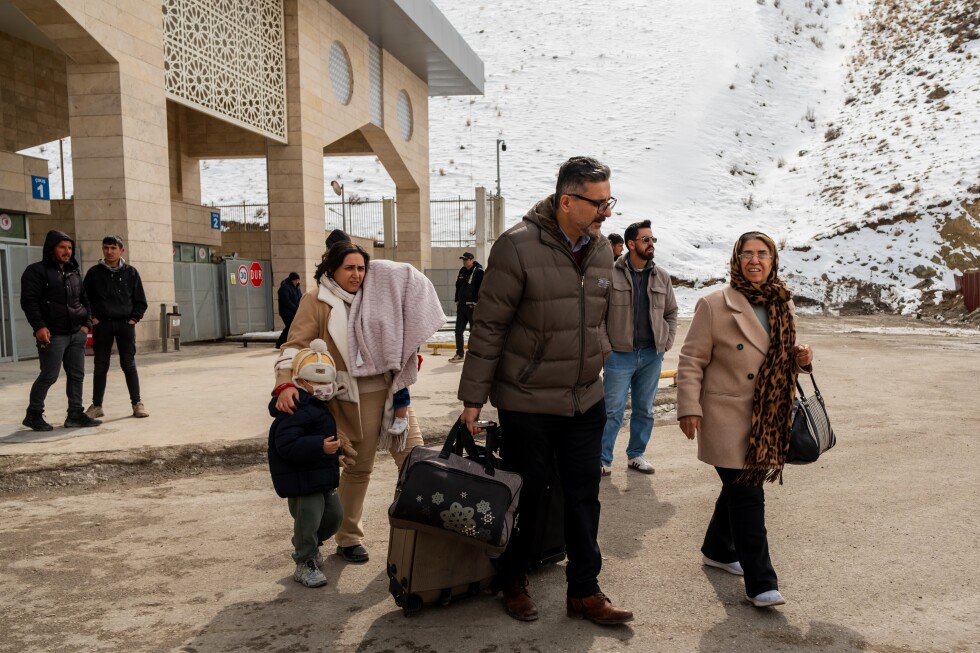
After bombs exploded near her home in the eastern Iranian city of Golestan, hairdresser Merve Pourkaz made the difficult decision to flee. The 32-year-old traveled nearly 1,500 kilometers (932 miles) to an alpine border crossing, hoping to reach safety in the nearby Turkish city of Van.
“If they let me, I will stay in Van until the war ends,” she told The Associated Press while waiting at the crossing. “If the war doesn’t end, maybe I’ll go back and die.”
Pourkaz is among the 3.2 million people in Iran who the U.N. refugee agency estimates have been displaced since the U.S.-Israel conflict with Iran began. While the current exodus remains relatively limited – with the U.N. estimating only about 1,300 Iranians fleeing via Turkey daily – neighboring countries are preparing for a potential larger-scale migration crisis should fighting intensify.
The movement patterns reveal a complex humanitarian situation developing. Some Iranians are seeking shelter in safer regions within their country or neighboring nations, while others are actually returning from abroad, heading toward the conflict to protect families and homes they’ve left behind.
This two-way flow was evident at the Kapikoy border crossing, where Leila Rabetnezhadfard was moving in the opposite direction from Pourkaz. The 45-year-old was in Istanbul preparing to marry a German university professor when hostilities erupted. She postponed her wedding and headed home to Shiraz in southern Iran.
“How can I feel safe in Istanbul when my family is living in Iran during the war?” Rabetnezhadfard explained, noting that bringing her family to Turkey wasn’t feasible due to her small apartment, her brother’s medical needs, and the high cost of living in Istanbul. “I will not leave Iran until the war ends,” she declared.
Most Iranians appear to be sheltering in place, either lacking financial means to flee or heeding U.S. President Donald Trump’s February 28 warning: “Stay sheltered. Don’t leave your home. It’s very dangerous outside. Bombs will be dropping everywhere.”
Those who have relocated within Iran have primarily moved from major cities to the countryside bordering the Caspian Sea north of Tehran, according to the International Organization for Migration (IOM).
“Movement out of Iran appears limited mainly because people are prioritizing staying with their families, as well as the safety of their families and property, and due to security conditions and logistical constraints,” explained Salvador Gutierrez, chief of the IOM’s mission in Iran.
Experts warn that destruction of critical infrastructure could trigger larger refugee movements. “If Tehran, a city of 10 million people, doesn’t have water, they’re going to go somewhere,” said Alex Vatanka, a fellow at the Middle East Institute in Washington.
This potential crisis is further complicated by Iran’s existing role as host to one of the world’s largest refugee populations – roughly 2.5 million forcibly displaced people, mostly from Afghanistan and Iraq.
Turkey, sharing a lengthy border with Iran, has abandoned its former “open-door” policy that welcomed millions of Syrian refugees during that country’s civil war. Instead, Turkish authorities have prepared plans to shelter Iranian refugees in “buffer zones” along the border or in tent cities inside Turkey, according to the Turkish newspaper Hurriyet.
Sara Karakoyun, an aid worker at the independent Human Resource Development Foundation near the border, notes that Iranians fleeing the conflict will likely not seek formal refugee status in Turkey because asylum claims might take years to process, if approved at all. “They don’t want to wait in limbo for years for a refugee status they might not get,” she said.
Turkey has hardened its border infrastructure, adding 380 kilometers of concrete walls, 203 optical towers and 43 observation posts, according to the country’s defense ministry. Analysts expect Turkey to deploy troops to control migration flows while seeking European Union funds to manage refugee needs.
The European Union, which forged a controversial migration deal with Turkey during the Syrian refugee crisis in 2016, now faces the prospect of another humanitarian emergency at its doorstep. That agreement, which provided Turkey with up to 6 billion euros in aid, is up for renewal this year amid changing political landscapes in both regions.
Anti-immigrant sentiment has grown in Turkey regarding Syrian refugees, while right-wing parties opposing immigration have gained popularity across parts of Europe. Adding to these concerns, fighting between Israel and Hezbollah in Lebanon has already displaced more than 800,000 people.
“We’ve got a situation [in the Middle East] that could have grave humanitarian consequences right at a time where humanitarian funding has been completely slashed,” warned Ninette Kelley, chair of the World Refugee & Migration Council, referencing cuts to international aid. “Is the world ready for another humanitarian disaster?”
As regional tensions escalate, the decisions facing Iranians like Pourkaz and Rabetnezhadfard highlight the human dimension of a conflict with potential far-reaching consequences for stability throughout the Middle East and beyond.
Fact Checker
Verify the accuracy of this article using The Disinformation Commission analysis and real-time sources.

5 Comments
It’s understandable that some Iranians would choose to return home despite the dangers, to protect their families and property. This conflict is clearly taking a huge emotional and logistical toll on the civilian population. My heart goes out to all affected.
This story highlights the tragic human consequences of geopolitical conflicts. The decision to flee one’s home is never easy, especially when the destination offers no guarantees of safety. I hope the international community can find ways to support displaced Iranians.
The numbers of Iranians seeking refuge abroad are still relatively small, but the potential for a larger-scale migration crisis is worrying. I wonder what steps the neighboring countries are taking to prepare their infrastructure and services to handle an influx of refugees.
The mass displacement of Iranians due to this conflict is concerning. It’s good to see neighboring countries preparing to handle a potential refugee crisis, but the human toll is devastating. I hope diplomacy can find a peaceful resolution.
This is a difficult situation for Iranians. Having to make the choice between staying in a war zone or fleeing to safety is heartbreaking. I hope the conflict de-escalates soon so people don’t have to make such tough decisions.