


Listen to the article
Iranian Women’s Soccer Team Departs Malaysia After Asylum Controversy
The Iranian women’s soccer team left Malaysia Monday night for Oman, concluding a diplomatic saga that began when several team members sought asylum in Australia following their participation in the Women’s Asian Cup.
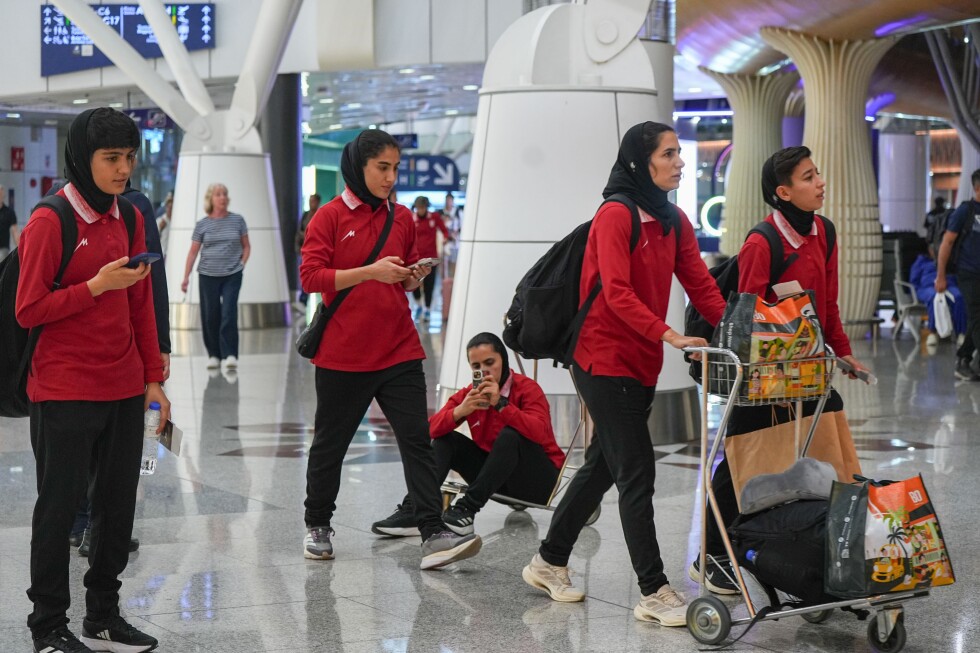
Five of the seven squad members who initially accepted protection visas in Australia reversed their decisions and rejoined the team in Kuala Lumpur before departure. The players remained quiet at the airport, with some chatting or using mobile phones while one player knelt to pray before boarding. Iranian embassy staff refused to comment to reporters.
Asian Football Confederation (AFC) General Secretary Windsor John told the Associated Press that while the team was heading to Oman, this wasn’t their final destination. The Iranian embassy arranged their travel plans, though complete details weren’t disclosed.
When asked about the players’ safety upon return to Iran, John assured that both the AFC and FIFA would conduct regular check-ins with the Iranian football federation. “They are our girls as well,” he stated.
The controversy began on March 10 when the squad flew from Sydney to Kuala Lumpur after being eliminated from the Women’s Asian Cup in Australia. Six players and one support staff member initially remained behind after accepting protection visas, which grant permanent residency to those seeking asylum in Australia.
By Monday, four players and the staff member had rejoined the team in Malaysia, with the most recent arrival flying in that day. No official explanation has been provided for their change of heart, though the Iranian diaspora in Australia suggests pressure from Tehran influenced their decisions.
Windsor John noted that the AFC had not received direct complaints from players about returning home, despite media reports suggesting their families in Iran might face retaliation after the team failed to sing their national anthem before their opening match—an act variously interpreted as resistance or mourning.
“We couldn’t verify anything. We asked them and they said, ‘No, it’s OK,'” John explained. “They are actually in high spirits… they didn’t look afraid.”
Iranian authorities have framed the women’s decisions to reject asylum as a victory against Australia and U.S. President Donald Trump. Iran’s Tasnim News Agency described the players as “returning to the warm embrace of their family and homeland,” characterizing their return as a failure of what it termed an American-Australian political effort.
The situation was particularly complicated by the outbreak of war in the Middle East on February 28, which disrupted travel arrangements for the squad that had arrived in Australia shortly before hostilities began.
Australian Assistant Immigration Minister Matt Thistlethwaite described the situation as “very complex” and said the government respects the decisions of those returning while continuing to support the two players who chose to remain in Australia. These two have been relocated to an undisclosed safe location and are receiving assistance from both the government and the Iranian diaspora community.
Kylie Moore-Gilbert, a Macquarie University political scientist who spent over two years in Iranian prisons on espionage charges, suggested that “winning the propaganda war” had overshadowed concerns for the women’s welfare.
“The high stakes made the Iranian regime sit up and pay attention and try to force their hand in response,” Moore-Gilbert said. She added that had the women quietly sought asylum without publicity, Iranian officials might have allowed it to happen, as they have with other defecting athletes in the past.
Diplomatic tensions between Australia and Iran have been high since last year, when Prime Minister Anthony Albanese cut diplomatic relations after intelligence officials concluded that Iran’s Revolutionary Guard had directed arson attacks on Jewish sites in Australia in 2024.
Kambiz Razmara, vice president of the Australian-Iranian Society of Victoria, said the women who initially accepted asylum had been under significant pressure from the Iranian regime. “They’ve had to make decisions at the spur of the moment with very little information and they’ve had to react to the circumstance,” he explained. “I’m surprised that they’ve decided to go, but I’m actually not surprised because I appreciate the pressures that they’re experiencing.”
Fact Checker
Verify the accuracy of this article using The Disinformation Commission analysis and real-time sources.

8 Comments
This situation highlights the complex challenges faced by athletes caught in the crosshairs of political tensions. While the players’ initial asylum requests raised concerns, I’m glad to see they were able to rejoin the team and depart Malaysia. Continued monitoring of their situation will be crucial.
This is a complex geopolitical situation impacting the Iranian women’s soccer team. While the initial asylum requests raised concerns, I’m glad to see the team was able to depart Malaysia for Oman. Ongoing monitoring of their safety and status will be crucial as this situation evolves.
It’s good to see the Iranian team making it to Oman, though the details around their final destination remain unclear. Navigating political asylum can be a delicate process, and I hope the relevant authorities provide the necessary support and protections for the players.
Absolutely. With the involvement of the AFC and FIFA, I’m hopeful they can find a resolution that prioritizes the players’ safety and wellbeing.
The reversal of the asylum decisions by some players is an interesting development. I wonder what factors led them to change course, and whether they feel secure in their decision to return to Iran. Navigating these sensitive political situations is never easy for athletes.
That’s a good question. There could be any number of personal or political factors at play. Hopefully the relevant authorities can provide clarity and assurances around the players’ safety and wellbeing going forward.
This is a complex situation with many angles to consider. On one hand, the players’ safety is paramount if they return to Iran. On the other, abrupt asylum decisions often have unintended consequences. I hope the AFC and FIFA can ensure the players’ well-being going forward.
Agreed, the safety and well-being of the players is the top priority here. Careful diplomacy and oversight will be crucial as this situation unfolds.