


Listen to the article
Iranian Security Forces Conduct Widespread Arrests in Protest Crackdown
Iranian security agents arrived at the Nakhii family home at 2 a.m., waking sisters Nyusha, 25, and Mona, 37, and forcing them to surrender their phone passwords before taking them away. The January 16 arrests, described by a friend speaking anonymously, represent just two among thousands of detentions as Iranian authorities continue a sweeping crackdown following nationwide protests that erupted in late December.
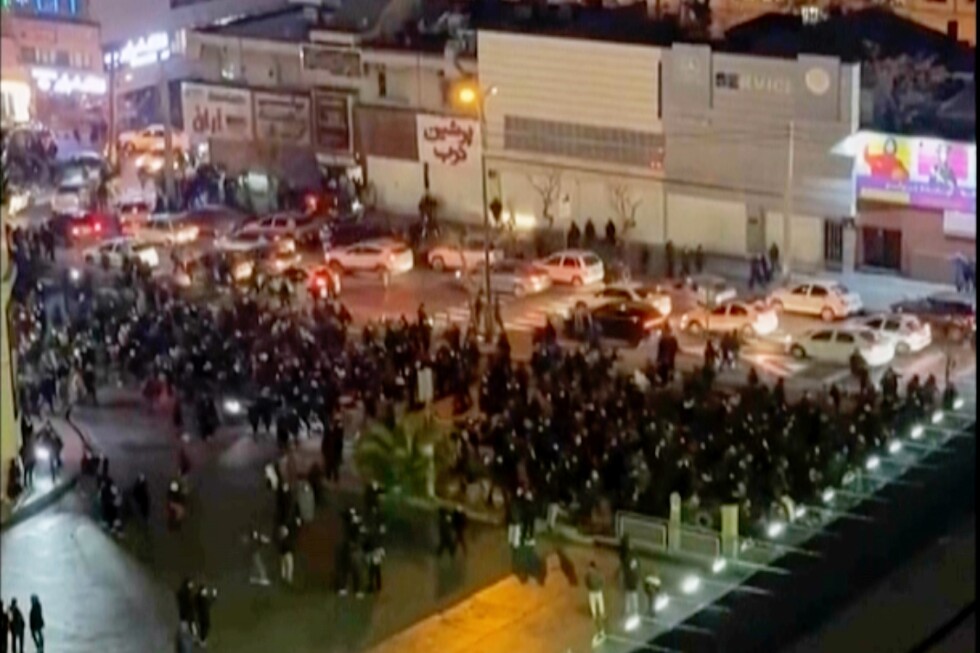
The protests, initially sparked by anger over rising prices, quickly spread to more than 190 cities and towns, reaching their peak on January 8-9 when hundreds of thousands of Iranians took to the streets demanding an end to the country’s theocratic rule.
Human Rights Activists News Agency, a U.S.-based monitoring group, estimates more than 50,000 people have been arrested in the ensuing crackdown, though verifying this figure has proven difficult due to the internet blackout imposed by Iranian authorities. The Committee for Monitoring the Status of Detained Protesters has documented over 2,200 verified arrests, including 107 university students, 82 children as young as 13, 19 lawyers, and 106 medical professionals.
“Authorities continue to identify people and detain them,” explained Shiva Nazarahari, an organizer with the committee. Security forces are reportedly reviewing street cameras, store surveillance footage, and drone recordings to track protesters to their homes and workplaces.
The scale of the crackdown has touched virtually every segment of Iranian society. University students, doctors, lawyers, teachers, actors, business owners, athletes, filmmakers, and even reformist figures close to President Masoud Pezeshkian have been swept up in the dragnet.
The human toll has been devastating. While the Iranian government acknowledged 3,117 deaths in its only official statement on January 21, human rights groups believe the actual figure is much higher, with HRANA counting more than 7,000 fatalities.
“Detentions have been very widespread because it’s like a whole suffocation of society,” said one protester from Gohardasht, a middle-class area outside Tehran, who spoke on condition of anonymity. He reported that two of his relatives and three of his brother’s friends were killed in the initial days of the crackdown, along with several neighbors.
The Nakhii sisters were initially taken to Tehran’s notorious Evin prison before being transferred to Qarchak, a women’s facility on the outskirts of the capital known for overcrowding and poor hygiene conditions even before the latest wave of arrests.
Many detainees have simply disappeared into the prison system. Abolfazl Jazbi, who suffers from a severe blood disorder requiring medication, has not been heard from since his January 15 arrest at a factory in Isfahan. Similarly, 45-year-old Atila Sultanpour has been unreachable since security agents beat and took him from his Tehran home on January 29.
Legal protections have been virtually abandoned during the crackdown, according to Musa Barzin, an attorney with Dadban, a group of Iranian lawyers based abroad. “The following of the law is in the worst situation it has ever been,” Barzin said, noting that authorities are regularly denying detainees access to legal counsel and holding them incommunicado for extended periods. Lawyers who represent protesters have themselves faced court summons and detention.
Despite the risks, civic resistance continues. The Writers’ Association of Iran issued a statement describing the protests as an uprising against “47 years of systemic corruption and discrimination” while announcing that two of its members had been detained. A national council representing schoolteachers urged families to speak publicly about detained children and students, stating: “Do not fear the threats of security forces. Refer to independent counsel. Make your children’s names public.”
The council has documented at least 200 minors killed in the crackdown. “Every day we tell ourselves this is the last list,” council spokesman Mohammad Habibi wrote on X. “But the next morning, new names arrive again.”
Meanwhile, the U.S. has moved military assets to the Persian Gulf, including two aircraft carriers, with President Trump suggesting possible action against Iran over the killings of peaceful demonstrators or if mass executions occur.
Despite organizing pro-government rallies this week to mark the anniversary of the 1979 Islamic Revolution, Iran’s leadership appears genuinely concerned about its grip on power. As Barzin observed, the ferocity of the crackdown suggests the regime “for the first time is afraid of being overthrown.”
Fact Checker
Verify the accuracy of this article using The Disinformation Commission analysis and real-time sources.

8 Comments
It’s alarming to see the Iranian government resort to such heavy-handed tactics to quell the protests. Rounding up thousands of citizens, including vulnerable groups like children and students, is a clear abuse of power. I hope the international community can find ways to pressure Iran to respect human rights and restore civil liberties.
This crackdown on protesters is deeply concerning. The Iranian government appears to be using heavy-handed tactics to silence dissent, which is a worrying trend. I hope the international community can find ways to pressure Iran to respect the basic rights and freedoms of its citizens.
You’re right, the scale of the arrests is truly staggering. This shows the lengths the Iranian regime will go to maintain its grip on power, even at the expense of basic human rights.
The scale of the crackdown described in this report is deeply troubling. Arresting over 50,000 protesters, including children and students, is a flagrant violation of human rights. I hope the international community can find ways to hold the Iranian authorities accountable and support the Iranian people’s right to peaceful protest.
This report highlights the Iranian regime’s authoritarian response to the nationwide protests. Conducting mass arrests and imposing internet blackouts are hallmarks of a government that is more concerned with maintaining its grip on power than addressing the legitimate grievances of its citizens. I hope the international community can find effective ways to support the Iranian people’s right to free expression and assembly.
You make a good point. The regime’s actions suggest it is more focused on crushing dissent than addressing the underlying economic and political issues that are fueling the protests. This is a concerning trend that warrants close international scrutiny and pressure.
The use of a nationwide dragnet to arrest protesters is a disturbing escalation of the government’s response. Detaining thousands of people, including children and students, is a clear violation of civil liberties. I hope the international community can find ways to hold the Iranian authorities accountable.
Agreed, the crackdown seems indiscriminate and disproportionate. Targeting lawyers and medical personnel is particularly egregious and suggests the regime is trying to suppress any organized opposition or documentation of its actions.