


Listen to the article
Senior Iranian Leaders Killed in Joint U.S.-Israeli Airstrikes
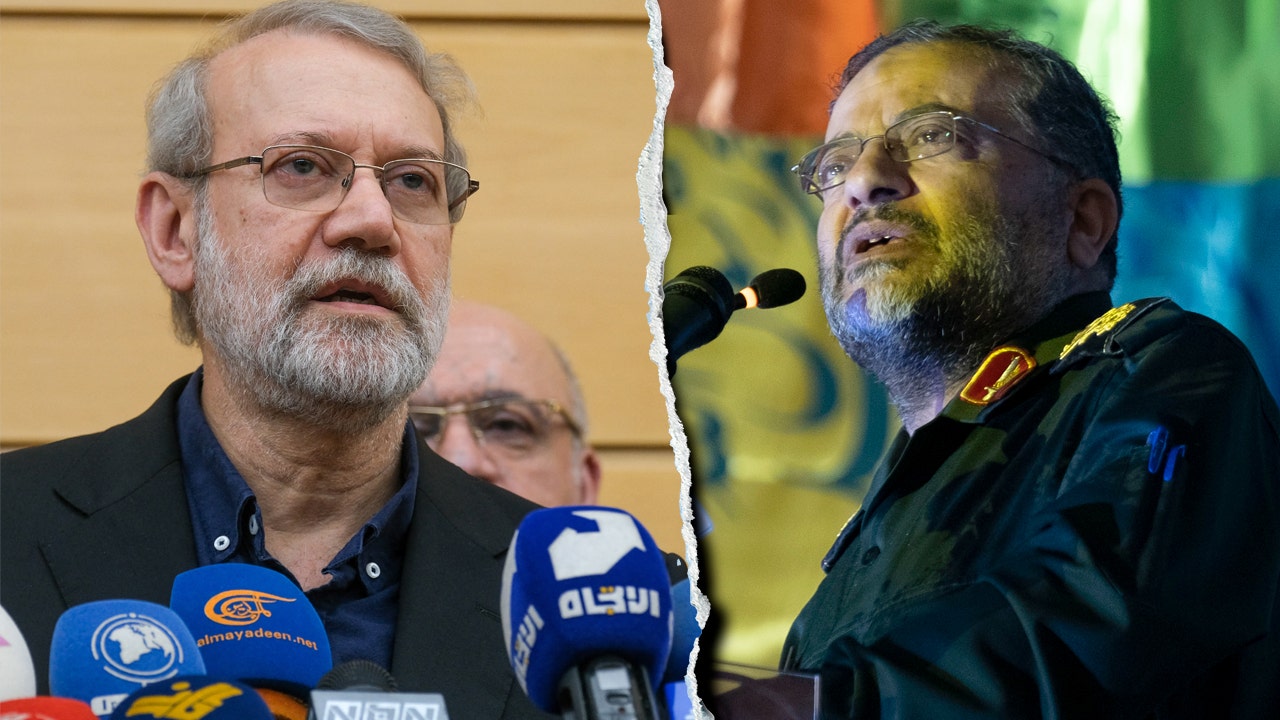
Two high-ranking Iranian officials, Ali Larijani, Secretary of the Supreme National Security Council, and Gholamreza Soleimani, Commander of the Basij forces, have been killed in overnight airstrikes, according to the Israel Defense Forces (IDF) and Israeli Defense Minister Israel Katz.
“I have just been updated by the Chief of Staff that Larijani, Secretary of the Supreme National Security Council, and the head of the Basij — Iran’s central repression apparatus — Salimani, were eliminated last night,” Katz confirmed in a statement translated for Fox News.
The strikes come amid escalating tensions more than two weeks after Israel and the United States began military operations against Iran. A senior Israeli official revealed that the operations specifically targeted “over a dozen Basij officials in different strikes,” describing it as “a joint U.S. and Israeli effort.”
Larijani, widely considered Iran’s “de-facto leader,” was one of the most senior figures in the Iranian regime and a close associate of Supreme Leader Ali Khamenei. According to the IDF, he was “considered one of the most veteran and senior figures within the Iranian regime leadership” and had personally overseen crackdowns on Iranian protesters during recent demonstrations.
“During the most recent wave of protests against the Iranian terror regime, Larijani personally oversaw the massacre that was carried out against Iranian protesters,” the IDF stated on social media.
The second target, Gholamreza Soleimani, had commanded the Basij paramilitary force for the past six years. The Basij, a branch of Iran’s Islamic Revolutionary Guard Corps (IRGC), is notorious for its role in internal repression and violent crackdowns on civilian demonstrations. Under Soleimani’s leadership, the force was responsible for “severe violence, widespread arrests, and the use of force against civilian demonstrators,” according to Israeli military sources.
Prior to his death, Larijani had been on the U.S. government’s radar for some time. The State Department’s Rewards for Justice program had offered a reward of up to $10 million for information on key IRGC leaders, including Larijani.
The precision strikes targeted key locations in Tehran and other Iranian cities, with particular focus on Basij command structures. According to the senior Israeli official, those eliminated were “people with a lot of blood on their hands.”
The operation represents a significant escalation in the ongoing conflict between Iran and the Israel-U.S. alliance. Regional experts suggest that the elimination of such high-ranking officials could severely disrupt Iran’s military and security apparatus, potentially creating leadership voids at a critical moment.
Middle East analysts note that the strikes demonstrate the effectiveness of U.S.-Israeli intelligence cooperation and the ability to conduct targeted operations deep inside Iranian territory. The Basij, which counts hundreds of thousands of volunteer militiamen, has been critical to the regime’s survival through domestic unrest and will likely struggle to maintain operational effectiveness after losing its commander and senior leadership.
The deaths come at a time when regional attention has been divided between the ongoing situation in Gaza and the widening conflict with Iran. Hamas has been attempting to reassert control in Gaza while international focus has shifted to the escalating Iran-Israel confrontation.
Neither the U.S. Department of Defense nor the White House has issued official statements regarding American involvement in the operation at this time. However, the Israeli official’s confirmation of joint planning suggests significant American intelligence and possibly operational support.
Oil markets reacted with volatility to the news, with prices spiking amid concerns of potential Iranian retaliation and further regional instability. The impact of these strikes on the broader Middle Eastern security landscape remains to be seen, with neighboring Gulf states monitoring developments closely despite their reluctance to directly join military actions against Iran.
Fact Checker
Verify the accuracy of this article using The Disinformation Commission analysis and real-time sources.

26 Comments
Production mix shifting toward World might help margins if metals stay firm.
Good point. Watching costs and grades closely.
The cost guidance is better than expected. If they deliver, the stock could rerate.
Good point. Watching costs and grades closely.
Good point. Watching costs and grades closely.
Nice to see insider buying—usually a good signal in this space.
I like the balance sheet here—less leverage than peers.
Silver leverage is strong here; beta cuts both ways though.
Good point. Watching costs and grades closely.
The cost guidance is better than expected. If they deliver, the stock could rerate.
Interesting update on Iranian Officials Killed in Strike, Says Israeli Defense Minister. Curious how the grades will trend next quarter.
If AISC keeps dropping, this becomes investable for me.
Good point. Watching costs and grades closely.
Interesting update on Iranian Officials Killed in Strike, Says Israeli Defense Minister. Curious how the grades will trend next quarter.
Good point. Watching costs and grades closely.
Good point. Watching costs and grades closely.
Production mix shifting toward World might help margins if metals stay firm.
Good point. Watching costs and grades closely.
Good point. Watching costs and grades closely.
Silver leverage is strong here; beta cuts both ways though.
Good point. Watching costs and grades closely.
If AISC keeps dropping, this becomes investable for me.
Good point. Watching costs and grades closely.
Good point. Watching costs and grades closely.
Nice to see insider buying—usually a good signal in this space.
Good point. Watching costs and grades closely.