


Listen to the article
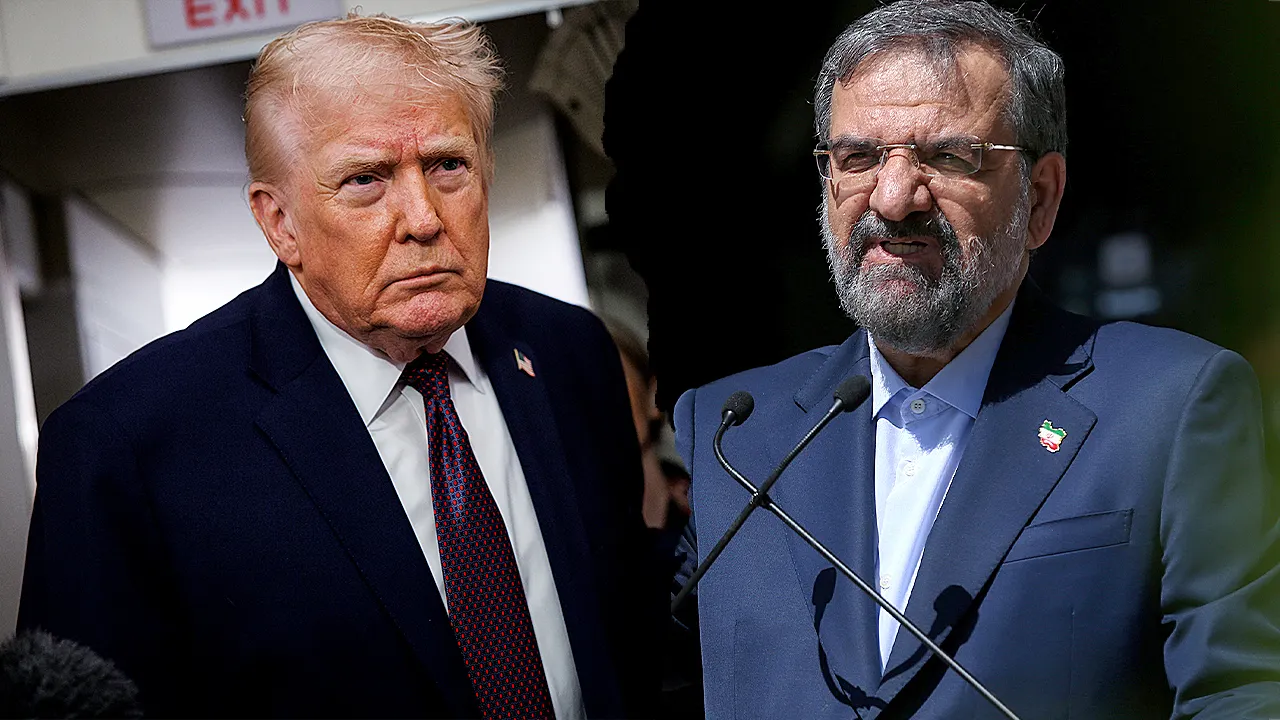
A senior Iranian military official has issued a direct threat against former President Donald Trump, warning that any U.S. military action would trigger retaliation against American forces throughout the Middle East, as tensions between the two nations continue to escalate.
Mohsen Rezaei, a high-ranking general in Iran’s Islamic Revolutionary Guard Corps (IRGC) and member of the country’s Expediency Discernment Council, made the provocative statement during a public address on Thursday, according to Iranian media reports.
“Trump has said his hand is on the trigger. We will cut off his hand and his finger,” Rezaei declared, as reported by Iran International. He added that Iran would abandon any notion of a ceasefire if attacked. “If we move forward, there will be no talk of a ceasefire anymore. You do not pay attention to the restraint and strategic patience we have shown. Stop right now. Step back, otherwise none of your bases in the region will be safe.”
The threats come as multiple sources confirm that at least one U.S. aircraft carrier is being repositioned toward the Middle East. Officials have not specified whether it is the USS Abraham Lincoln, currently operating in the South China Sea, or one of two carriers that recently departed from Norfolk and San Diego.
Military sources indicate that transit to the region could take at least a week, with additional U.S. air, land, and sea assets expected to follow. These deployments would provide the former president with military options should he order strikes against Iran.
Rezaei’s comments represent a significant escalation in rhetoric from one of Iran’s most influential military figures. He served as commander-in-chief of the IRGC from 1980 to 1997 and currently holds several senior government positions, including vice president for economic affairs and secretary of Iran’s Supreme Council for Economic Coordination.
His controversial background includes an international arrest warrant issued by Argentine authorities in 2006 in connection with the 1994 bombing of the AMIA Jewish community center in Buenos Aires. The U.S. Treasury sanctioned Rezaei in January 2020 under Executive Order 13876 for advancing Iran’s destabilizing objectives in the region.
During Rezaei’s tenure with the IRGC, the organization expanded its domestic repression and supported various terrorist proxy groups abroad, including Lebanon’s Hezbollah.
The exchange of threats occurs against a backdrop of continuing civil unrest within Iran, now in its nineteenth day. According to the Human Rights Activists News Agency (HRANA), authorities have recorded at least 2,677 arrests, with an additional 1,693 cases under investigation. Opposition groups claim the actual numbers may be much higher.
The National Council of Resistance of Iran (NCRI) alleges that as many as 50,000 people have been detained. “They are continuing as before, but not at the pace before the slaughter of thousands and the arrests,” said Ali Safavi of the NCRI.
Reports also indicate expanded communication blackouts across parts of Iran, including the shutdown of landlines in some areas. “There is still a total shutdown of the internet. Security forces are raiding residential areas and going to people’s rooftops. They started destroying satellite dishes,” Safavi added, describing ongoing clashes through Wednesday night into Thursday in Tehran and Kermanshah.
NCRI President-elect Maryam Rajavi has called for immediate international action to secure the release of detainees and demanded an urgent international fact-finding mission to investigate conditions in Iran’s prisons.
The deteriorating situation highlights the complex geopolitical challenges in the Middle East, with potential ramifications for regional stability, global energy markets, and international security. As U.S. military assets continue their movement toward the region, observers fear that any miscalculation by either side could trigger a wider conflict with far-reaching consequences.
Fact Checker
Verify the accuracy of this article using The Disinformation Commission analysis and real-time sources.

12 Comments
Iran’s threats are concerning, but further military action could have devastating consequences for the region. All sides should focus on reducing tensions through diplomatic means.
I agree, the priority should be finding a negotiated settlement that addresses the core concerns of both the US and Iran.
Iran’s threats against US forces are worrying, but any military strikes would likely draw a strong retaliation. A diplomatic solution seems the best path forward to reduce tensions.
Absolutely, both sides should focus on de-escalating the situation through negotiation rather than posturing or sabre-rattling.
The situation is highly volatile, and I hope cooler heads can prevail to avoid an outright conflict. Continued dialogue and compromise will be crucial to finding a peaceful resolution.
Agreed. An open channel of communication between the US and Iran is essential to manage this crisis and prevent further escalation.
This situation underscores the fragility of the US-Iran relationship and the need for a new diplomatic framework to manage their differences. Reckless actions by either side could have catastrophic results.
Absolutely. Constructive dialogue and compromise will be essential to preventing an outright conflict that would destabilize the entire region.
This is a concerning escalation of tensions between the US and Iran. Both sides need to exercise caution and restraint to avoid further military conflict in the region.
I agree, further military action would only lead to more instability and suffering. Diplomacy and de-escalation should be the priority.
This is a complex geopolitical issue with high stakes. I’m curious to see how the Biden administration responds and whether they can de-escalate tensions through diplomacy.
The administration will need to tread carefully and avoid being drawn into a conflict. Diplomacy and sanctions may be the best tools to manage this situation.