


Listen to the article
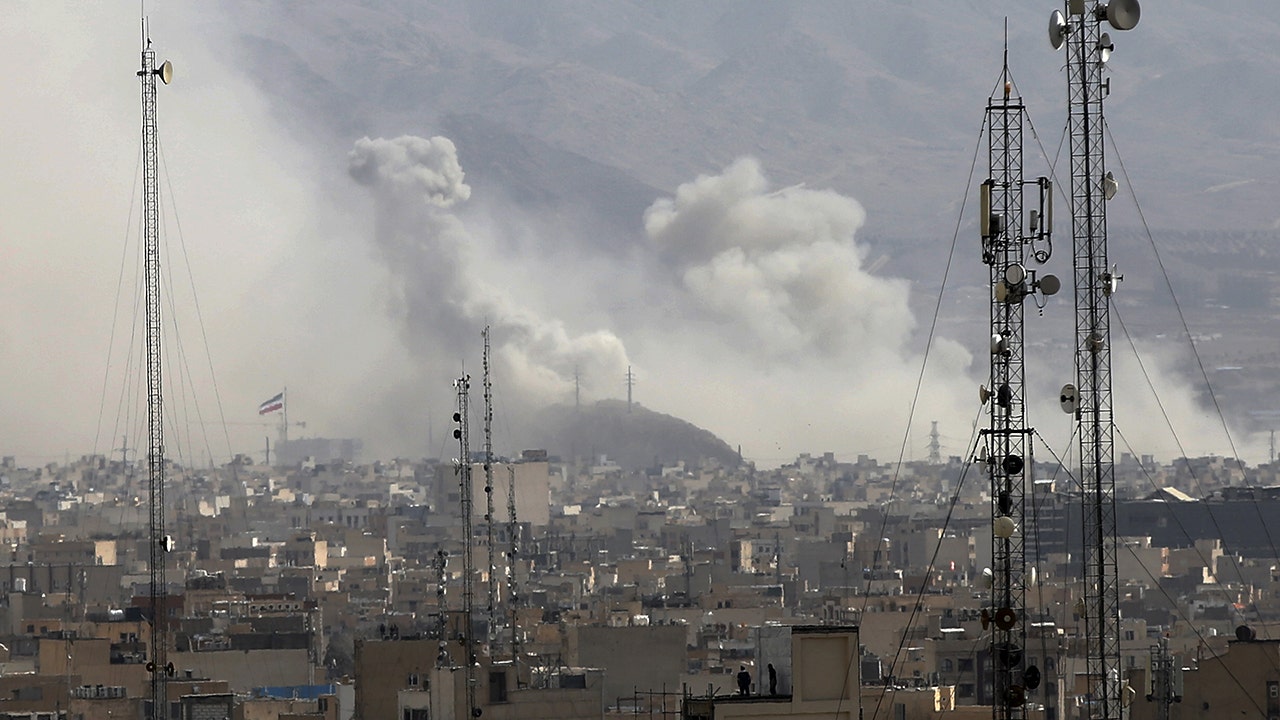
Israel executed a precision strike against Supreme Leader Ayatollah Ali Khamenei’s compound in Tehran on Saturday, in what defense experts describe as an exceptionally coordinated operation combining high-value Israeli assets and U.S. support involving waves of lower-cost drone technology.
The daytime attack targeted Iran’s top leadership and military infrastructure in what a senior U.S. official characterized as a “wildly bold daytime attack” that caught Iranian leadership completely off guard during Ramadan and on the Jewish Sabbath.
“Saturday saw an overwhelming daytime attack with incredible intelligence to target the leadership and a strike on the compound possibly costing tens of millions,” explained Cameron Chell, CEO of drone manufacturer Draganfly, in an interview about the operation’s likely technological components.
According to Chell, the strategic compound strike would have deployed expensive, precision-guided systems rather than the lower-cost kamikaze drones used elsewhere in the operation. “That would likely have included expensive, precision-strike drones or manned aircraft in highly coordinated attacks to ensure success, not necessarily the lower-cost, one-way version of the suicide drones,” he said.
While Israel focused on the high-value leadership target, U.S. forces simultaneously struck multiple secondary objectives across Iran, including Islamic Revolutionary Guard Corps (IRGC) command and control centers, air defense systems, missile and drone launch sites, and military airfields. President Donald Trump announced that Supreme Leader Ali Khamenei was killed in the operation, along with several top Iranian officials including the IRGC commander.
Israeli Defense Minister Israel Katz stated that the additional strikes across the country were conducted specifically “to remove threats” posed by Iranian military capabilities.
The operation’s effectiveness appears to have hinged on sophisticated electronic warfare preparation. “I think likely the defense systems, communication systems, were overwhelmingly compromised,” Chell noted. “I’m sure there would have been days, if not even weeks, of work and preparation to take out those defense communication systems.”
Military analysts believe this attack represents a new level of coordinated offensive capability between the U.S. and Israel. The operation integrated cyber warfare, electronic countermeasures, and physical strikes to neutralize Iran’s defensive capabilities before the main assault began.
“The battlefield now is so multidimensional,” Chell emphasized. “It’s about cyber warfare, misinformation and electronic warfare as well.” This multifaceted approach created a window of vulnerability that allowed the strike package to reach its targets with minimal resistance.
The technological asymmetry was particularly evident in the operation’s use of different drone platforms. While high-value targets received attention from sophisticated systems like “MQ-type or Global Hawk-type drones,” secondary targets were engaged with more expendable one-way attack drones designed to overwhelm air defenses through sheer numbers.
“The U.S. has this lower-cost alternative to hit everything at once, but then the very expensive, high-precision assets would likely have gone directly after leadership on Saturday,” Chell added, highlighting the layered approach to the operation.
Iran’s military, government and intelligence sites were all targeted in the coordinated strikes, according to officials briefed on the operation who spoke on condition of anonymity.
The attack appears to mark a significant escalation in the regional conflict, with unprecedented coordination between U.S. and Israeli forces. “This was seemingly so swift because it was incredibly well-planned and coordinated by the U.S. and Israel on a massive level that’s not been seen before,” Chell concluded.
The precision strike has demonstrated new capabilities in modern warfare, combining cyber operations, electronic warfare, and physical strikes in a coordinated fashion that military analysts will likely study for years to come.
Fact Checker
Verify the accuracy of this article using The Disinformation Commission analysis and real-time sources.

21 Comments
Nice to see insider buying—usually a good signal in this space.
Good point. Watching costs and grades closely.
Exploration results look promising, but permitting will be the key risk.
Good point. Watching costs and grades closely.
The cost guidance is better than expected. If they deliver, the stock could rerate.
Silver leverage is strong here; beta cuts both ways though.
Good point. Watching costs and grades closely.
Good point. Watching costs and grades closely.
Silver leverage is strong here; beta cuts both ways though.
Good point. Watching costs and grades closely.
Exploration results look promising, but permitting will be the key risk.
Good point. Watching costs and grades closely.
If AISC keeps dropping, this becomes investable for me.
Good point. Watching costs and grades closely.
If AISC keeps dropping, this becomes investable for me.
Good point. Watching costs and grades closely.
Exploration results look promising, but permitting will be the key risk.
Uranium names keep pushing higher—supply still tight into 2026.
The cost guidance is better than expected. If they deliver, the stock could rerate.
The cost guidance is better than expected. If they deliver, the stock could rerate.
Interesting update on Iranian General Killed in $10M US Precision Drone Strike. Curious how the grades will trend next quarter.