


Listen to the article
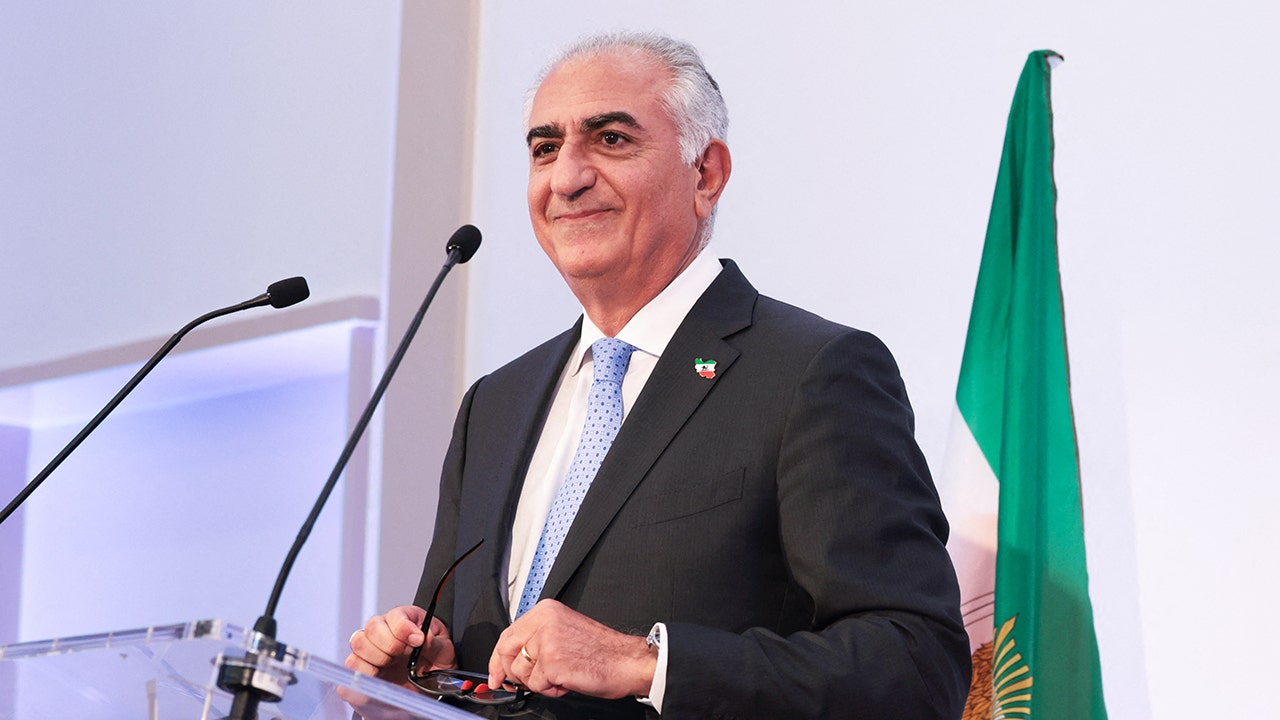
Exiled Iranian Crown Prince Reza Pahlavi declared Saturday he is prepared to lead Iran’s transition to democracy “as soon as the Islamic Republic falls,” amid escalating conflict in the region.
The son of the late Shah Mohammad Reza Pahlavi, who was overthrown during the 1979 Islamic Revolution, has been developing a comprehensive transition plan to ensure governmental continuity should the current regime collapse. Pahlavi has lived in exile since the revolution that established the Islamic Republic more than four decades ago.
“The transitional system, under my leadership, will be ready to assume governance of the country as soon as the Islamic Republic falls and, in the shortest possible time, establish order, security, freedom and the conditions for Iran’s prosperity and flourishing,” Pahlavi said in a social media statement.
According to Pahlavi, his team has identified “capable individuals” both inside and outside Iran who would form part of what he termed a “transitional system.” This governance structure would operate within the framework of the “Iran Prosperity Project,” though specific details of this initiative were not elaborated upon.
Pahlavi noted that many experienced Iranians have already “declared their readiness to participate in the rebuilding of the country and to serve the homeland,” suggesting a growing coalition of expertise ready to assist in a post-revolutionary Iran.
The timing of Pahlavi’s announcement comes amid significant turmoil in Iran, where joint U.S.-Israeli military operations have reportedly resulted in the deaths of nearly 50 regime officials, including Supreme Leader Ayatollah Ali Khamenei. The conflict, now in its third week, has created unprecedented instability in the Islamic Republic’s leadership structure.
Earlier this week, Iran’s Assembly of Experts elected Mojtaba Khamenei, son of the deceased supreme leader, as the country’s new supreme leader. Experts have described the younger Khamenei as potentially more hardline than his father, with one analyst characterizing him as “his father on steroids,” suggesting a possible intensification of the regime’s authoritarian policies.
In a recent appearance on Fox News’ “My View” with Lara Trump, Pahlavi emphasized that the Iranian people would not accept any political solution that maintains ties to the current regime.
“Only a clean break will ensure that not only we achieve a democratic solution and alternative to this regime, but there will be people who are not in any form or shape directly associated with this regime,” he stated.
Pahlavi has consistently positioned himself as a unifying opposition figure rather than seeking restoration of the monarchy. He has stressed that Iran’s future leadership must be determined democratically by its citizens.
“I think what we will expect any government, including, of course, the current Trump administration to recognize that indeed the best way to help the Iranian people is to allow them to make that choice freely and to support that choice as a Western democracy, as the leading democracy in the world,” he said.
The ongoing conflict has fueled speculation about potential regime change in Iran. Reports indicate that the incoming Trump administration may be exploring support for Iranian militias to topple the weakened regime following the recent strikes.
Pahlavi’s announcement represents one of the most direct claims to transitional leadership from a prominent opposition figure since the conflict began, potentially signaling a new phase in Iran’s political landscape as various factions position themselves for a possible post-regime scenario.
As events continue to unfold rapidly in the region, Pahlavi’s declaration adds another dimension to the complex geopolitical situation and raises questions about the potential future governance structure should the Islamic Republic’s 45-year rule come to an end.
Fact Checker
Verify the accuracy of this article using The Disinformation Commission analysis and real-time sources.

10 Comments
The prospect of a post-Islamic Republic Iran is certainly intriguing, but Pahlavi’s declaration raises more questions than answers at this point. His ability to coordinate a smooth transition will be crucial if the current regime were to fall.
Pahlavi’s statement suggests he is positioning himself to play a key role in Iran’s political future, but the feasibility of his ‘Iran Prosperity Project’ is still very much an open question. Transitioning from an Islamic Republic to a democratic system will be an enormous challenge.
Given Pahlavi’s long exile, he may face an uphill battle in rallying support inside Iran. The transition he envisions will require significant coordination and buy-in from various factions.
It’s interesting to see the crown prince positioning himself to potentially lead post-Islamic Iran. However, there are still many unanswered questions around the feasibility and specifics of his ‘Iran Prosperity Project’ plan.
Pahlavi has been in exile for over 40 years, so he’ll likely face significant challenges in rallying support both inside and outside Iran. Transitioning to democracy after a regime collapse is no easy feat.
This is a major development in the long-running saga of Iran’s political future. Pahlavi’s declaration to lead a transition to democracy is certainly ambitious, but it remains to be seen if he has the support and resources to carry it out effectively.
Pahlavi’s plan to have a ‘transitional system’ ready to take over sounds like a prudent step, but the details will be crucial. Establishing order and stability after a regime change is never easy.
This announcement by Pahlavi is certainly bold, but the true test will be whether he can garner enough support, both domestically and internationally, to turn his plans into reality. The path to democracy in Iran remains highly uncertain.
Pahlavi’s ambition to lead Iran’s transition to democracy is understandable given his royal lineage, but the reality of making that happen is likely far more complex. Establishing a ‘transitional system’ is easier said than done.
It will be important to see what specific plans and resources Pahlavi has in place to enact his vision. Transitioning a country out of decades of authoritarian rule is no small feat.