


Listen to the article
In a remarkable display of intelligence capabilities, the United States successfully rescued a missing U.S. Air Force weapons systems officer who had been stranded for more than 36 hours inside Iranian territory, according to security experts familiar with the operation.
The mission, which relied on meticulous intelligence gathering and a sophisticated deception operation orchestrated by the CIA, demonstrates the continued importance of human intelligence assets despite technological advances in surveillance and reconnaissance.
Fox News contributor Paul Mauro emphasized that the rescue operation’s success stemmed from years of careful intelligence collection that preceded the crisis. “You’ve got to collect, you collect, you collect and a lot of it sometimes you’re never going to use,” Mauro explained during a Fox & Friends interview. “The key is when you need it, it has to be there.”
The rescue involved precise coordination between multiple intelligence agencies and military branches to locate and extract the airman from hostile territory. Officials familiar with the operation revealed that the CIA implemented a strategic deception campaign designed to mislead Iranian search teams while U.S. forces pinpointed the exact location of the downed aviator.
Intelligence experts note this operation bears similarities to other high-stakes missions, including a January operation targeting Venezuelan President Nicolas Maduro. In that case, Mauro highlighted U.S. intelligence’s ability to precisely track Maduro’s movements. “They got him as they were running to a safe room without a scratch. Everybody comes out without a scratch,” he said, emphasizing the importance of detailed intelligence and synchronized operations.
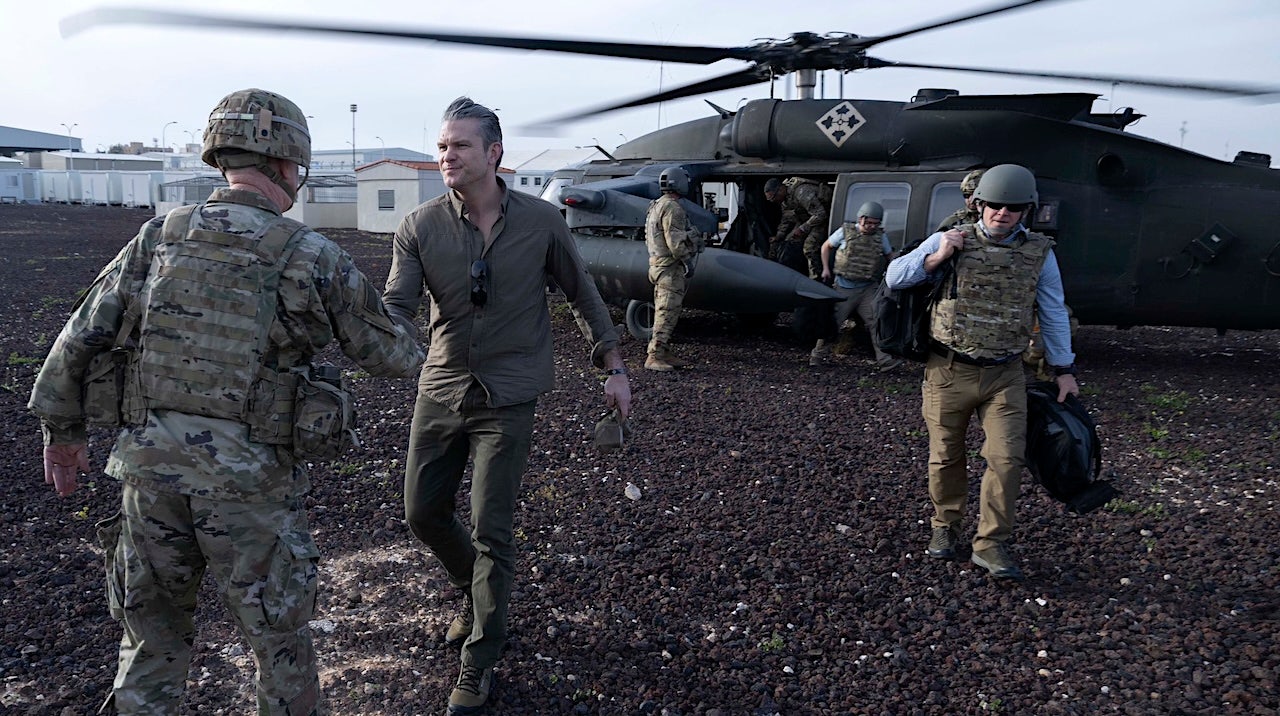
War Secretary Pete Hegseth, who was recently photographed meeting with American troops in the Middle East during a CENTCOM visit, was reportedly involved in the crisis response. When the emergency occurred, the chain of command quickly activated intelligence resources, with officials turning to intelligence agencies for critical information on the missing airman’s whereabouts.
“[This] was one of those situations where the bell rang. ‘Guys, what [have] you got?’ President turns around, [War Secretary] Hegseth turns around, [and] they all talk to Ratcliffe and they say, ‘What [have] you got, director?’ and fortunately it was there,” Mauro explained, highlighting the rapid response capabilities of U.S. intelligence infrastructure.
The successful rescue underscores the ongoing geopolitical tensions between the United States and Iran, which have escalated in recent years through a series of proxy conflicts and direct confrontations. The incident also reveals the extent of U.S. intelligence penetration in the region, which enabled a swift response to locate an American service member in hostile territory.
Intelligence professionals emphasize that despite advances in artificial intelligence and signal intelligence, human sources remain the cornerstone of successful intelligence operations. “At the end of the day, it comes down to people,” Mauro stressed. “If you think that you can sit in a cubicle someplace and get everything you need to be done, that’s not how it’s going to go.”
The mission highlights the critical role of human intelligence assets operating in dangerous environments. “You need people in country, in dangerous areas, Americans working on our behalf that you’ll never hear about… they’re running the sources so that, again, when you need it, they say, ‘My source is good,'” Mauro added.
Former President Donald Trump characterized the rescue as an “Easter miracle,” reflecting the national significance attached to the successful recovery of U.S. military personnel from enemy territory.
The rescue operation serves as a reminder of the continuing risks faced by U.S. service members operating near hostile countries, as well as the substantial intelligence infrastructure maintained to protect American forces abroad. It also demonstrates the United States’ ongoing capability to conduct complex operations deep within adversarial territory when American lives are at stake.
Fact Checker
Verify the accuracy of this article using The Disinformation Commission analysis and real-time sources.

12 Comments
I’m impressed by the level of detail and planning that went into this rescue mission. The strategic deception campaign in particular seems like a key factor in its success. It will be interesting to see if more information emerges about the specific tactics used.
I’m curious to learn more about the deception tactics used to mislead the Iranian search teams. What kind of false information or diversionary tactics were employed, and how effective were they?
Yes, the deception aspect is intriguing. Carefully crafting misinformation to throw off the adversary is a hallmark of skilled intelligence operations.
Fascinating operation, demonstrating the importance of meticulous intelligence gathering and coordination across agencies. It’s reassuring to see the US maintain such robust capabilities for rescuing personnel in hostile environments.
Agreed. The strategic deception campaign was a clever tactic to throw off Iranian forces. Careful planning and execution are key for successful missions like this.
This operation highlights the continued importance of human intelligence gathering and the need for diverse intelligence capabilities, beyond just technological solutions. Coordination between agencies also seems critical.
Absolutely. Relying solely on tech can create vulnerabilities, as this case demonstrates. Maintaining a robust human intelligence network is essential for national security.
This rescue mission highlights the continued value of human intelligence assets, even in the age of advanced surveillance tech. Relying solely on tech can leave critical blind spots, as this operation illustrates.
Good point. While technology is powerful, having boots on the ground and seasoned intelligence analysts is irreplaceable for certain types of missions and intel gathering.
The successful rescue of the missing airman is an impressive feat, especially given the challenging operational environment in Iran. It’s good to see the US maintaining the capabilities to execute such complex missions.
This successful rescue operation is a testament to the skill and dedication of the US intelligence and military personnel involved. The coordination and execution required for a mission like this is truly impressive.
Agreed. Executing a high-stakes rescue in hostile territory is no easy feat. The US should be commended for maintaining such robust capabilities to protect its personnel.