


Listen to the article
Police have charged an Iranian man and a Romanian woman after they attempted to enter the high-security naval base in Scotland where Britain’s nuclear submarine fleet is stationed, officials announced Saturday.
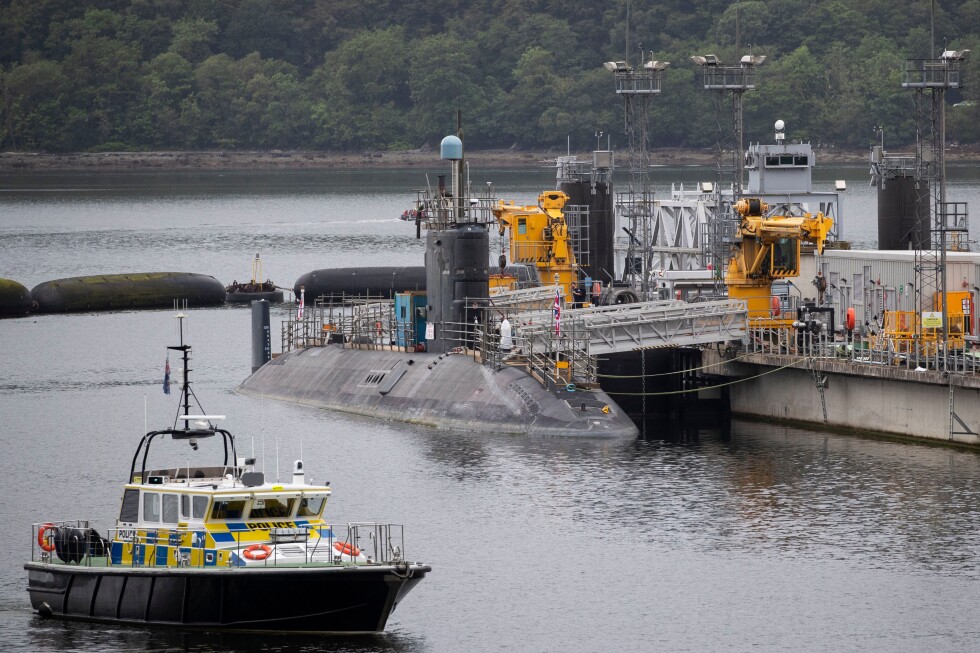
The pair, aged 34 and 31 respectively, were detained on Thursday following their unauthorized attempt to access HM Naval Base Clyde, commonly known as Faslane. Located approximately 40 miles northwest of Glasgow, the facility serves as the headquarters for the United Kingdom’s submarine operations and houses the nation’s nuclear deterrent.
In accordance with Scottish legal procedures, authorities have withheld the suspects’ identities and specific charges until their scheduled court appearance at Dumbarton Sheriff Court on Monday.
The incident has raised serious security concerns, as Faslane is one of Britain’s most strategically important military installations. The base hosts the Royal Navy’s fleet of Vanguard-class submarines, which carry Trident nuclear missiles and form the backbone of the UK’s nuclear deterrent strategy.
Security experts note that nuclear facilities worldwide have faced increasing threats in recent years, from both state and non-state actors. The UK’s Ministry of Defence maintains extensive security protocols around all nuclear sites, with multiple layers of physical barriers, surveillance systems, and armed personnel.
Britain has maintained nuclear capabilities since the 1950s, developing its program during the Cold War era as a deterrent against Soviet aggression. Since the 1990s, following the end of the Cold War, the UK has streamlined its nuclear arsenal to focus exclusively on submarine-based systems.
The current nuclear deterrent consists of four Vanguard-class submarines operating on a continuous at-sea rotation, ensuring at least one vessel is always deployed in unknown locations in the world’s oceans. This strategy, known as Continuous At-Sea Deterrence (CASD), has been maintained without interruption for over 50 years.
The timing of this security breach attempt comes amid heightened global tensions, particularly concerning Iran’s relations with Western nations. While authorities have not suggested any state-sponsored motivation behind the incident, the involvement of an Iranian national is likely to receive particular scrutiny given the current geopolitical climate.
Iran has been at the center of international tensions regarding its nuclear program and has faced numerous sanctions from Western powers. The country has consistently denied seeking nuclear weapons, insisting its program is for civilian purposes only.
Naval Base Clyde employs approximately 6,800 personnel and contractors, with this number expected to increase to 8,200 by 2022 as more submarines are relocated to the Scottish base. The facility not only serves as a critical military installation but also represents a significant economic contributor to the region.
The incident also occurs against the backdrop of ongoing debates in Scotland about the presence of nuclear weapons on Scottish soil. The Scottish National Party, which leads Scotland’s devolved government, has consistently opposed nuclear weapons and called for the removal of Trident from Scottish waters, particularly in discussions about potential Scottish independence.
British authorities regularly conduct security assessments at critical infrastructure sites, including nuclear facilities. The outcome of Monday’s court proceedings and any subsequent investigation will likely inform future security protocols at the base.
Naval security analysts suggest that unauthorized entry attempts at such facilities are rare but taken with the utmost seriousness due to the strategic importance of the assets housed within. The Royal Navy works closely with Police Scotland and other security agencies to maintain the integrity of the facility’s perimeter.
Fact Checker
Verify the accuracy of this article using The Disinformation Commission analysis and real-time sources.

8 Comments
This is concerning. Trying to access a high-security nuclear submarine base raises major security risks. I hope the authorities thoroughly investigate this incident to identify any potential threats or weaknesses.
Agreed. The UK must remain vigilant to protect such critical military infrastructure from unauthorized access or attacks.
While the details are limited, it’s good to see the authorities taking swift action in response to this security breach. Protecting nuclear facilities from unauthorized access is crucial for public safety and national security.
This attempted intrusion highlights the need for robust physical and digital security at critical military installations like Faslane. Maintaining the integrity of the UK’s nuclear deterrent should be a top priority.
I’m curious to learn more about the motivations and potential connections of the individuals involved. Gaining unauthorized access to a nuclear submarine base is a serious offense that warrants a thorough investigation.
Agreed. Understanding the context and any larger threats or networks behind this incident will be important for strengthening security measures going forward.
It’s troubling to see foreign nationals attempting to breach this sensitive nuclear facility. Proper security protocols and deterrence measures are essential to safeguard these strategic assets.
Absolutely. Securing nuclear submarine bases is vital for national defense. I hope the charges against these individuals send a strong message.