


Listen to the article
Iranian Americans Balance Grief and Tradition During Nowruz Celebrations
After thousands of Iranian demonstrators were killed in a January crackdown, many Iranian Americans found themselves approaching Nowruz—the Persian New Year—with mixed emotions this spring. The traditionally joyous holiday has taken on a more somber tone as communities across the United States grapple with ongoing unrest in Iran.
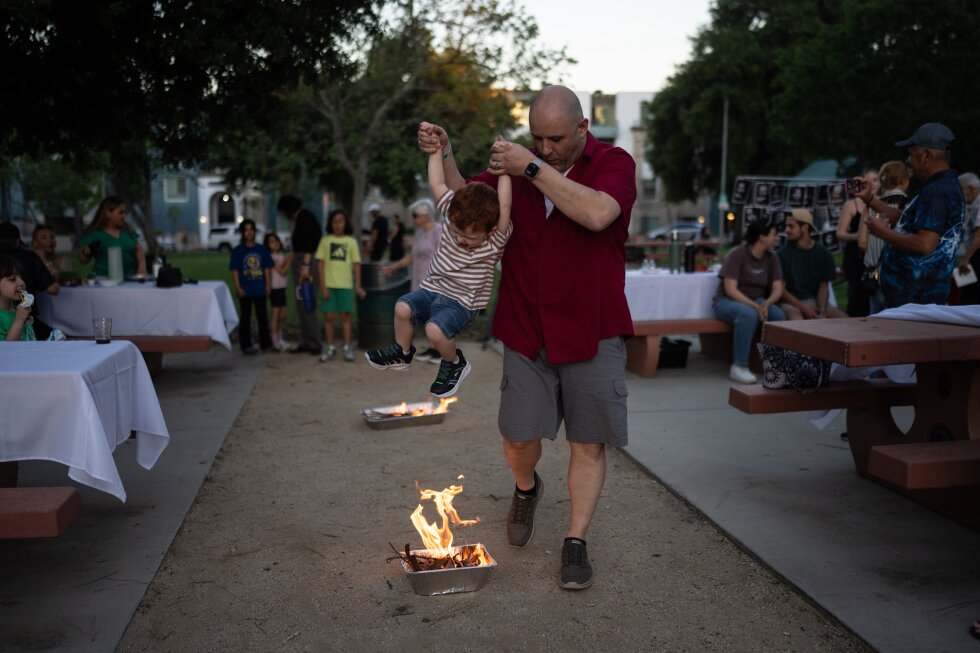
Shima Razavi Gacek, a 46-year-old Los Angeles resident, opted to organize a vigil at a local park instead of hosting her usual house party. Dozens gathered to light candles and display photos of slain protesters while participating in a modified version of Chaharshanbe Suri, the traditional fire-jumping ceremony.
“It is such a beautiful and joyous time of year,” said Razavi Gacek, who has lived in the United States since she was 5. “This year, it’s not, but we need our community more than ever.”
The holiday’s timing is particularly poignant, coming less than a month after U.S. and Israeli forces attacked Iran, killing Supreme Leader Ayatollah Ali Khamenei. Since then, regional conflict has intensified, casting a shadow over celebrations.
Nowruz, which means “new day” in Farsi, coincides with the spring equinox and is deeply rooted in Zoroastrian tradition dating back millennia. The holiday is celebrated throughout the Middle East and Central Asia, from Afghanistan to Turkey, and by Iranians of all faiths despite occasional discouragement from Iran’s hard-line regime.
In the United States, where approximately 750,000 Iranian Americans reside, celebrations typically take place in major communities like Los Angeles, home to nearly a third of the country’s Iranian American population, and in Nashville, Tennessee, which hosts a significant Kurdish community.
Many customary festivities have been altered or canceled outright this year. In New York, the Long Island Ladies Association called off their suburban shopping mall celebration. “People are not in the mood to celebrate the New Year,” explained Marjan Khalili, the group’s president. “That’s what Nowruz is—we welcome the New Year, and now we really don’t have much to welcome, you know?”
In Southern California, the Orange County Iranian American Chamber of Commerce replaced its annual party with mental health support services for community members struggling with the conflict and communication difficulties with family in Iran.
“Everyone I hear from is not doing well,” said Shani Moslehi, the Chamber’s chief executive. “The dancing and singing lasted a day, and people realized just killing that one guy is not going to solve the problem.”
Some organizations have found ways to continue traditions while acknowledging the gravity of current events. New York University’s Persian Cultural Society held a vigil featuring speeches and poetry instead of its usual celebration, requesting attendees wear black rather than festive colors.
In Los Angeles, organizers canceled a major outdoor festival that typically draws thousands, opting instead for a concert titled “Light Always Prevails.” The performance featured an Iranian female vocalist who had been barred from singing after the 1979 Islamic Revolution, along with an Iranian-American artist performing in Persian for the first time.
Others view celebrating Nowruz as an act of defiance against the Islamic regime. Hedi Yousefi, organizer of the Pomexpo Norooz Bazaar in Manhattan, created a memorial wall displaying names of approximately 3,000 people killed in January’s crackdown.
“They want us to be quiet. They want us to shut up and don’t talk and celebrate,” she said. “But we have to talk about our culture, we have to keep our tradition alive.”
In Nashville, the local Kurdish community planned an event showcasing solidarity across the war-torn region. “It’s not going to be a grief celebration or a sad celebration,” said Tabeer Taabur, president of the Tennessee Kurdish Community Council.
Back at the Los Angeles park, attendees shared dinner at picnic tables adorned with white tablecloths, displays of sprouts, fruit, and flowers. Many participated in the fire-jumping tradition symbolizing the changing of the year.
For Mojan Gabbay, a 50-year-old who doesn’t always observe Chaharshanbe Suri, this year felt different. After lighting a candle at the memorial table, she jumped over a pan filled with burning tree bark.
“I wanted my kids to know where their roots are from and everything that’s going on has really touched our hearts,” Gabbay said, fighting tears. “These are your people and when you hear their pain and when you see their suffering, you feel it.”
Fact Checker
Verify the accuracy of this article using The Disinformation Commission analysis and real-time sources.

9 Comments
It’s admirable that Iranian Americans are finding ways to honor Nowruz traditions while also acknowledging the ongoing grief and unrest in their homeland. Vigils and modified ceremonies are a thoughtful way to observe this complex moment.
Organizing a vigil to honor slain protesters at a Nowruz celebration is a powerful statement. It’s heartening to see the Iranian American community coming together to mourn losses while also upholding their cultural traditions during this difficult time.
The mix of sadness and joy must be palpable for Iranian Americans marking Nowruz this year. Celebrating their cultural identity while mourning lost lives is a profound act of resilience and solidarity with their homeland.
The timing of Nowruz this year, coming right after the US-Israel attack on Iran, must make the celebrations especially bittersweet. While the holiday’s joyous traditions are important, the shadow of regional conflict is hard to ignore.
You’re right, the geopolitical situation adds a heavy weight to what is normally a celebratory occasion. Maintaining cultural identity and connection is crucial, even in difficult times.
Nowruz is a time of hope and renewal, but the recent attacks in Iran have cast a somber tone over this year’s celebrations for Iranian Americans. Balancing grief and joy must be a delicate process, but the community’s resolve shines through.
You’re absolutely right. Maintaining cultural traditions in the face of tragedy takes great strength and resilience. Iranian Americans are honoring their heritage while also processing immense grief – a true testament to the power of community.
The contrast between Nowruz’s themes of renewal and the recent violence in Iran must make this year’s celebrations especially poignant for the Iranian American community. Finding ways to grieve and still celebrate cultural identity is an impressive act of resilience.
This is a somber Nowruz for many Iranian Americans, as they balance celebrating their heritage with grief over the ongoing unrest in Iran. It’s heartening to see the community coming together to mourn the lost protesters through thoughtful vigils.