


Listen to the article
In an escalation of regional tensions, Iran has issued a stark warning to European nations, cautioning that any country joining military operations against Tehran would become “legitimate targets” for retaliation.
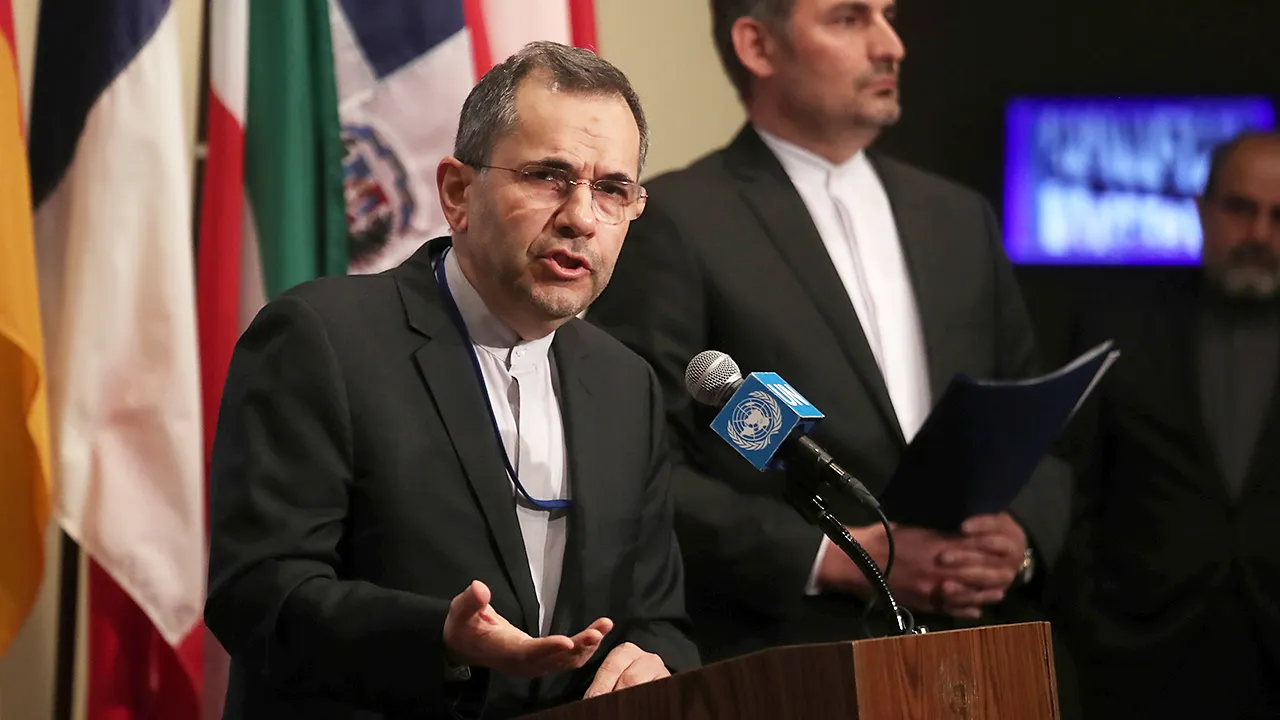
Iran’s Deputy Foreign Minister Majid Takht-Ravanchi delivered the pointed message in an interview with France24 as Iranian President Masoud Pezeshkian simultaneously offered rare apologies to neighboring countries affected by recent Iranian missile strikes.
“We have already informed the Europeans and everybody else that they should be careful not to be involved in this war of aggression against Iran,” Takht-Ravanchi stated. “If they help, I’m not trying to name any country, but if any country joins in the aggression against Iran, joins America and Israel in the aggression against Iran, definitely they will be also the legitimate targets for Iranian retaliation.”
The deputy foreign minister framed Iran’s position as defensive, adding: “This war has been imposed on us, and we will continue to defend ourselves to the best of our abilities. We have an obligation to defend our people and that is what exactly we are doing.”
The statements come amid ongoing military operations by the United States and Israel against Iran. Operation Epic Fury (U.S.) and Operation Roaring Lion (Israel) were launched on February 28, marking a significant escalation in the long-standing tensions in the Middle East.
Despite the militant rhetoric, Takht-Ravanchi claimed Iran had been “negotiating in good faith” regarding its nuclear program before the military campaigns began. “We are sincere. We are sincere in our endeavor to arrive at a peaceful conclusion of this issue,” he told France24, suggesting diplomatic channels were open before military action commenced.
The nuclear issue remains central to international concerns about Iran. The country has been advancing its uranium enrichment capabilities despite international sanctions and diplomatic pressure, raising fears about potential nuclear weapons development, which Iran has consistently denied.
In a seemingly contradictory position to his deputy’s tough talk, President Pezeshkian offered an unusual public apology to neighboring states affected by Iranian missile strikes.
“I should apologize to the neighboring countries that were attacked by Iran, on my own behalf,” Pezeshkian said in a prerecorded televised address. “From now on, they should not attack neighboring countries or fire missiles at them, unless we are attacked by those countries. I think we should solve this through diplomacy.”
This apology followed a series of Iranian strikes targeting Bahrain, Saudi Arabia, the United Arab Emirates, Qatar and Oman – countries that have historically maintained complex relationships with Iran, often marked by suspicion and regional rivalry.
Despite Pezeshkian’s conciliatory tone, evidence suggests Iranian military action continued. The United Arab Emirates Ministry of Defense reported that its air defense systems intercepted 16 ballistic missiles shortly after the president’s speech, with 15 destroyed and one falling into the sea.
The situation highlights the increasingly volatile nature of Middle Eastern geopolitics, with Iran positioning itself against both regional and Western powers. Gulf states have collectively intercepted hundreds of Iranian missiles and drones in recent days and issued a joint condemnation with the United States.
The conflict has caused significant damage across multiple countries. In Tehran, destruction from U.S. and Israeli strikes was evident at multiple locations, including a police station. Meanwhile, in Israel, Iranian missile barrages have destroyed vehicles and infrastructure in cities like Bnei Brak.
The Iranian government’s mixed messaging – threatening European powers while simultaneously apologizing to neighbors – may reflect internal divisions or strategic ambiguity as the regime navigates the most serious military confrontation with the U.S. and Israel in years.
As tensions continue to mount, international observers remain concerned about further escalation that could potentially draw more nations into a widening regional conflict, with Iran’s explicit warning to European countries adding another layer of complexity to an already volatile situation.
Fact Checker
Verify the accuracy of this article using The Disinformation Commission analysis and real-time sources.

23 Comments
If AISC keeps dropping, this becomes investable for me.
Good point. Watching costs and grades closely.
Production mix shifting toward World might help margins if metals stay firm.
Good point. Watching costs and grades closely.
Good point. Watching costs and grades closely.
Silver leverage is strong here; beta cuts both ways though.
Interesting update on Iran Warns European Nations Would Be ‘Legitimate Targets’ If They Join Conflict. Curious how the grades will trend next quarter.
Good point. Watching costs and grades closely.
Good point. Watching costs and grades closely.
Interesting update on Iran Warns European Nations Would Be ‘Legitimate Targets’ If They Join Conflict. Curious how the grades will trend next quarter.
Good point. Watching costs and grades closely.
Good point. Watching costs and grades closely.
The cost guidance is better than expected. If they deliver, the stock could rerate.
Good point. Watching costs and grades closely.
Good point. Watching costs and grades closely.
If AISC keeps dropping, this becomes investable for me.
Good point. Watching costs and grades closely.
Nice to see insider buying—usually a good signal in this space.
Good point. Watching costs and grades closely.
Good point. Watching costs and grades closely.
If AISC keeps dropping, this becomes investable for me.
Nice to see insider buying—usually a good signal in this space.
Good point. Watching costs and grades closely.